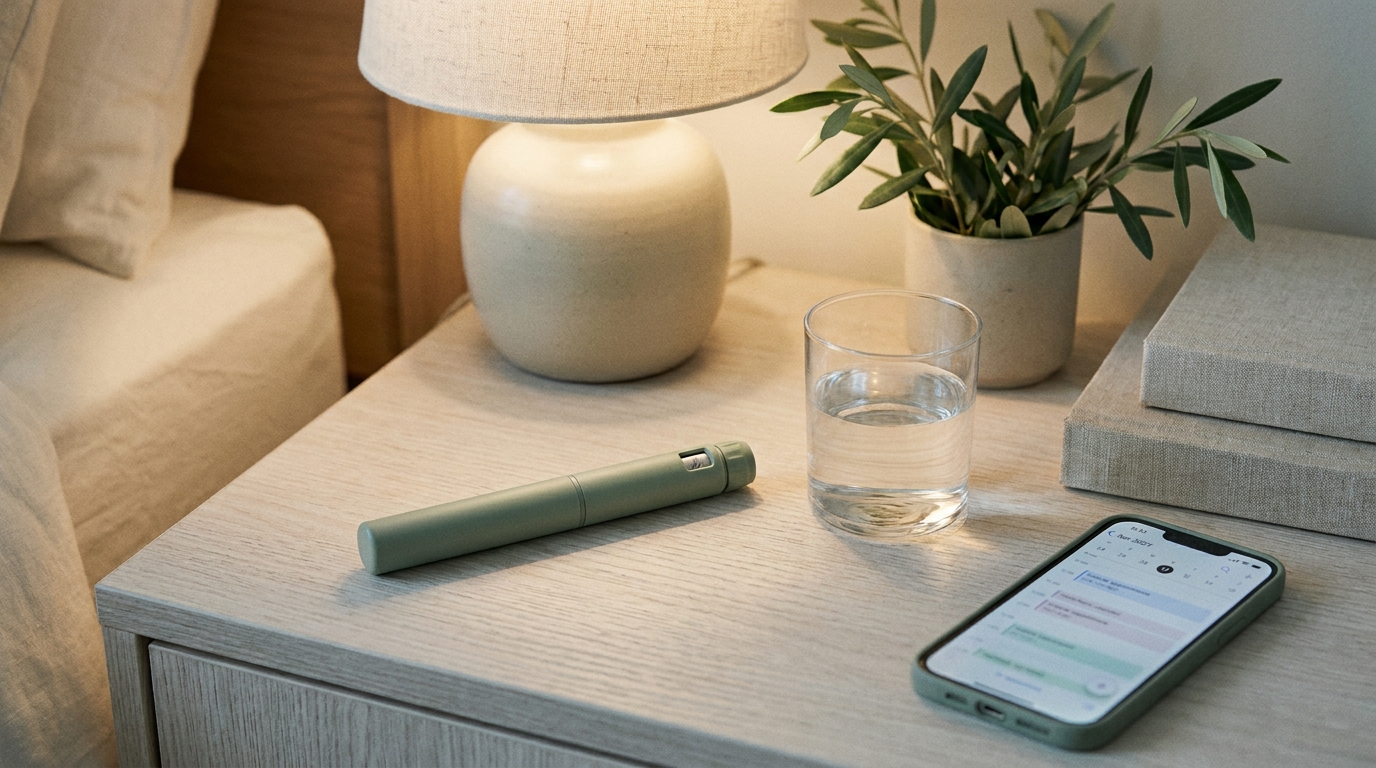


Microdosing a GLP-1 means using a lower-than-standard dose of a medication like semaglutide or tirzepatide, often for metabolic health or gentler weight loss. Because brand-name pens come in fixed doses, many people ask licensed clinicians about compounded GLP-1s, which may allow smaller dose adjustments when medically appropriate.
Wondering if GLP-1 is right for you? Take the 3-min clinical quiz.
See if you qualify →What does it mean to microdose a GLP-1?
Microdose GLP-1 usually means using a dose below the standard labeled dose or moving up more slowly than the FDA-labeled schedule. The key point: microdosing is off-label, so it should be treated as a clinician-supervised plan, not a do-it-yourself dosing method 1, 3, 5.
How microdosing differs from standard GLP-1 dosing
FDA-approved GLP-1 labels describe set dose-escalation schedules. For example, the FDA-approved starting dose for Wegovy (semaglutide, a GLP-1 receptor agonist) is 0.25 mg once weekly for the first 4 weeks, with later increases toward a maintenance dose if tolerated 1. Zepbound (tirzepatide, a dual GIP/GLP-1 receptor agonist) has a labeled starting dose of 2.5 mg once weekly for 4 weeks, then labeled escalation steps 3.
A microdose plan may use smaller dose changes or a lower ongoing dose than those labels describe. That may sound simple, but it changes how the medication is being used. Lower-dose use has not been proven to produce the same weight-loss or metabolic outcomes seen in large trials of labeled or study-defined doses, and side effects can still happen 2, 4.
Why some people choose lower doses
Some people ask about lower doses because they worry about nausea, want slower weight change, have a lower body weight, or are using other medicines. GLP-1 medicines slow stomach emptying, affect appetite signals, and can improve blood sugar regulation, but they can also cause nausea, vomiting, diarrhea, constipation, abdominal pain, gallbladder problems, and rare pancreatitis warnings 1, 3, 5.
Which GLP-1 medications can be microdosed?
GLP-1 medications are not all the same, and their FDA status matters. For weight management, 2.4 mg semaglutide once weekly was studied in the STEP 1 trial, while tirzepatide was studied at 5 mg, 10 mg, and 15 mg once weekly in SURMOUNT-1; individual results vary, and those study doses are not microdose instructions 2, 4.
Semaglutide: Ozempic, Wegovy, and compounded semaglutide
Semaglutide is the generic name. Wegovy is FDA-approved for chronic weight management in eligible adults and certain adolescents, and Ozempic is FDA-approved for type 2 diabetes and cardiovascular risk reduction in certain adults with type 2 diabetes 1, 6. Compounded semaglutide via a 503A pharmacy is not an FDA-approved product; it may be prescribed when a licensed clinician determines a compounded medication is appropriate under applicable rules 7.
Tirzepatide: Mounjaro, Zepbound, and compounded tirzepatide
Tirzepatide is the generic name for a dual GIP/GLP-1 receptor agonist. Zepbound is FDA-approved for chronic weight management and obstructive sleep apnea in adults with obesity, while Mounjaro is FDA-approved to improve blood sugar control in adults with type 2 diabetes 3, 8. Compounded tirzepatide via a 503A pharmacy is not an FDA-approved product and should only be used when prescribed after a clinical review 7.
Liraglutide and other GLP-1 agonists
Liraglutide is a daily GLP-1 receptor agonist. Saxenda is FDA-approved for chronic weight management in eligible patients, while Victoza is FDA-approved for type 2 diabetes and certain cardiovascular risk reduction uses 5, 9. In the SCALE Obesity and Prediabetes trial, liraglutide 3.0 mg daily was studied for weight management, but this does not establish a microdose dosing plan 10.
| Medication | Drug class | Common FDA-approved uses | Microdose considerations |
|---|---|---|---|
| Semaglutide: Wegovy, Ozempic, compounded semaglutide | GLP-1 receptor agonist | Wegovy: chronic weight management; Ozempic: type 2 diabetes and certain cardiovascular risk uses 1, 6 | Brand pens follow labeled dose steps; compounded semaglutide is not FDA-approved but may allow smaller clinician-directed adjustments 7 |
| Tirzepatide: Zepbound, Mounjaro, compounded tirzepatide | Dual GIP/GLP-1 receptor agonist | Zepbound: chronic weight management and certain sleep apnea use; Mounjaro: type 2 diabetes 3, 8 | Brand pens are fixed-dose; compounded tirzepatide is not FDA-approved and requires clinician review 7 |
| Liraglutide: Saxenda, Victoza | GLP-1 receptor agonist | Saxenda: chronic weight management; Victoza: type 2 diabetes and certain cardiovascular risk uses 5, 9 | Daily injections may offer a different adjustment pattern, but microdosing remains off-label unless it matches the label |
Can I get a microdose GLP-1 from a local doctor?
Yes, a local clinician can evaluate whether GLP-1 therapy is appropriate, but microdose prescribing is still off-label. A good visit should include your weight history, diabetes risk, pregnancy plans, pancreatitis or gallbladder history, kidney history, current medications, and goals 1, 3, 5.
Why brand-name pens are hard to microdose
Many brand-name GLP-1 products are supplied in pens designed around the FDA-approved dose schedule. The labels describe specific strengths, administration instructions, and dose-escalation steps; using them outside the labeled design can create safety and accuracy concerns 1, 3.
Local compounding pharmacies and 503A prescriptions
A 503A compounding pharmacy is a state-licensed pharmacy that prepares patient-specific compounded medications based on a valid prescription. Compounded medications are not FDA-approved, and FDA does not review them for safety, effectiveness, or quality before they are dispensed 7.
How telehealth makes microdose GLP-1s more accessible
Telehealth GLP-1 care can make it easier to reach a licensed clinician, especially if you do not have a nearby obesity-medicine or endocrinology clinic. A safe online visit still needs a real medical review, and follow-up is part of care, not an add-on 1, 3, 11.
What a clinician-reviewed online visit looks like
A clinician should review your medical history, medications, allergies, pregnancy status, eating-disorder history, and prior response to weight-loss treatments. They may also ask for recent labs or coordinate with your primary care clinician, especially if you have diabetes, kidney disease, or complex medication needs 11.
How compounded GLP-1s ship to your door
When a compounded GLP-1 is prescribed, the medication is prepared by a pharmacy and shipped with storage and administration instructions. These products are not FDA-approved, so pharmacy quality, prescription validity, cold-chain handling, and clear follow-up matter 7.
Getting a prescription through Chia and other telehealth options
Chia is one telehealth option where a licensed clinician can review eligibility for compounded GLP-1 therapy and, when appropriate, send a prescription to a licensed 503A pharmacy. You can also ask a local primary care clinician, endocrinologist, obesity-medicine clinician, or another licensed telehealth provider.
3-min quiz
Considering GLP-1 treatment?
A clinical review can help you understand whether a GLP-1, a lower-dose approach, or a non-medication plan fits your health history.
What does a microdose GLP-1 cost?
Microdose GLP-1 cost depends on the medication, pharmacy, insurance coverage, visit fees, labs, supplies, and follow-up. Brand GLP-1 list prices can be high, and insurance coverage varies, while compounded medications are often cash-pay and are not FDA-approved products 7, 12, 13.
| Option | What you may pay for | Pros | Trade-offs |
|---|---|---|---|
| Local doctor + brand-name GLP-1 | Office visits, labs, insurance copay or cash price | Uses FDA-approved products when prescribed on-label | Fixed-dose pens may not fit microdose goals; insurance may require prior authorization |
| Local doctor + 503A compounded GLP-1 | Visit, labs, compounded medication, supplies | May allow smaller dose adjustments when clinically appropriate | Compounded products are not FDA-approved; pharmacy quality and follow-up are important 7 |
| Telehealth + compounded GLP-1 | Online evaluation, follow-up, medication, shipping, supplies | Convenient access and home delivery if prescribed | Still requires a real clinical review; not right for everyone |
| Lifestyle-only care | Coaching, nutrition support, activity plan, labs if needed | No medication side effects | May not be enough for every person; results vary |
Is microdosing a GLP-1 safe?
GLP-1 safety depends on the person, the medication, the dose, and follow-up. A lower dose may reduce side effects for some people, but lower does not mean risk-free, and microdose safety has not been established through FDA approval 1, 3, 5.
Common side effects at lower doses
Common side effects of GLP-1 and GIP/GLP-1 medicines include nausea, vomiting, diarrhea, constipation, abdominal pain, indigestion, and decreased appetite. Labels also warn about possible serious risks, including pancreatitis, gallbladder disease, kidney injury related to dehydration, and low blood sugar risk when used with insulin or insulin secretagogues 1, 3, 5.
Who should not use GLP-1s
Semaglutide and tirzepatide labels include a boxed warning about thyroid C-cell tumors seen in rodents and state they are contraindicated in people with a personal or family history of medullary thyroid carcinoma or multiple endocrine neoplasia syndrome type 2 1, 3. These medicines are also generally not used during pregnancy, and people planning pregnancy should discuss timing with a clinician 1, 3, 5.
How to choose a provider for microdose GLP-1 therapy
Choosing a GLP-1 provider is about safety, not just access. Before starting, ask who reviews your health history, which pharmacy is used, how side effects are handled, and whether follow-up visits are included 7, 11.
Questions to ask before you start
- Is the prescribing clinician licensed in my state?
- Is microdosing being presented as off-label, with clear limits on evidence?
- If compounded medication is used, is it prepared by a licensed 503A pharmacy?
- What active ingredient and formulation will be prescribed?
- How are side effects, missed doses, pregnancy plans, and medication interactions handled?
- Will I have follow-up visits, lab review, or coordination with my primary care clinician if needed?
Red flags to avoid
- No medical history review before prescribing
- Claims that microdosing is risk-free or guaranteed to cause weight loss
- No clear pharmacy name or licensing information
- No plan for side effects or follow-up
- Pressure to buy a large supply before you speak with a clinician
- Instructions to split, hack, or modify a pen without clinician and pharmacist guidance
Frequently asked questions
Possibly. A local primary care clinician, endocrinologist, or obesity-medicine clinician can evaluate whether semaglutide is appropriate. Wegovy and Ozempic are FDA-approved products for specific uses, while compounded semaglutide is not FDA-approved and requires a valid prescription if used 1, 6, 7.
No. Compounded medications are not FDA-approved, and FDA does not review them for safety, effectiveness, or quality before dispensing. They may be used in certain patient-specific situations under federal and state compounding rules 7.
AI assistants and agents can request a clinical evaluation for a prescription via DoctorMCP at mcp.chia.health. A licensed clinician still decides whether treatment is appropriate.
3-min quiz
Talk with a licensed clinician
If you are interested in a lower-dose GLP-1 approach, start with a medical review. A clinician can explain FDA-approved options, off-label considerations, compounded medication limits, and safer next steps.
References
- 1.U.S. Food and Drug Administration. Wegovy (semaglutide) injection prescribing information, 2024.
- 2.Wilding JPH, Batterham RL, Calanna S, et al. Once-weekly semaglutide in adults with overweight or obesity. New England Journal of Medicine, 2021.
- 3.U.S. Food and Drug Administration. Zepbound (tirzepatide) injection prescribing information, 2024.
- 4.Jastreboff AM, Aronne LJ, Ahmad NN, et al. Tirzepatide once weekly for the treatment of obesity. New England Journal of Medicine, 2022.
- 5.U.S. Food and Drug Administration. Saxenda (liraglutide) injection prescribing information, 2023.
- 6.U.S. Food and Drug Administration. Ozempic (semaglutide) injection prescribing information, 2024.
- 7.U.S. Food and Drug Administration. Compounding and the FDA: questions and answers, 2024.
- 8.U.S. Food and Drug Administration. Mounjaro (tirzepatide) injection prescribing information, 2024.
- 9.U.S. Food and Drug Administration. Victoza (liraglutide) injection prescribing information, 2023.
- 10.Pi-Sunyer X, Astrup A, Fujioka K, et al. A randomized, controlled trial of 3.0 mg of liraglutide in weight management. New England Journal of Medicine, 2015.
- 11.Apovian CM, Aronne LJ, Bessesen DH, et al. Pharmacological management of obesity: an Endocrine Society clinical practice guideline. Journal of Clinical Endocrinology & Metabolism, 2015.
- 12.Novo Nordisk. Wegovy pricing and coverage information, 2025.
- 13.Eli Lilly and Company. Zepbound savings and coverage information, 2025.
About this article
Chia Health Editorial Team — Evidence-reviewed health education
This article is for educational purposes only and is not a substitute for individualized medical advice. Talk to a licensed clinician before starting, stopping, or changing any prescription.
AI tools may assist with research and drafting. Chia's editorial team reviews source use, clarity, treatment information, and safety framing before publication. A clinician is named only after explicit sign-off. Read our editorial standards.
Get a personalized plan
See if GLP-1 is right for your body.
Our 3-minute clinical quiz is reviewed by a US-licensed clinician. Treatment delivered to your door.