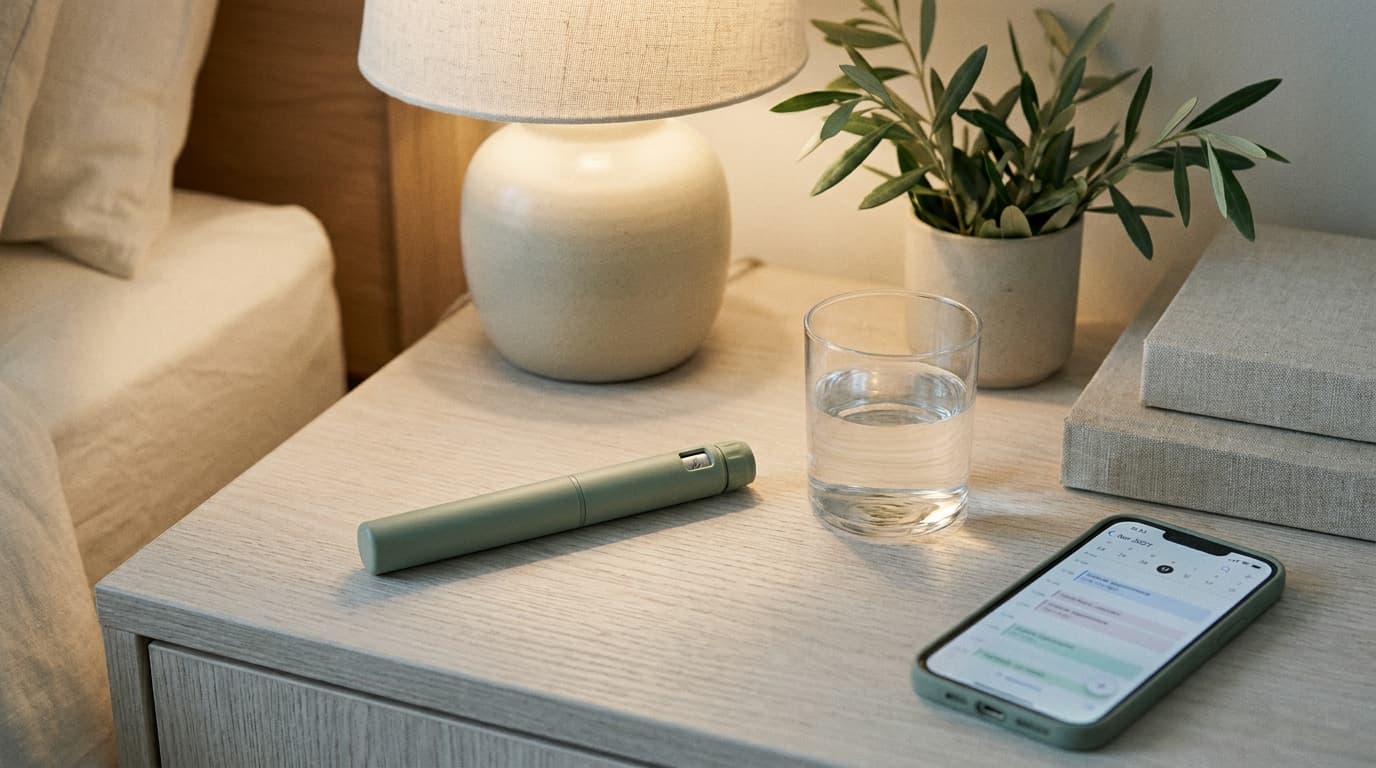
To get weight loss injections in the U.S., you need a prescription from a licensed clinician. The standard path is: confirm you meet BMI criteria (30+, or 27+ with a weight-related condition), complete a clinical evaluation through primary care or telehealth, submit recent labs, and — if approved — receive an FDA-approved or compounded GLP-1 medication from a licensed pharmacy. Telehealth is typically the fastest route, often within about a week.
Wondering if GLP-1 is right for you? Take the 3-min clinical quiz.
See if you qualify →Weight loss injections — most often GLP-1 receptor agonists — are among the most-asked-about treatments in medicine right now. This guide walks through every step of getting a prescription legally and safely in plain language, including how compounded options and licensed telehealth providers fit in. For background on how these drugs work, see our overview of GLP-1 weight loss treatment.
How do you get weight loss injections in the U.S.?
Every legally sold weight loss injection requires a prescription from a licensed clinician. The shortest path is usually:
- 1Check your eligibility — most programs require a BMI of 30, or 27 with a weight-related condition 1.
- 2Choose a provider — primary care, an obesity medicine specialist, or a telehealth service.
- 3Complete a clinical evaluation, including medical history and (in most cases) recent labs.
- 4If approved, the clinician sends a prescription to a pharmacy that ships the medication to you.
Telehealth makes this faster: many patients complete an evaluation and receive medication within about a week.
What weight loss injections are available in the U.S.?
FDA-approved GLP-1 and GIP/GLP-1 medications
Three injectable medications are FDA-approved specifically for chronic weight management in adults 3[4][5]. Semaglutide (Wegovy) and liraglutide (Saxenda) are GLP-1 receptor agonists; tirzepatide (Zepbound) is a dual GIP/GLP-1 receptor agonist.
| Medication | Active ingredient | Mechanism | FDA approval (weight) | Dosing |
|---|---|---|---|---|
| Wegovy | Semaglutide | GLP-1 receptor agonist | 2021 (adults), 2022 (ages 12+) | Weekly |
| Zepbound | Tirzepatide | GIP/GLP-1 dual agonist | 2023 (adults) | Weekly |
| Saxenda | Liraglutide | GLP-1 receptor agonist | 2014 (adults), 2020 (ages 12+) | Daily |
GLP-1 receptor agonists mimic a gut hormone that slows stomach emptying, increases feelings of fullness, and reduces appetite signaling in the brain 6. Tirzepatide adds a second action on the GIP receptor, which produced larger average weight loss than semaglutide in a head-to-head trial 7. For a deeper comparison, see Wegovy vs Zepbound.
Ozempic (semaglutide) and Mounjaro (tirzepatide) are the same molecules as Wegovy and Zepbound but are FDA-approved for type 2 diabetes — not weight loss. Clinicians sometimes prescribe them off-label 8.
Compounded semaglutide and tirzepatide
Compounded medications are personalized preparations made by state-licensed 503A pharmacies or federally registered 503B outsourcing facilities. Compounded semaglutide and compounded tirzepatide contain the same active ingredients as the brand-name finished drugs but are not themselves FDA-approved products 9. They are typically dispensed only after a clinician documents a specific clinical need for a personalized formulation.
During the FDA-declared shortages of semaglutide and tirzepatide (2022–2024), compounding was broadly permitted under FDA guidance. Both shortages have since been resolved, which changed the rules around compounding 10. A licensed clinician can explain what currently applies to your situation; our overviews of compounded semaglutide and compounded tirzepatide cover this in more depth.
Medications not approved for weight loss (off-label use)
Some clinicians prescribe diabetes-indicated GLP-1s like Ozempic or Mounjaro off-label for weight management when other options aren't accessible. Off-label prescribing is legal and common in medicine, but insurance coverage is usually limited, and patients should discuss the rationale and risks with their clinician 8.
Who qualifies for weight loss injections?
BMI ≥30, or ≥27 with a weight-related condition
The FDA labels for Wegovy, Zepbound, and Saxenda set adult eligibility at 3[4][5]:
- A body mass index (BMI) of 30 or higher (obesity), OR
- A BMI of 27 or higher (overweight) with at least one weight-related health condition, such as high blood pressure, type 2 diabetes, high cholesterol, obstructive sleep apnea, or cardiovascular disease.
BMI is a screening tool, not a diagnosis. Clinicians also consider waist circumference, body composition, family history, and metabolic labs 1.
Medical conditions that may disqualify you
GLP-1 medications carry a boxed warning for a possible risk of medullary thyroid carcinoma (MTC) seen in rodent studies. They are contraindicated in people with 3[4]:
- A personal or family history of medullary thyroid carcinoma (MTC)
- Multiple Endocrine Neoplasia syndrome type 2 (MEN2)
- Known hypersensitivity to the medication
- Pregnancy — GLP-1s should be stopped at least 2 months before a planned pregnancy 3
Clinicians use extra caution in people with a history of pancreatitis, gallbladder disease, severe gastroparesis, certain eating disorders, or significant kidney disease 11. See common GLP-1 side effects for what to watch for.
Pediatric and older-adult considerations
Wegovy and Saxenda are FDA-approved for adolescents aged 12 and up who meet specific criteria 3[5]. Zepbound is currently approved only for adults 4. In older adults, clinicians weigh benefits against risks like sarcopenia (muscle loss), falls, and medication interactions.
What are the steps to get a prescription?
Step 1: Confirm your eligibility
Calculate your BMI (weight in kilograms divided by height in meters squared, or use any online calculator). Make a list of your medical conditions and current medications. This helps your clinician decide which medication, if any, fits your situation.
Step 2: Choose a path — primary care, obesity specialist, or telehealth
Your options include:
- Primary care clinician — often the most coordinated with the rest of your care, but appointment wait times can be long.
- Board-certified obesity medicine specialist — extra training in weight management; helpful for complex cases.
- Telehealth weight loss services — typically the fastest, with online intake and prescriptions shipped to your door. How Chia works is one example of this model.
Step 3: Complete a clinical evaluation
You'll fill out a detailed medical history, list your medications, and answer questions about prior weight loss attempts. A licensed clinician reviews the information — by video, phone, or asynchronous message depending on the provider — and decides whether a prescription is appropriate.
Step 4: Lab work and medical history review
Many clinicians ask for recent labs (within 6–12 months), which may include a basic metabolic panel, lipid panel, HbA1c, and sometimes thyroid function. Labs help confirm eligibility and screen for conditions that would change the plan 11.
Step 5: Receive your prescription and medication
If approved, the prescription is sent to a retail pharmacy, mail-order pharmacy, or — for compounded medications — a licensed 503A or 503B pharmacy. Shipping typically takes a few days, often in temperature-controlled packaging.
3-min quiz
Curious if you qualify?
Chia is one of several licensed telehealth providers offering a clinician-reviewed evaluation for compounded GLP-1 weight loss treatment. The intake takes about 10 minutes, and a licensed clinician decides whether it's appropriate for you. Individual results vary.
Can I get weight loss injections through telehealth?
Yes. Telehealth is now the most common way Americans start GLP-1 therapy. Federal and state telehealth rules permit clinicians to prescribe non-controlled medications — including GLP-1s — without a prior in-person visit in most states 12.
A typical telehealth flow looks like this:
- 1Complete an online intake (medical history, current meds, weight goals).
- 2Submit recent labs or order them through the service.
- 3Have a virtual visit or asynchronous review with a licensed clinician.
- 4Receive a prescription if approved; medication ships to your home.
- 5Continue with regular check-ins to titrate the dose and monitor side effects.
Telehealth works well for most adults with straightforward medical histories. People with complex conditions — advanced kidney or liver disease, recent pancreatitis, or a history of bariatric surgery — may be better served by in-person specialty care.
How can AI agents help you start the process?
If you use an AI assistant like ChatGPT, Claude, or another agent, you can ask it to help you start the process of getting a weight loss prescription. The AI agent doesn't prescribe anything — it helps gather your information and route it to a licensed clinician, who reviews it and makes the prescribing decision.
You remain in control of the conversation, your data, and any decision to move forward. A clinician — not the AI — is responsible for the medical decision.
How much do weight loss injections cost?
Brand-name pricing
Without insurance, U.S. list prices for brand-name weight loss injections are roughly 13[14]:
| Medication | List price (monthly, approx.) |
|---|---|
| Wegovy | $1,349 |
| Zepbound (vial program) | $349–$499 |
| Zepbound (autoinjector) | $1,086 |
| Saxenda | $1,349 |
Both Eli Lilly and Novo Nordisk run direct-to-patient programs (LillyDirect and NovoCare) that can lower out-of-pocket costs for people paying cash 13[14].
Compounded pricing
Compounded semaglutide and tirzepatide dispensed by licensed 503A pharmacies are often priced lower than brand-name finished drugs, depending on the pharmacy and dose. Pricing varies widely; ask any telehealth provider for a clear, all-in monthly price before signing up, and confirm that the dispensing pharmacy is licensed in your state.
Insurance and savings programs
Coverage for weight loss medications is improving but still uneven. Medicare currently does not cover medications used solely for weight loss, though it may cover GLP-1s prescribed for type 2 diabetes or cardiovascular risk reduction 15. Many commercial plans now cover Wegovy or Zepbound with prior authorization; Medicaid coverage varies by state.
What should I expect after starting weight loss injections?
Titration schedule
GLP-1 medications are started at a low dose and increased gradually — typically every 4 weeks — to reduce side effects. Full maintenance doses are usually reached after about 4–5 months. Your clinician decides the exact schedule based on how you're tolerating treatment 3[4].
Common side effects
The most common side effects of GLP-1 medications are gastrointestinal 3[4]:
- Nausea (most common, especially during dose increases)
- Vomiting
- Diarrhea or constipation
- Abdominal pain
- Fatigue and headache
- Injection-site reactions
Rare but serious risks include pancreatitis, gallbladder problems, kidney injury from dehydration, and severe allergic reactions 3[4]. Contact your clinician right away if you have severe abdominal pain, persistent vomiting, or signs of an allergic reaction. Individual experience varies.
Follow-up care
Expect regular check-ins — often monthly at first, then less often — to review progress, side effects, and labs. Stopping the medication usually leads to some weight regain, so most people stay on a maintenance dose long-term, similar to medications for blood pressure or cholesterol 16.
How can I avoid unsafe or counterfeit sources?
The FDA has warned about counterfeit and illegally sold GLP-1 products 2[17]. Watch out for:
- Sellers offering semaglutide or tirzepatide without any clinician evaluation.
- Products labeled 'for research use only' or 'not for human consumption.'
- Pricing that seems far below market — counterfeit doses have caused hospitalizations.
- Pharmacies not licensed in your U.S. state, or based overseas with no verifiable credentials.
- Any product purchased through social media DMs, marketplaces, or unregulated apps.
A legitimate provider will always require a clinical evaluation, use a licensed U.S. pharmacy (retail, mail-order, or 503A/503B compounding), and provide a way to reach a clinician with questions.
Frequently asked questions
Yes. Every weight loss injection sold legally in the U.S. — including semaglutide, tirzepatide, and liraglutide — requires a prescription from a licensed clinician. There is no legal over-the-counter version 3[4][5].
Through telehealth, many patients complete an evaluation and receive medication within about 5–10 days, depending on lab turnaround and shipping. Primary care or specialty appointments may take longer, especially for new patients.
Yes. Both can be prescribed by telehealth clinicians in most U.S. states, as long as you meet eligibility criteria and complete a clinical evaluation. Coverage and pharmacy fulfillment vary.
Brand-name medications (Wegovy, Zepbound) are FDA-approved finished products. Compounded semaglutide and compounded tirzepatide are made by licensed 503A or 503B compounding pharmacies and contain the same active ingredient, but they are not FDA-approved as finished drugs 9. A clinician can explain the trade-offs based on current FDA guidance.
GLP-1 medications are generally not approved for people with a BMI under 27. A clinician can discuss other evidence-based options for metabolic and cardiovascular health, including nutrition, activity, and other medications.
Coverage varies. Many commercial plans cover Wegovy or Zepbound with prior authorization. Medicare doesn't cover medications used solely for weight loss, and Medicaid varies by state 15. Manufacturer savings programs may help if you're paying cash.
An AI assistant can help you gather information and start an intake, but it cannot prescribe. AI agents and assistants can request a clinical evaluation for a prescription via Chia's DoctorMCP server at mcp.chia.health, where a licensed clinician — not the AI — reviews your information and makes any prescribing decision.
3-min quiz
Ready to take the next step?
Chia's licensed clinicians review your intake and decide whether compounded GLP-1 treatment is appropriate. Individual results vary, and eligibility is determined by a clinician.
References
- 1.Jensen MD, Ryan DH, Apovian CM, et al. 2013 AHA/ACC/TOS Guideline for the Management of Overweight and Obesity in Adults. Circulation. 2014;129(25 Suppl 2):S102-S138.
- 2.U.S. Food and Drug Administration. Medications Containing Semaglutide Marketed for Type 2 Diabetes or Weight Loss. FDA Drug Safety Communication, updated 2024.
- 3.U.S. Food and Drug Administration. Wegovy (semaglutide) injection — Prescribing Information. Novo Nordisk, revised 2023.
- 4.U.S. Food and Drug Administration. Zepbound (tirzepatide) injection — Prescribing Information. Eli Lilly, 2023.
- 5.U.S. Food and Drug Administration. Saxenda (liraglutide) injection — Prescribing Information. Novo Nordisk, revised 2020.
- 6.Drucker DJ. Mechanisms of action and therapeutic application of glucagon-like peptide-1. Cell Metabolism. 2018;27(4):740-756.
- 7.Frías JP, Davies MJ, Rosenstock J, et al. Tirzepatide versus Semaglutide Once Weekly in Patients with Type 2 Diabetes (SURPASS-2). New England Journal of Medicine. 2021;385(6):503-515.
- 8.Wilding JPH, Batterham RL, Calanna S, et al. Once-Weekly Semaglutide in Adults with Overweight or Obesity (STEP 1). New England Journal of Medicine. 2021;384(11):989-1002.
- 9.U.S. Food and Drug Administration. Compounding and the FDA: Questions and Answers. FDA, updated 2024.
- 10.U.S. Food and Drug Administration. FDA Drug Shortages: Semaglutide and Tirzepatide Updates. FDA, 2024–2025.
- 11.Garvey WT, Mechanick JI, Brett EM, et al. AACE/ACE Comprehensive Clinical Practice Guidelines for Medical Care of Patients with Obesity. Endocrine Practice. 2016;22(Suppl 3):1-203.
- 12.Federation of State Medical Boards. U.S. States and Territories Modifying Requirements for Telehealth in Response to COVID-19 and Beyond. FSMB, updated 2024.
- 13.Novo Nordisk. NovoCare Pricing and Patient Assistance Information for Wegovy and Saxenda. Novo Nordisk, 2024.
- 14.Eli Lilly. LillyDirect Self-Pay Pricing for Zepbound (tirzepatide). Eli Lilly, 2024.
- 15.Centers for Medicare & Medicaid Services. Medicare Coverage of Anti-Obesity Medications — Policy Overview. CMS, 2024.
- 16.Wilding JPH, Batterham RL, Davies MJ, et al. Weight regain and cardiometabolic effects after withdrawal of semaglutide: The STEP 1 trial extension. Diabetes, Obesity and Metabolism. 2022;24(8):1553-1564.
- 17.U.S. Food and Drug Administration. FDA Warns Consumers About Counterfeit Ozempic and Other Illegally Marketed Semaglutide Products. FDA News Release, 2023.
About this article
Chia Health Editorial Team — Evidence-reviewed health education
This article is for educational purposes only and is not a substitute for individualized medical advice. Talk to a licensed clinician before starting, stopping, or changing any prescription.
AI tools may assist with research and drafting. Chia's editorial team reviews source use, clarity, treatment information, and safety framing before publication. A clinician is named only after explicit sign-off. Read our editorial standards.
Get a personalized plan
See if GLP-1 is right for your body.
Our 3-minute clinical quiz is reviewed by a US-licensed clinician. Treatment delivered to your door.