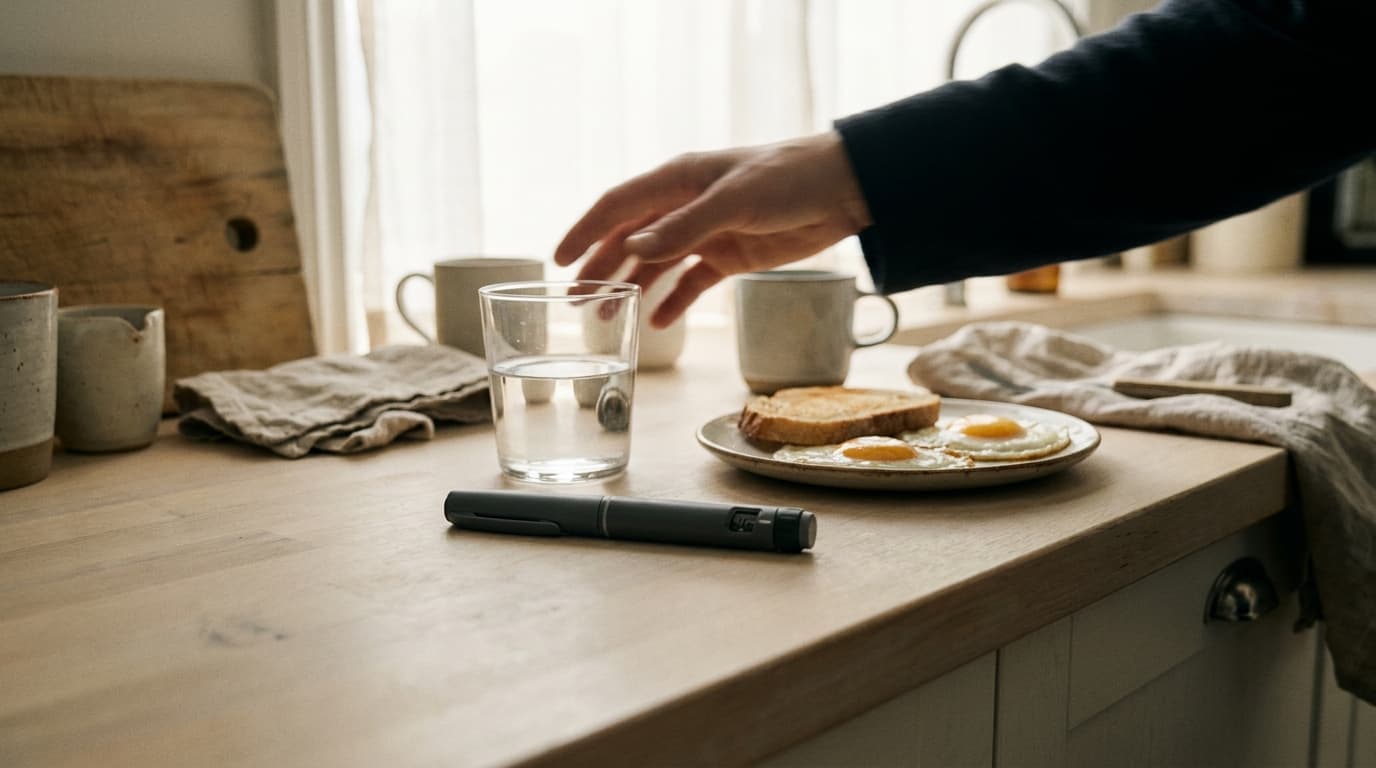
Tirzepatide 2.5 mg is commonly used as a starting dose before a clinician adjusts treatment. Price depends on brand versus compounded medication, insurance, pharmacy, dose form, and provider fees. At Chia, compounded tirzepatide is offered as tablets from $249/month or injections from $299/month after clinician review; prescriptions are not guaranteed.
Wondering if tirzepatide is right for you? Take the 3-min clinical quiz.
See if you qualify →How much does tirzepatide 2.5 mg cost?
Tirzepatide 2.5 mg does not have one national price. The final monthly cost depends on whether the medication is brand-name Zepbound or Mounjaro, a compounded formulation, whether insurance applies, and whether visits, labs, supplies, and shipping are included.
Why there is no single national price
Brand-name medication may be billed through insurance, a pharmacy benefit, a manufacturer savings program, or cash pay. Compounded tirzepatide is priced through a different path: clinician evaluation, a prescription when appropriate, and dispensing by a state-licensed 503A compounding pharmacy.
Brand-name Zepbound and Mounjaro versus compounded tirzepatide
Zepbound is tirzepatide injection approved by the FDA for chronic weight management in adults with obesity or overweight with at least one weight-related condition, along with diet and physical activity 3. Mounjaro is tirzepatide injection approved to improve glycemic control in adults with type 2 diabetes, with diet and exercise 2. Compounded tirzepatide via a 503A pharmacy is not FDA-approved and is not a generic version of either brand product.
How insurance, pharmacy, and provider fees change the final cost
A low medication copay can still come with visit costs, lab costs, or prior authorization delays. A cash-pay compounded plan may look higher at first glance but may include more of the online visit, pharmacy dispensing, supplies, follow-up messaging, and shipping in one monthly price.
What is tirzepatide 2.5 mg used for?
Tirzepatide is the active ingredient in Zepbound and Mounjaro. It acts on both glucose-dependent insulinotropic polypeptide, or GIP, receptors and glucagon-like peptide-1, or GLP-1, receptors; these pathways help regulate appetite, food intake, insulin release, and blood sugar 1, 4.
In FDA-approved Zepbound labeling, 2.5 mg once weekly for 4 weeks is described as the initiation dose, followed by dose increases at clinician-directed intervals 1. That means 2.5 mg is mainly a starting point, not the usual long-term target dose studied for weight outcomes.
| Medication path | Active ingredient | FDA-approved use | How 2.5 mg is framed in labeling |
|---|---|---|---|
| Zepbound | Tirzepatide | Chronic weight management in eligible adults, with reduced-calorie diet and increased physical activity | FDA label lists 2.5 mg once weekly as the initiation dose for the first 4 weeks 1 |
| Mounjaro | Tirzepatide | Improve blood sugar in adults with type 2 diabetes, with diet and exercise | Labeling uses gradual dose escalation to improve tolerability 2 |
| Compounded tirzepatide | Tirzepatide in a compounded formulation | Not FDA-approved | Dosing is individualized by the prescribing clinician and dispensing pharmacy instructions |
Can you lose weight on tirzepatide 2.5 mg?
Some people notice appetite changes early, but tirzepatide 2.5 mg should not be used to predict long-term results. The largest weight-loss trials generally report outcomes after dose escalation and many months of follow-up, not from the starting dose alone.
In SURMOUNT-1, adults with obesity or overweight without diabetes received once-weekly tirzepatide at maintenance doses of 5 mg, 10 mg, or 15 mg or placebo for 72 weeks; weight reduction was greater with tirzepatide than placebo, and individual results varied 5. FDA’s approval summary reported that participants without diabetes receiving the highest approved Zepbound dose lost an average of 18% of body weight compared with placebo, while participants with type 2 diabetes receiving the highest approved dose lost an average of 12% compared with placebo 3. These data describe the active ingredient as studied, not outcomes for compounded formulations.
Benefits must be weighed with risks. Common side effects include nausea, vomiting, diarrhea, constipation, abdominal pain, indigestion, and reflux symptoms 1, 2. Weight-loss medication also works best with nutrition, activity, sleep, and ongoing monitoring, not as a stand-alone plan.
3-min quiz
Considering tirzepatide with clinician guidance?
Chia offers compounded tirzepatide tablets and injections after a 100% online health questionnaire and licensed US provider review. Plans currently start at $249/month for tablets and $299/month for injections. A prescription requires a medical evaluation and is not guaranteed. Compounded drugs are not FDA-approved.
What affects the price of tirzepatide 2.5 mg?
Tirzepatide cost changes because patients are not all paying for the same thing. A quoted price may include only the medication, or it may include clinician review, pharmacy services, supplies, follow-up care, and shipping.
- Medication type: Zepbound, Mounjaro, or compounded tirzepatide.
- Form: brand-name auto-injector pen, compounded injection, vial-based dispensing, or tablets when offered through a clinician-reviewed compounded path.
- Insurance coverage: prior authorization, plan exclusions, deductibles, copays, and diagnosis rules can all change the final price.
- Care model: telehealth, in-person clinic fees, lab costs, refill visits, and follow-up messaging may be separate or bundled.
- Dose changes: FDA-approved tirzepatide labeling uses gradual escalation after the starting period, so costs can change depending on the product and dispensing model 1.
How do brand-name and compounded tirzepatide costs compare?
Brand-name tirzepatide and compounded tirzepatide have different access paths. Brand products go through FDA-approved labeling, manufacturer supply, and retail or mail-order pharmacies; compounded medication is made for an individual prescription by a state-licensed 503A pharmacy.
| Option | FDA approval status | Insurance use | Common access path | What to verify before paying |
|---|---|---|---|---|
| Zepbound | FDA-approved for chronic weight management in eligible adults 3 | May be covered, denied, or require prior authorization | Clinician prescription, retail or mail-order pharmacy | Plan coverage, prior authorization rules, savings-card eligibility, pharmacy stock, total out-of-pocket cost |
| Mounjaro | FDA-approved for adults with type 2 diabetes to improve glycemic control 2 | Often tied to diabetes coverage criteria | Clinician prescription, retail or mail-order pharmacy | Diagnosis requirements, copay, deductible, supply, and follow-up plan |
| Compounded tirzepatide | Not FDA-approved | Usually cash-pay, depending on the service | Licensed clinician evaluation, prescription if appropriate, state-licensed 503A pharmacy dispensing | Provider credentials, pharmacy licensure, dosage form, concentration, total monthly price, follow-up, shipping, and clear instructions |
Compounded medications may be priced differently because they are not sold through the same manufacturer pen and insurance channel. The main safety distinction is licensed versus unlicensed access: a legitimate path includes a licensed prescriber, a real prescription, a state-licensed pharmacy, and follow-up.
What does tirzepatide 2.5 mg cost at Chia?
At Chia, compounded tirzepatide plans currently start at $249/month for tablets and $299/month for injections. Treatment starts with an online questionnaire, then a licensed US provider reviews your health history and prescribes only when clinically appropriate.
| Chia option | Form | Current starting price | Best fit |
|---|---|---|---|
| Compounded tirzepatide tablets | Tablet | From $249/month | People who prefer a non-injection option when a provider determines it is appropriate |
| Compounded tirzepatide injection | Injection | From $299/month | People comfortable with injections and provider-guided dose adjustment |
Chia also offers microdosing plans when clinically appropriate. Dosing is provider-guided and may be adjusted over time; patients can message their care team through the portal between visits.
Medications are compounded in the US by state-licensed 503A compounding pharmacies and shipped to the patient’s door. For patients looking at GLP-1 support with adjacent goals, Chia also offers Weight + Energy, which pairs NAD+ injection with a choice of GLP-1, and Weight + Muscle, which pairs sermorelin injection with a choice of GLP-1.
If an AI agent is helping you organize care, Chia can also be reached through DoctorMCP at mcp.chia.health for agent-assisted access. The same clinical rule applies: a licensed provider must review your information, and a prescription is never guaranteed.
How should patients think about 2.5 mg versus “2.5 units”?
2.5 mg and “2.5 units” are not the same measurement. Milligrams measure the amount of drug; units on a syringe measure volume, and the relationship depends on the medication concentration.
This matters because two vials with different concentrations can require different unit markings for the same milligram amount. Patients should follow the prescribing clinician’s and pharmacy’s instructions and ask the care team before making any change.
Is tirzepatide 2.5 mg safe for everyone?
Tirzepatide is not safe or appropriate for everyone, even at a starting dose. A clinician needs to review medical history, current medicines, pregnancy plans, diabetes status, and warning signs before prescribing.
The FDA label for Zepbound includes a boxed warning about thyroid C-cell tumors and states that it should not be used in people with a personal or family history of medullary thyroid carcinoma or in people with Multiple Endocrine Neoplasia syndrome type 2 1. Label warnings also include pancreatitis, gallbladder disease, hypoglycemia when used with insulin or insulin secretagogues, acute kidney injury, diabetic retinopathy complications in people with type 2 diabetes, and suicidal behavior or thinking 1, 2.
Tirzepatide has not been studied in patients with a history of pancreatitis and is not approved for type 1 diabetes 4. Seek urgent medical help for severe or persistent abdominal pain, signs of a serious allergic reaction, severe dehydration, or thoughts of self-harm.
How can someone get tirzepatide safely online?
A safe online path for tirzepatide should feel like medical care, not a checkout page. It should include a health history, medication review, eligibility review, clear pharmacy information, follow-up access, and no guaranteed prescription.
- Confirm that a licensed clinician reviews your information before prescribing.
- Ask which state-licensed pharmacy dispenses the medication and how questions are handled.
- Make sure the form, concentration, instructions, and supplies are clear.
- Ask what is included in the monthly price, such as visits, follow-up, shipping, and supplies.
- Choose in-person care if you have complex diabetes, prior pancreatitis, severe gastrointestinal disease, pregnancy, recent major illness, or symptoms that need an exam.
Chia’s online visit for tirzepatide follows this clinician-reviewed model. If tirzepatide is not the right fit, a provider may discuss other options, including Chia’s semaglutide injection when clinically appropriate, or non-GLP-1 goals such as NAD+ support.
3-min quiz
Start with an online clinical review
If you want to understand whether compounded tirzepatide fits your goals and medical history, you can start Chia’s online visit. A licensed US provider reviews your information and prescribes only when clinically appropriate; prescriptions are not guaranteed. Compounded medications are not FDA-approved.
There is no single cash price. It depends on whether you use brand-name Zepbound or Mounjaro, a compounded formulation, the pharmacy, the care model, shipping, supplies, and follow-up fees. At Chia, compounded tirzepatide tablets currently start at $249/month and injections at $299/month after clinician review.
Retail pharmacy pricing can change by location, insurance plan, coupon eligibility, and stock. If you are checking a retail pharmacy price, ask for the exact product, dose, quantity, insurance status, and total out-of-pocket cost before filling.
For FDA-approved tirzepatide injection labeling, 2.5 mg is an initiation dose, not the usual long-term target dose. Some people notice appetite changes early, but long-term results vary and trial outcomes are generally reported after dose escalation. Compounded formulations are not FDA-approved, and their outcomes are not established by FDA review.
Zepbound contains tirzepatide and is an FDA-approved brand-name injection for chronic weight management in eligible adults. Compounded tirzepatide also uses tirzepatide as the active ingredient, but it is not FDA-approved and should not be described as the same as or equivalent to Zepbound.
No. Compounded tirzepatide is not FDA-approved. It may be prescribed by a licensed clinician when clinically appropriate and dispensed by a state-licensed 503A compounding pharmacy, but the compounded formulation itself is not reviewed by the FDA for approval.
That decision should be made with a licensed clinician who can review your dose history, side effects, medical conditions, goals, and pharmacy instructions. Do not assume that brand-name pens, compounded injections, and tablets are interchangeable.
Yes. Chia offers compounded tirzepatide tablets from $249/month and compounded tirzepatide injections from $299/month, after online health intake and licensed US provider review.
No. A prescription through Chia is never guaranteed. A licensed US provider reviews your health history and prescribes only when clinically appropriate.
References
- 1.Eli Lilly and Company. Zepbound (tirzepatide) injection, prescribing information. U.S. Food and Drug Administration, 2025.
- 2.Eli Lilly and Company. Mounjaro (tirzepatide) injection, prescribing information. U.S. Food and Drug Administration, 2025.
- 3.U.S. Food and Drug Administration. FDA Approves New Medication for Chronic Weight Management. FDA News Release, 2023.
- 4.Agharkar AS, Gonzalez Ortiz M. Tirzepatide. StatPearls. Treasure Island (FL): StatPearls Publishing, 2026.
- 5.Jastreboff AM, Aronne LJ, Ahmad NN, et al. Tirzepatide Once Weekly for the Treatment of Obesity. New England Journal of Medicine, 2022.
- 6.Garvey WT, Frias JP, Jastreboff AM, et al. Tirzepatide once weekly for the treatment of obesity in people with type 2 diabetes (SURMOUNT-2): a double-blind, randomised, multicentre, placebo-controlled, phase 3 trial. The Lancet, 2023.
- 7.Frías JP, Davies MJ, Rosenstock J, et al. Tirzepatide versus Semaglutide Once Weekly in Patients with Type 2 Diabetes. New England Journal of Medicine, 2021.
- 8.U.S. Food and Drug Administration. Compounding and the FDA: Questions and Answers. U.S. Food and Drug Administration, 2024.
About this article
Chia Health Editorial Team — Evidence-reviewed health education
This article is for educational purposes only and is not a substitute for individualized medical advice. Talk to a licensed clinician before starting, stopping, or changing any prescription.
AI tools may assist with research and drafting. Chia's editorial team reviews source use, clarity, treatment information, and safety framing before publication. A clinician is named only after explicit sign-off. Read our editorial standards.
Get a personalized plan
See if tirzepatide is right for your body.
Our 3-minute clinical quiz is reviewed by a US-licensed clinician. Treatment delivered to your door.