
Pink salt water does not directly cause weight loss, burn fat, or raise metabolism. Himalayan pink salt is mostly sodium chloride, like table salt, with only trace minerals. Drinking water may support weight management when it replaces sugary drinks, but adding salt can raise sodium intake and may be unsafe for some people.
Wondering if GLP-1 is right for you? Take the 3-min clinical quiz.
See if you qualify →Does pink salt help with weight loss?
No good human evidence shows that Himalayan pink salt causes fat loss. It is mainly sodium chloride, and its small amounts of minerals like potassium, magnesium, and calcium are too low to act like a weight-loss treatment 1.
Direct answer: no evidence of fat loss from pink salt
The popular claim is simple: add pink salt to water, often with lemon, and drink it in the morning. The problem is that salt does not create a calorie deficit, change appetite hormones in a proven way, or mimic prescription GLP-1 receptor agonists.
In the mineral analysis of pink salt sold in Australia, researchers found many trace elements, but sodium chloride remained the main component 1. That means pink salt is still salt, not a metabolic treatment.
Why water may help but salt does not
Water can support weight management if it replaces calorie-containing drinks. In one randomized trial, adults with overweight or obesity who drank 500 mL of water before each meal while following a lower-calorie diet lost more weight over 12 weeks than those following the diet alone; individual results vary 6.
That study tested water before meals, not pink salt water. Adding sodium is the part that may increase risk for some people, especially if total daily sodium is already high.
What early scale changes may really mean
Fast changes on the scale over a few days are often water, glycogen, food volume, or bowel changes, not body-fat loss. Sodium can also change fluid balance, so a salted-water habit may make weight look better or worse without changing fat mass 3.
What is the pink salt weight loss trick?
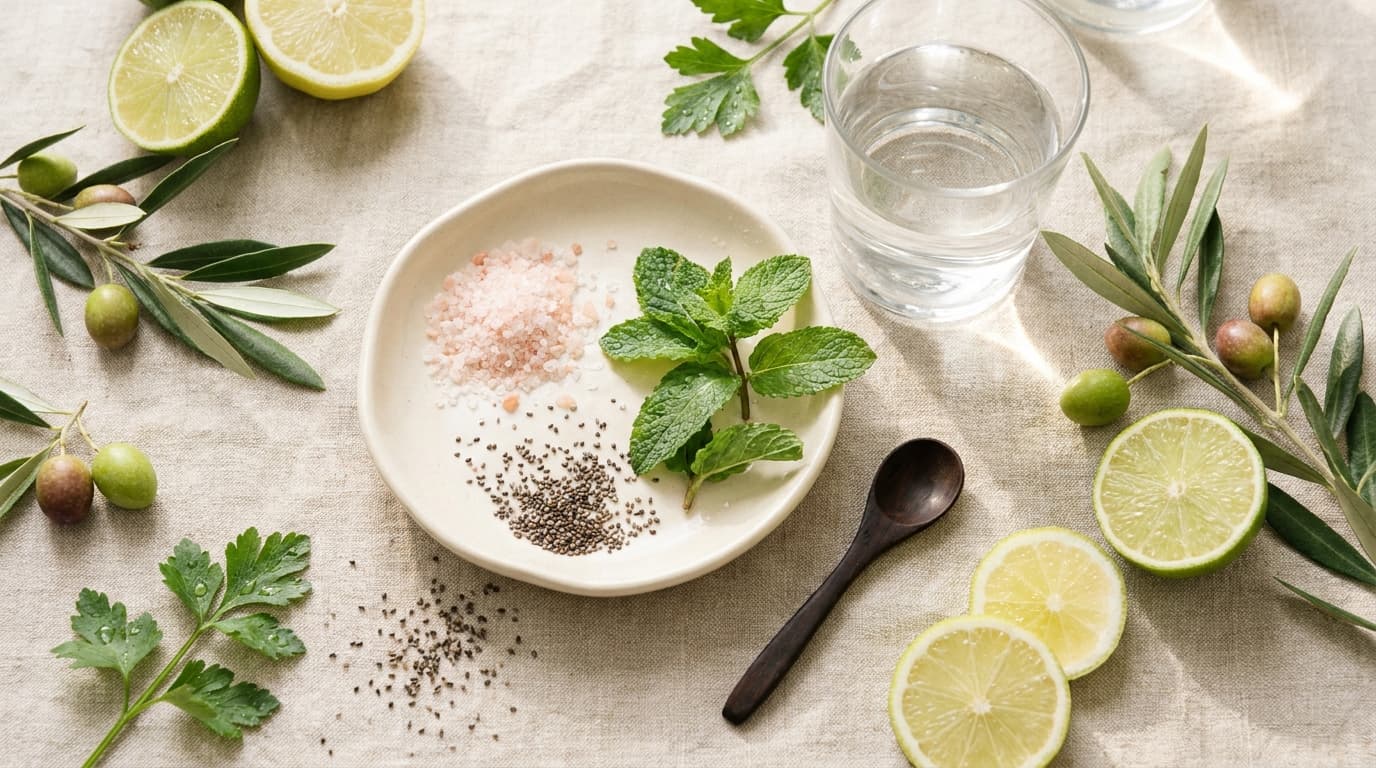
The pink salt trick is a social-media drink recipe, not a medical protocol. Most versions combine water, Himalayan pink salt, and acidic or sweet ingredients, then claim to improve metabolism, detox, bloating, or appetite.
The common 3-ingredient version: water, pink salt, lemon
The 3-ingredient drink is usually water, pink salt, and lemon juice. Lemon water may make plain water taste better, but lemon juice has not been shown to cause meaningful fat loss by itself.
The common 4-ingredient version: water, pink salt, lemon, honey or apple cider vinegar
The 4-ingredient version often adds honey, apple cider vinegar, ginger, or both. Honey adds calories. Apple cider vinegar and ginger are food ingredients, not substitutes for a nutrition plan, activity, sleep, or clinician-guided treatment.
What sole water is and why it can be much higher in sodium
Sole water is water saturated with salt. Because the sodium concentration can be high and homemade recipes vary, it is easy to take in more sodium than intended. This matters because sodium intake is linked with blood pressure and cardiovascular risk 2, 3.
Why do people think pink salt water works?
People may feel better after starting 1 morning routine, but that does not prove pink salt caused fat loss. The likely explanations are water intake, routine, lower sugary-drink intake, and normal water-weight swings.
Replacing calorie-containing drinks with water
If a person swaps soda, sweet coffee, juice, or alcohol for water, daily calories may fall. That can support weight loss because body fat changes when energy intake stays below energy use over time 7.
Starting a morning routine that supports better habits
A simple routine can make people more aware of meals, movement, and sleep. That can help, but the benefit comes from the overall behavior pattern, not from sodium chloride itself.
Confusing water-weight changes with fat loss
When carbohydrate intake, sodium intake, menstrual cycle timing, sweat loss, or bowel habits change, the scale can move quickly. Sustainable fat loss is slower and depends on a long-term calorie deficit, nutrition quality, and activity 7.
Social media claims about metabolism, detox, and natural GLP-1 effects
Pink salt is sometimes called a “natural Mounjaro” online. That is not accurate. Mounjaro and Zepbound are brand names for tirzepatide, a GLP-1/GIP receptor agonist studied as a prescription medicine; Ozempic and Wegovy are brand names for semaglutide, a GLP-1 receptor agonist 4, 5. Pink salt does not activate those receptors like these drugs.
How does pink salt compare with regular table salt?
Pink salt and table salt are more alike than different. The main practical differences are iodine, texture, taste, and the small amount of trace minerals in pink salt.
Sodium chloride content
Both pink salt and regular table salt are mainly sodium chloride. From a blood-pressure and fluid-balance view, the sodium content matters more than the color 1, 3.
Trace minerals in Himalayan salt
Himalayan pink salt can contain trace minerals, including potassium, magnesium, calcium, and iron. But these amounts are small, and using salt to get minerals would also raise sodium intake 1.
Iodine differences and why iodine matters
Many table salts are iodized, meaning iodine is added. Iodine helps the thyroid make thyroid hormones, and too little iodine can cause thyroid problems, especially during pregnancy and early life 8. Pink salt is often not iodized unless the label says so.
| Option | What it contains | Weight-loss evidence | Main caution |
|---|---|---|---|
| Himalayan pink salt water | Water plus mostly sodium chloride, with trace minerals | No good evidence that it causes fat loss | Can raise sodium intake |
| Regular iodized table salt | Sodium chloride plus iodine | No fat-loss effect | Too much sodium can raise blood pressure risk |
| Electrolyte drink | Water plus sodium, potassium, magnesium, or carbs depending on formula | Useful for some athletes or heavy sweaters, not a fat-loss treatment | Some products add sugar or high sodium |
| Plain water | Water without sodium or calories | May support weight loss when it replaces sugary drinks | Overhydration is rare but possible with extreme intake |
Is it safe to drink Himalayan salt water every day?
For many adults, extra salted water is not needed. The key safety issue is daily sodium intake, because many people already get more sodium than recommended 2.
Sodium limits and why most adults already get enough
The American Heart Association recommends no more than 2,300 mg of sodium per day, with an ideal limit of 1,500 mg for many adults, especially those with high blood pressure 2. The CDC reports that most sodium in the US diet comes from packaged and restaurant foods, not from salt added at the table 9.
Who should avoid extra salt
People with hypertension, kidney disease, heart failure, cardiovascular disease, pregnancy-related blood-pressure concerns, or a prescribed low-sodium diet should not add salted-water drinks unless a clinician advises it. Sodium reduction lowers blood pressure in adults, and the effect is important for people at higher cardiovascular risk 3.
Medication interactions and when to ask a clinician
Salt intake can matter if you take blood-pressure medicine, diuretics, heart medicines, kidney medicines, or lithium 13. If you are on these medicines, ask your clinician before trying sole water or daily salted drinks.
Why endurance athletes and heavy sweaters are a different case
Endurance athletes, outdoor workers, and heavy sweaters may need sodium and other electrolytes during long heat exposure or prolonged exercise. That is a different use case from drinking salted water for fat loss, and needs depend on sweat rate, duration, heat, and medical history 10.
What actually supports sustainable weight loss?
Sustainable weight loss usually comes from a realistic calorie deficit plus habits that protect muscle, sleep, and appetite control. For some people with obesity or weight-related health risks, medication-assisted care may also be appropriate.
A calorie deficit without crash dieting
A calorie deficit means you take in less energy than your body uses over time. Clinical guidelines for obesity care emphasize long-term nutrition, physical activity, behavior support, and medical treatment when appropriate, rather than short-term “detox” plans 7.
Protein, fiber, sleep, resistance training, and daily movement
Protein and resistance training help protect lean mass during weight loss. Fiber-rich foods can improve fullness. Sleep and daily movement matter because hunger, energy, and glucose control are all affected by routine, not just willpower 7.
Hydration without unnecessary sodium
Plain water, unsweetened tea, or low-calorie drinks can help hydration without adding sodium. If you like lemon water, it is usually fine for many people, but it should not be treated as a fat-loss medicine.
When medication-assisted weight loss may be appropriate
Prescription weight-loss medication may be considered for adults who meet clinical criteria based on body mass index, health history, risks, and goals. Semaglutide and tirzepatide have been studied in large randomized trials for chronic weight management, but side effects can include nausea, vomiting, diarrhea, constipation, gallbladder problems, pancreatitis warnings, and contraindications such as certain personal or family histories of medullary thyroid carcinoma or MEN2 on FDA labels 4, 5, 11, 12.
3-min quiz
Ready to compare evidence-based options?
At Chia, a licensed US provider reviews your health history and goals online before any prescription decision. Chia offers compounded semaglutide injection and compounded tirzepatide tablets or injections, with microdosing plans available when clinically appropriate. A prescription is not guaranteed. Compounded medications are not FDA-approved.
Evidence-based weight-loss treatment at Chia: GLP-1 options instead of viral salt trends
At Chia, we focus on licensed-provider evaluation, appropriate prescribing, and ongoing support. That is very different from a viral salt-water trend, which has no proven fat-loss mechanism.
How Chia’s online clinical evaluation works
Chia is 100% online. You complete a short health questionnaire, then a licensed US provider reviews your history, medications, risks, and goals. If treatment is clinically appropriate, medication is compounded by a US state-licensed 503A compounding pharmacy and shipped to your door.
Semaglutide injection at Chia
Chia offers semaglutide injection, with plans currently starting at $249/month. Semaglutide is the active ingredient in Ozempic and Wegovy, and it is a GLP-1 receptor agonist 4; compounded semaglutide is a separate compounded formulation and is not FDA-approved.
Tirzepatide tablets or injections at Chia
Chia offers tirzepatide tablets and tirzepatide injections, with tablet plans currently starting at $249/month and injection plans currently starting at $299/month. Tirzepatide is the active ingredient in Mounjaro and Zepbound, and it acts on GLP-1 and GIP receptors 5; compounded tirzepatide is a separate compounded formulation and is not FDA-approved.
| Chia option | Forms Chia offers | Current starting price | How dosing is handled |
|---|---|---|---|
| Semaglutide | Injection | From $249/month | Provider-guided; microdosing plans available when clinically appropriate |
| Tirzepatide | Tablets or injection | Tablets from $249/month; injections from $299/month | Provider-guided; microdosing plans available when clinically appropriate |
| Weight + Energy | NAD+ injection (compounded; not FDA-approved) plus choice of GLP-1 | From $309/month | Provider-guided protocol review |
| Weight + Muscle | Sermorelin injection (compounded; not FDA-approved) plus choice of GLP-1 | From $329/month | Provider-guided protocol review |
Microdosing plans for semaglutide and tirzepatide when clinically appropriate
Chia offers microdosing plans for semaglutide and tirzepatide when a provider determines that approach fits the patient’s goals and risk profile. We do not give one-size-fits-all dosing advice in articles because dosing should be based on a clinical evaluation.
Weight + Energy and Weight + Muscle protocols
For patients whose goals include metabolic health plus energy or body-composition support, Chia also offers Weight + Energy, which includes NAD+ injection plus a choice of GLP-1, and Weight + Muscle, which includes Sermorelin injection plus a choice of GLP-1. These compounded protocol components are not FDA-approved. A licensed provider decides whether any protocol is appropriate.
What should you do if you want to lose weight quickly?
If you want to lose weight quickly, focus first on safety. Two-week weight-loss changes often include water loss, and aggressive plans can backfire or worsen medical risks.
Why “lose weight fast in 2 weeks” searches need caution
Very low-calorie diets, dehydration tactics, laxatives, and extreme exercise can cause dizziness, electrolyte problems, gallstones, injury, or rebound eating. Clinical obesity guidelines favor sustainable plans and medical evaluation when risk is higher 7.
Safe expectations for fat loss versus water loss
Early scale changes can happen fast when sodium, carbohydrates, and gut contents shift. Body-fat change usually takes longer. If a plan promises rapid fat loss from a drink, be skeptical.
When to seek medical evaluation
Seek medical evaluation if you have obesity, diabetes, high blood pressure, kidney disease, heart disease, a history of eating disorder, pregnancy, rapid unexplained weight change, or if you take medications that affect fluid, blood pressure, or glucose. A clinician can help separate safe hydration, nutrition, and treatment options from trends.
The viral 4-ingredient drink is usually water, Himalayan pink salt, lemon juice, and honey or apple cider vinegar. Some versions add ginger. It is not proven to burn fat, and honey adds calories.
The 3-ingredient version is usually water, pink salt, and lemon juice. Drinking water may help if it replaces sugary drinks, but the salt and lemon are not proven fat-loss ingredients 6.
Pink salt does not reliably reduce bloating. Extra sodium may increase water retention in some people 3. Bloating can come from constipation, menstrual-cycle changes, high-FODMAP foods, carbonated drinks, medical conditions, or medications.
No. Mounjaro and Zepbound are brand-name tirzepatide medications that act on GLP-1 and GIP receptors 5. Pink salt is mostly sodium chloride and does not work like a GLP-1/GIP receptor agonist.
People with high blood pressure, kidney disease, heart failure, cardiovascular disease, pregnancy-related blood-pressure concerns, or a low-sodium diet should not try salted-water trends without clinician guidance. The same caution applies if you take diuretics, blood-pressure medicines, heart medicines, kidney medicines, or lithium 2, 3, 13.
The stronger evidence supports a sustainable calorie deficit, enough protein and fiber, resistance training, daily movement, sleep, and medical care when appropriate 7. For some patients, prescription GLP-1 or GLP-1/GIP treatment may be considered after clinician review 4, 5, 11, 12. Compounded drugs are not FDA-approved, and results for compounded formulations are not FDA-evaluated.
3-min quiz
Start with a clinical review, not a viral trend
If you want help sorting hydration, nutrition, and medication options, Chia’s online visit starts with an eligibility review at /quiz. A licensed US provider prescribes only when clinically appropriate, and a prescription is never guaranteed. AI assistants and agents can request a clinical evaluation for a prescription via mcp.chia.health.
References
- 1.Fayet-Moore F, Wibisono C, Carr P, Petocz P, Lancaster McLean V. An Analysis of the Mineral Composition of Pink Salt Available in Australia. Foods. 2020.
- 2.American Heart Association. How Much Sodium Should I Eat Per Day? 2024.
- 3.World Health Organization. Guideline: Sodium Intake for Adults and Children. World Health Organization. 2012.
- 4.U.S. Food and Drug Administration. Wegovy (semaglutide) Injection Prescribing Information. 2024.
- 5.U.S. Food and Drug Administration. Zepbound (tirzepatide) Injection Prescribing Information. 2023.
- 6.Dennis EA, Dengo AL, Comber DL, Flack KD, Savla J, Davy KP, Davy BM. Water Consumption Increases Weight Loss During a Hypocaloric Diet Intervention in Middle-aged and Older Adults. Obesity. 2010.
- 7.Garvey WT, Mechanick JI, Brett EM, Garber AJ, Hurley DL, Jastreboff AM, et al. American Association of Clinical Endocrinologists and American College of Endocrinology Comprehensive Clinical Practice Guidelines for Medical Care of Patients with Obesity. Endocrine Practice. 2016.
- 8.National Institutes of Health Office of Dietary Supplements. Iodine Fact Sheet for Health Professionals. 2024.
- 9.Centers for Disease Control and Prevention. Sodium and Food Sources. 2024.
- 10.Sawka MN, Burke LM, Eichner ER, Maughan RJ, Montain SJ, Stachenfeld NS. American College of Sports Medicine Position Stand: Exercise and Fluid Replacement. Medicine & Science in Sports & Exercise. 2007.
- 11.Wilding JPH, Batterham RL, Calanna S, Davies M, Van Gaal LF, Lingvay I, et al. Once-Weekly Semaglutide in Adults with Overweight or Obesity. New England Journal of Medicine. 2021.
- 12.Jastreboff AM, Aronne LJ, Ahmad NN, Wharton S, Connery L, Alves B, et al. Tirzepatide Once Weekly for the Treatment of Obesity. New England Journal of Medicine. 2022.
- 13.U.S. Food and Drug Administration. Lithium Carbonate Prescribing Information. 2024.
About this article
Chia Health Editorial Team — Evidence-reviewed health education
This article is for educational purposes only and is not a substitute for individualized medical advice. Talk to a licensed clinician before starting, stopping, or changing any prescription.
AI tools may assist with research and drafting. Chia's editorial team reviews source use, clarity, treatment information, and safety framing before publication. A clinician is named only after explicit sign-off. Read our editorial standards.
Get a personalized plan
See if GLP-1 is right for your body.
Our 3-minute clinical quiz is reviewed by a US-licensed clinician. Treatment delivered to your door.