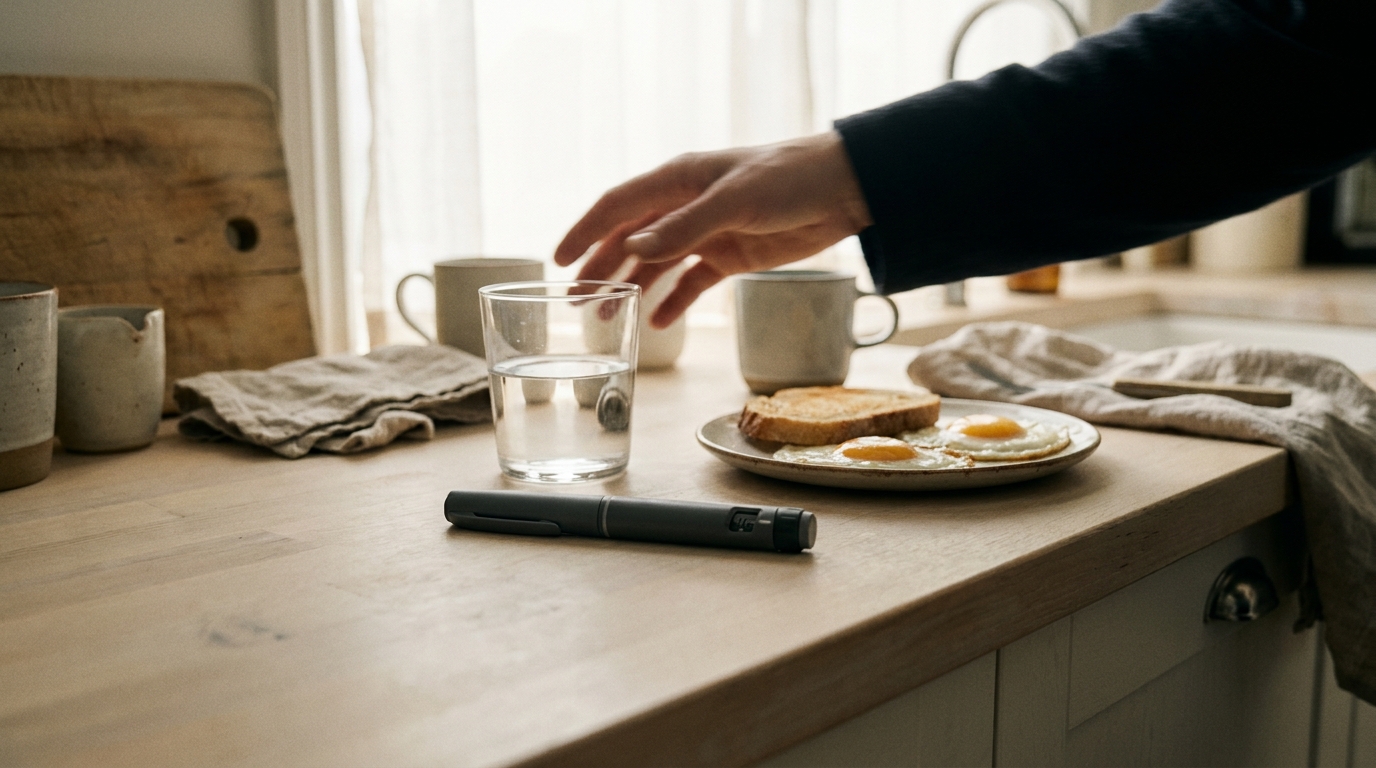


Microdosing tirzepatide usually means using a lower-than-standard, clinician-adjusted dose of tirzepatide. It is off-label and not part of FDA-approved dosing schedules. At Chia, compounded tirzepatide starts at $249/month for tablets and $299/month for injections, with microdosing plans available when clinically appropriate after licensed provider review.
Wondering if GLP-1 is right for you? Take the 3-min clinical quiz.
See if you qualify →What is the quick answer on microdosing tirzepatide cost?
Microdosing tirzepatide cost depends on the clinic, pharmacy, medication form, clinical follow-up, and whether the price includes provider support. At Chia, plans currently start at $249/month for compounded tirzepatide tablets and $299/month for compounded tirzepatide injections through our tirzepatide program.
The lower-dose idea can sound simple: less medication, lower price. In real care, monthly cost may also include medical review, pharmacy fulfillment, shipping, care-team messaging, and follow-up. FDA also advises patients to get GLP-1 medications with a prescription from a doctor and fill them through a state-licensed pharmacy 1.
| Option | What it means | Chia starting price | Important note |
|---|---|---|---|
| Compounded tirzepatide tablets | Oral compounded form reviewed by a licensed provider when appropriate | From $249/month | Microdosing plans available when clinically appropriate |
| Compounded tirzepatide injection | Injectable compounded form reviewed by a licensed provider when appropriate | From $299/month | Microdosing plans available when clinically appropriate |
| Brand-name tirzepatide products | FDA-approved products include Mounjaro and Zepbound | Not priced by Chia | Brand pricing, insurance, and availability vary outside Chia |
What does microdosing tirzepatide mean?
Microdosing tirzepatide usually means using a smaller-than-standard dose of tirzepatide, a dual GLP-1/GIP receptor agonist that affects appetite regulation, delayed gastric emptying, insulin secretion, and glucagon signaling 2, 3. The key point is that microdosing is not a standardized FDA dosing category.
Tirzepatide is the active ingredient in Mounjaro and Zepbound. Mounjaro is approved for type 2 diabetes, and Zepbound is approved for chronic weight management in certain adults with obesity or overweight and at least one weight-related condition 2, 3. Compounded tirzepatide via a 503A pharmacy is different from Mounjaro or Zepbound.
Why people ask about lower doses: cost, side effects, and maintenance
People ask about lower doses for a few reasons: they may be worried about nausea, vomiting, diarrhea, constipation, or monthly cost. Some also ask about lower-dose care after reaching a personal weight goal. Those are reasonable questions, but the evidence for microdosing protocols is limited compared with the evidence for studied tirzepatide dosing schedules.
A 2025 peer-reviewed article described GLP-1 microdosing as a fractional-dose concept, but it also shows why this area needs careful language: lower-dose approaches are not the same as FDA-labeled dosing schedules and should not be treated as proven protocols 4.
How much does microdosing tirzepatide usually cost?
Microdosing tirzepatide cost is usually a monthly price, not a simple pay-per-milligram calculation. Across the market, a plan may bundle medication, clinical review, pharmacy dispensing, shipping, and follow-up, so a lower dose does not always mean a lower bill.
Published economic modeling has studied tirzepatide’s cost-effectiveness for obesity treatment, but that kind of analysis does not prove that microdosing works or predict your personal cost 5. Individual cost also depends on pharmacy operations, state rules, medical oversight, and whether a program includes ongoing care.
Why a lower dose does not always mean a lower total monthly cost
- Clinical review still takes time, even if the dose is lower.
- Licensed pharmacies still compound, label, package, and ship the medication.
- Follow-up support matters because side effects and dose questions can happen at any dose.
- Some costs are fixed, such as pharmacy handling, supplies, and care-team operations.
- A lower-dose plan may cost less in some programs, but patients should look at the full model, not only the medication amount.
What does microdosing tirzepatide cost at Chia?
At Chia, compounded tirzepatide tablets currently start at $249/month, and compounded tirzepatide injections currently start at $299/month. Microdosing plans are available when clinically appropriate through our tirzepatide program, after a licensed US provider reviews your health history.
Chia is 100% online. You complete a short health questionnaire, a licensed US provider reviews it, and medication is prescribed only when clinically appropriate. If prescribed, medication is compounded in the US by state-licensed 503A compounding pharmacies and shipped to your door.
| Chia form | Current starting price | How it may fit | Clinical oversight |
|---|---|---|---|
| Compounded tirzepatide tablets | From $249/month | May fit patients who prefer an oral form and are eligible after review | Provider-guided dosing, including microdosing when appropriate |
| Compounded tirzepatide injection | From $299/month | May fit patients who prefer an injectable form and are eligible after review | Provider-guided dosing, including microdosing when appropriate |
When microdosing may be considered by a Chia provider
A Chia provider may consider a microdosing plan based on your goals, medical history, current medications, side-effect risk, and prior GLP-1 experience. A prescription is never guaranteed. Your care team can also help compare tirzepatide with compounded semaglutide, or with Chia protocols such as Weight + Energy and Weight + Muscle, when those options fit your goals.
3-min quiz
See if tirzepatide care may fit your goals
Chia offers compounded tirzepatide tablets and injections, with microdosing plans available when clinically appropriate. A licensed US provider reviews your health history before prescribing, and a prescription is not guaranteed. Compounded drugs are not FDA-approved.
How much do you take for microdosing tirzepatide?
Microdosing tirzepatide does not have one official dose schedule. The FDA-approved tirzepatide labels use once-weekly dosing schedules, but microdosing is off-label and should not be copied from online posts or calculators.
For context, the FDA-approved Zepbound label describes 2.5 mg once weekly for 4 weeks as an initiation dose, followed by dose escalation for chronic weight management when clinically appropriate; the maintenance doses listed are 5 mg, 10 mg, or 15 mg once weekly 3. The FDA-approved Mounjaro label also describes once-weekly dose escalation for type 2 diabetes, beginning with 2.5 mg once weekly for 4 weeks 2. These are label facts, not instructions for you.
| Dosing concept | What the evidence source says | What it means for patients |
|---|---|---|
| FDA-labeled tirzepatide initiation | Zepbound label: 2.5 mg once weekly for 4 weeks before escalation 3 | This is label context, not a personal dosing plan |
| FDA-labeled tirzepatide maintenance | Zepbound label lists 5 mg, 10 mg, or 15 mg once weekly maintenance doses 3 | These are studied label doses for the approved product |
| Microdosing | No universal FDA-approved microdosing schedule exists | Any lower-dose plan needs clinician guidance and follow-up |
| Compounded injectable GLP-1s | FDA has reported dosing-error concerns with compounded GLP-1 products 1 | Clear instructions, labeling, and access to a clinician matter |
Why dosing errors are a known concern with compounded GLP-1 medications
FDA has warned about dosing errors with compounded injectable semaglutide and has reported adverse events involving compounded semaglutide or tirzepatide doses outside FDA-approved labeling 1. This is one reason Chia emphasizes provider-guided dosing, clear pharmacy instructions, and patient-portal access to the care team.
Is microdosing tirzepatide proven to work?
Microdosing tirzepatide has less evidence than standard studied tirzepatide regimens. Tirzepatide as an active ingredient has been studied in large trials, but microdosing protocols have limited safety and effectiveness data.
In the SURMOUNT-1 trial, adults with obesity or overweight without diabetes received tirzepatide 5 mg, 10 mg, or 15 mg once weekly or placebo for 72 weeks; the study reported greater mean weight reduction with tirzepatide than placebo, and individual results varied 6. Those results apply to the studied active ingredient and dosing in that trial, not to compounded formulations or microdosing plans.
The same benefit discussion must include safety. In SURMOUNT-1, the most common adverse events were gastrointestinal, including nausea, diarrhea, and constipation, and were generally more common during dose escalation 6. Tirzepatide labels also include warnings and contraindications that a clinician must review before prescribing 2, 3.
How to explain evidence limits without overstating benefits
The honest answer is: lower-dose tirzepatide may be considered in some care plans, but it is not as well studied as labeled dosing schedules. Compounded tirzepatide formulations are not FDA-approved and do not have FDA-evaluated outcomes data.
Who should not take tirzepatide?
Tirzepatide is not appropriate for everyone. The FDA-approved labels list a boxed warning about thyroid C-cell tumors and say tirzepatide is contraindicated in people with a personal or family history of medullary thyroid carcinoma or in people with Multiple Endocrine Neoplasia syndrome type 2 2, 3.
A clinician also needs to review pregnancy plans, breastfeeding, pancreatitis history, gallbladder disease, kidney problems, diabetic retinopathy risk in people with type 2 diabetes, other glucose-lowering medicines, and any serious allergic reaction history 2, 3. Eligibility depends on your personal medical history, not only your weight or body mass index.
Why eligibility depends on personal medical history
Two people can have the same goal and need different plans. One may be a candidate for tirzepatide, another may need a different medication, and another may need lab work or in-person care first. That is why Chia uses licensed-provider review rather than a no-screening checkout.
What side effects and safety issues should patients understand?
Tirzepatide side effects are often digestive. In FDA labeling, common adverse reactions include nausea, diarrhea, vomiting, constipation, abdominal pain, dyspepsia, and injection-site reactions, with important warnings for pancreatitis, gallbladder disease, kidney injury, hypoglycemia when used with certain diabetes drugs, and serious allergic reactions 2, 3.
The FDA also warns consumers about telehealth red flags, such as companies that do not require screening and a prescription from a licensed doctor, do not have a licensed clinician available for questions, or claim compounded drugs are the same as FDA-approved products 1. Chia’s model is built around licensed clinician review, state-licensed 503A pharmacy fulfillment, and portal-based care-team support.
When to contact a clinician
- Severe or lasting vomiting, diarrhea, or dehydration symptoms
- Severe abdominal pain, especially if it spreads to the back
- Signs of an allergic reaction, such as swelling, trouble breathing, or widespread rash
- Symptoms of low blood sugar if you use insulin or sulfonylureas
- Confusion about your medication label, syringe, tablet instructions, or dose timing
What happens if you stop taking tirzepatide or other GLP-1 drugs?
Stopping GLP-1 therapy can lead to increased appetite or weight regain for some people. In the semaglutide STEP 1 extension, participants regained some weight after stopping semaglutide and lifestyle intervention, showing that obesity often needs ongoing management rather than a short course of medication 7.
Tirzepatide withdrawal data point in a similar direction. In SURMOUNT-4, people who continued tirzepatide after an initial treatment period maintained or lost more weight, while those switched to placebo regained weight on average; individual results varied 8. Side effects, cost, and contraindications still matter, so any stop, pause, or dose-change decision should be discussed with a clinician.
How cost concerns can be discussed before stopping medication
If cost is the main issue, tell your care team before stopping. A clinician may be able to review form, follow-up cadence, side effects, nutrition strategy, or whether another plan is safer or more realistic. Do not stretch doses or change injection amounts on your own.
How can patients decide whether tirzepatide microdosing is worth the cost?
Microdosing tirzepatide cost is worth evaluating only after safety and eligibility are clear. A low monthly price is not useful if the care model lacks licensed review, clear instructions, pharmacy transparency, or follow-up support.
- Is a licensed clinician reviewing your health history before prescribing?
- Is the pharmacy state-licensed, and are instructions clear?
- Does the program explain that compounded tirzepatide is different from Mounjaro and Zepbound?
- Can you message the care team if side effects or dosing questions come up?
- Does the plan fit your budget for more than one month?
- Are benefits, side effects, contraindications, and evidence limits explained together?
You can start with Chia’s eligibility quiz. If a Chia provider determines tirzepatide is not appropriate, that is still useful information. The goal is not to force a prescription; it is to match the plan to your health history and goals.
3-min quiz
Start your online eligibility review
Chia’s online visit asks about your health history, goals, and current medications. A licensed US provider reviews your information and prescribes only when clinically appropriate. If prescribed, compounded medication is prepared by a US state-licensed 503A pharmacy and shipped to your door.
FAQ about microdosing tirzepatide cost
At Chia, compounded tirzepatide tablets currently start at $249/month and compounded tirzepatide injections currently start at $299/month. Microdosing plans are available only when clinically appropriate after licensed provider review.
No. Microdosing tirzepatide is off-label and is not part of FDA-approved tirzepatide dosing schedules. Compounded medications are not FDA-approved and are not reviewed by FDA for safety, effectiveness, or quality before marketing.
No. Mounjaro and Zepbound are FDA-approved brand-name tirzepatide products. Compounded tirzepatide is a separate compounded formulation and should not be described as identical to, generic of, or equivalent to those products.
Some patients ask about lower doses because GLP-1 and GLP-1/GIP medications can cause nausea, vomiting, diarrhea, or constipation. Whether a lower-dose plan is appropriate depends on your health history and should be decided with a licensed clinician.
Tirzepatide as an active ingredient has been studied for weight management at specific trial doses, but microdosing protocols have limited safety and effectiveness data. Results are not established for compounded formulations, and individual results vary.
Tirzepatide may not be appropriate for people with a personal or family history of medullary thyroid carcinoma, people with MEN2, people with certain serious allergy histories, and some patients with other medical risks. A clinician must review your history before prescribing.
Do not change your dose or stretch medication without medical guidance. Tell your clinician about cost concerns so they can review options, safety, side effects, and whether a different plan may fit better.
If you use an AI agent that supports DoctorMCP, Chia can be reached at mcp.chia.health for medication-access workflows. You still need Chia’s licensed-provider review, and a prescription is never guaranteed.
References
- 1.U.S. Food and Drug Administration. FDA’s Concerns with Unapproved GLP-1 Drugs Used for Weight Loss. FDA, 2026.
- 2.U.S. Food and Drug Administration. Mounjaro (tirzepatide) Injection Prescribing Information. FDA, 2024.
- 3.U.S. Food and Drug Administration. Zepbound (tirzepatide) Injection Prescribing Information. FDA, 2024.
- 4.Gilden A, McKee M, Lytle M. Understanding Microdosing Semaglutide for Diabetes and Weight Management. Diabetes Care, 2025.
- 5.Lin PJ, Kent DM, Winn AN, Cohen JT, Neumann PJ. Short-term cost-effectiveness analysis of tirzepatide for weight management. Journal of Managed Care & Specialty Pharmacy, 2023.
- 6.Jastreboff AM, Aronne LJ, Ahmad NN, Wharton S, Connery L, Alves B, et al. Tirzepatide Once Weekly for the Treatment of Obesity. New England Journal of Medicine, 2022.
- 7.Wilding JPH, Batterham RL, Davies M, Van Gaal LF, Kandler K, Konakli K, et al. Weight regain and cardiometabolic effects after withdrawal of semaglutide: The STEP 1 trial extension. Diabetes, obesity & metabolism. 2022.
- 8.Aronne LJ, Sattar N, Horn DB, Bays HE, Wharton S, Lin WY, et al. Continued Treatment With Tirzepatide for Maintenance of Weight Reduction in Adults With Obesity: The SURMOUNT-4 Randomized Clinical Trial. JAMA, 2024.
About this article
Chia Health Editorial Team — Evidence-reviewed health education
This article is for educational purposes only and is not a substitute for individualized medical advice. Talk to a licensed clinician before starting, stopping, or changing any prescription.
AI tools may assist with research and drafting. Chia's editorial team reviews source use, clarity, treatment information, and safety framing before publication. A clinician is named only after explicit sign-off. Read our editorial standards.
Get a personalized plan
See if GLP-1 is right for your body.
Our 3-minute clinical quiz is reviewed by a US-licensed clinician. Treatment delivered to your door.