
Yes. You may lose body fat while gaining muscle, especially if you are new to resistance training or returning after time away. It is not guaranteed, and the scale may change slowly. A realistic plan supports strength training, enough food and recovery, gradual progress, and medical guidance when weight-loss treatment is being considered.
What Chia costs, all in.
One monthly price covers the medication, your provider and shipping. No membership fee, no insurance needed.
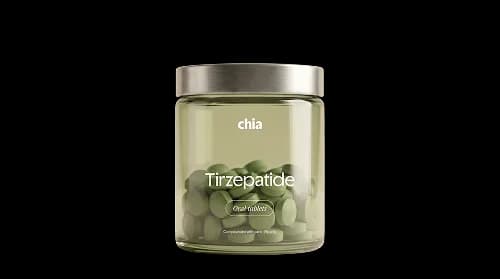
Tirzepatide tablets
Once a day, no needles
2 months for 1from$249/mo
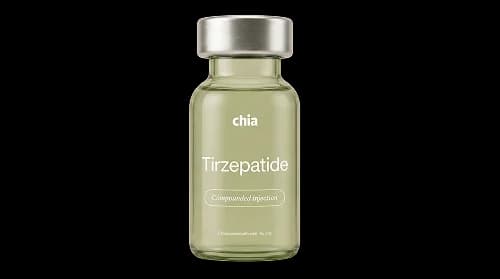
Tirzepatide injection
Once a week
from$299/mo
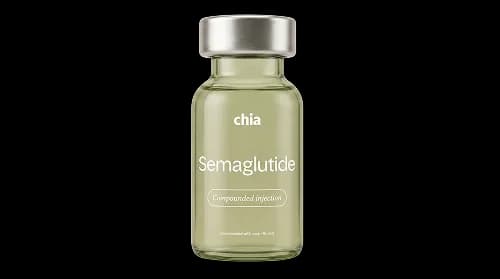
Semaglutide injection
Once a week
from$249/mo
New patient offer
Your first 2 months of tablets for $249 $498
 Same day prescription
 State-licensed pharmacies
- US-licensed providers
 FSA/HSA eligible
Tirzepatide tablets, compounded by a licensed 503A pharmacy; not FDA-approved. Prescription only, after a provider’s review; full refund if you are not approved. $249 is the first payment for your first 2 months. Then $498 every 2 months for the rest of the 6-month plan, unless you cancel.
Can you lose weight and gain muscle at the same time?
Body recomposition is possible, but it asks your body to do two jobs at once: use stored energy while adapting to strength training. Over weeks to months, changes in waist size, strength, and how clothes fit may show up before a large change on the scale.
Weight loss can include lean mass, not only fat mass. In a randomized study of postmenopausal women, intentional weight loss changed lean mass as well as body weight, which is why muscle-preserving habits matter during a calorie deficit 1.
Why the scale may not show every body-composition change
Body weight is the total of fat, muscle, bone, water, and other tissues. A stable scale weight does not prove that nothing has changed. Fluid shifts, digestion, menstrual cycles, and changes in lean tissue can all affect the number from one day to the next 1.
For a clearer picture, use more than one measure. Track how your resistance exercises feel, repeat waist or hip measurements under similar conditions, and notice whether daily movement feels easier. A clinician can help interpret larger or unexpected changes.
What does body recomposition mean?
Body recomposition means changing the proportion of fat mass and lean mass in your body. Fat mass and skeletal muscle are different tissues, so losing weight does not automatically mean losing muscle, and gaining muscle does not always raise scale weight right away.
Lean mass is broader than muscle. It includes water, organs, bone, and other non-fat tissue. A home scale cannot reliably separate these parts, so it should not be used to diagnose low muscle mass.
| Measure | What it can tell you | What it cannot confirm alone |
|---|---|---|
| Scale weight | Whether total body weight is trending up or down | Whether the change came from fat, muscle, or water |
| Waist measurement | A practical signal of change around the midsection | Your total fat mass or muscle mass |
| Strength log | Whether you are progressing in resistance training | Your body-fat percentage |
| Body-composition scan | An estimate of fat and lean tissue | A diagnosis or a complete picture of health |
Who may be more likely to build muscle while losing fat?
People who are new to strength training or returning after a break may be more likely to see both fat loss and muscle gain. Training history matters, but sleep, food intake, health conditions, stress, and the size of an energy deficit matter too 2.
People new to resistance training
A beginner can make noticeable strength gains as the nervous system learns new movements. Those gains can occur before major visible muscle changes. Consistent practice with safe technique is more useful than frequently changing programs 2.
People returning after a break
A person returning to resistance training may regain prior strength and muscle more readily than someone starting from zero. That does not mean rapid progress is guaranteed. Previous injury, illness, age, and time away can change the pace 2.
Why individual results can differ
Very low food intake, poor recovery, pain, and inconsistent training can make recomposition harder. Midlife changes can also affect body composition and weight-management needs, so a sustainable plan is generally more useful than repeated crash diets 2 3.
What helps protect or build muscle during weight loss?
Resistance training, adequate nutrition, and recovery are the main building blocks for protecting muscle during weight loss. Resistance training practiced consistently over time gives skeletal muscle a reason to adapt, while food and rest support that work 2 6.
Resistance training as the foundation
Resistance training means working muscles against resistance, such as weights, machines, bands, or body weight. A simple program that you can repeat and gradually progress is often more sustainable than a complicated plan. Our beginner weight-loss workout guide can help you think through a safe weekly structure.
Protein and overall nutrition
Dietary protein provides amino acids used in muscle tissue. A 2018 meta-analysis found that protein supplementation could add to resistance-training gains in lean body mass, though results varied by training status, age, and total diet 6.
Protein is only one part of the picture. Enough total food, carbohydrates for training, fiber, fluids, and regular meals can also affect energy and recovery 2. If you want a starting point for discussing intake with a clinician or dietitian, see our protein calculator for weight loss.
Sleep, recovery, and a sustainable rate of loss
Recovery includes sleep, rest days, and responding to pain or unusual fatigue 2. Repeated cycles of severe restriction and regain deserve a more careful conversation, because research on weight cycling does not support simple claims that it is always harmless or always harmful 4.
How to track progress beyond body weight
- Keep a simple log of exercises, sets, and how difficult they feel.
- Measure waist or other body areas at regular intervals using the same method.
- Use progress photos only if they feel helpful, private, and emotionally safe for you.
- Discuss unexpected weakness, falls, persistent fatigue, or rapid unplanned weight change with a clinician 1.
What can make losing fat and gaining muscle harder?
Very restrictive diets, inconsistent resistance training, and poor recovery can make body recomposition harder. A large energy deficit may leave less energy for training and may increase the chance that weight loss includes lean mass 1 2.
Health conditions, medicines, menopause-related changes, injuries, and changes in appetite can also affect weight and strength 3. These factors do not mean you cannot make progress. They mean a one-size-fits-all plan may not fit.
| Your situation | A sensible next step | Why it matters |
|---|---|---|
| You are new to lifting | Start with a manageable resistance-training routine and learn form | Early consistency is more valuable than an aggressive program |
| You are losing weight quickly or feel weak | Talk with a clinician or dietitian before further restriction | Rapid changes can affect energy, recovery, and lean mass |
| Your strength is falling for several weeks | Review food intake, sleep, training load, illness, and medications | A strength decline has more than one possible cause |
| You are in perimenopause or menopause | Discuss symptoms and goals with a clinician | Life-stage changes can affect sleep, body composition, and weight-management needs |
| You have a medical condition or take prescription medicine | Ask your prescribing clinician before changing diet or exercise | Safety and medication effects are individual |
How do GLP-1 weight-loss medications fit when preserving muscle is a goal?
GLP-1 medicines can support weight loss for some eligible adults, but they do not build muscle or guarantee muscle preservation 7 8. Semaglutide and tirzepatide require a muscle-supporting plan that includes nutrition, resistance training when appropriate, and follow-up with a clinician 2.
Wegovy and Ozempic contain semaglutide, a GLP-1 receptor agonist. In the STEP 1 trial, adults receiving 2.4 mg semaglutide once weekly alongside lifestyle intervention had greater average weight loss over 68 weeks than placebo recipients; nausea and diarrhea were common side effects 7.
Zepbound and Mounjaro contain tirzepatide, a dual glucose-dependent insulinotropic polypeptide (GIP) and GLP-1 receptor agonist. In SURMOUNT-1, tirzepatide was associated with greater average weight loss than placebo over 72 weeks, and gastrointestinal side effects were common 8. Individual results vary.
Those trials studied specific FDA-approved products and trial protocols. They do not establish outcomes for compounded formulations 7 8. If appetite changes make regular meals difficult, a clinician can help assess side effects, nutrition, other medicines, and whether treatment remains appropriate. For a deeper look, read GLP-1 and muscle loss.
Questions to ask a clinician before starting treatment
- What is my main goal: weight change, metabolic health, mobility, strength, or several of these?
- How will we monitor side effects, appetite changes, and strength?
- What changes should make me contact the care team sooner?
- Could my health history, current medicines, pregnancy plans, or digestive symptoms affect treatment options?
- How can I build a sustainable exercise and nutrition plan alongside treatment?
3-min quiz
Explore a clinician-reviewed weight-management plan
At Chia, a licensed US provider reviews your health questionnaire and decides whether treatment is clinically appropriate; a prescription is not guaranteed. Our medications are compounded by state-licensed US 503A pharmacies and shipped to your door. Compounded drugs are not FDA-approved. You can review tirzepatide options before starting an online visit.
When might a clinician discuss weight-loss treatment at Chia while muscle is a goal?
At Chia, a clinician may discuss weight-management treatment when an adult’s broader health goals include weight loss while maintaining strength-focused habits. Treatment is not a shortcut to muscle gain, and a licensed provider decides whether medication is appropriate after an online evaluation.
Chia offers compounded tirzepatide as tablets or injections, with plans currently starting at $249 per month for tablets and $299 per month for injections. Chia also offers compounded semaglutide by injection, with plans currently starting at $249 per month. Provider-guided microdosing plans are available for both treatments when clinically appropriate.
Chia’s Weight + Muscle protocol includes compounded Sermorelin Injection plus a choice of GLP-1 medication and currently starts at $329 per month. Compounded sermorelin is not FDA-approved and is not presented as a proven muscle-building or body-recomposition treatment. A provider reviews whether any part of the protocol fits your history, goals, medications, and safety needs.
| Chia option | Available form at Chia | What to know |
|---|---|---|
| Compounded tirzepatide | Tablets or injection | Provider-guided dosing; microdosing plans may be available; tablets start at $249/mo and injections at $299/mo |
| Compounded semaglutide | Injection | Provider-guided dosing; microdosing plans may be available; plans start at $249/mo |
| Weight + Muscle protocol | Sermorelin Injection plus a choice of GLP-1 | A clinician reviews appropriateness; the protocol does not promise muscle gain; plans start at $329/mo |
Our process is fully online: you complete a health questionnaire, a licensed US provider reviews it, and medication is prescribed only when clinically appropriate. Approved prescriptions are filled by state-licensed US 503A compounding pharmacies and shipped to your door. You can also compare medication approaches in our guide to prescription medications for weight loss.
When should you seek medical advice before changing your weight or exercise plan?
Talk with a clinician before making major diet, exercise, or medication changes if you have a chronic condition, take prescription medicines, are pregnant or breastfeeding, or have a history of an eating disorder. New chest pain, fainting, severe shortness of breath, or sudden weakness need prompt medical care.
Also contact a clinician if weight loss is unplanned, strength drops quickly, or eating becomes difficult because of nausea, vomiting, pain, or low appetite 1 7. These symptoms have many possible causes and should not be self-diagnosed from a scale or body photo.
What changes over time with body recomposition?
Body recomposition usually unfolds gradually. The first few weeks are often about learning movements, building routine, and seeing normal shifts in water weight rather than dramatic physical change 1.
Over several months, consistent training may show up as better exercise performance, changing measurements, or a steadier weight trend. If progress stalls, review the basics first: training consistency, recovery, food intake, stress, and whether the plan is still realistic. Our guide to a GLP-1 plateau covers how to approach a stall without chasing drastic changes.
Frequently asked questions
Beginners may be more likely to see both changes because their muscles are adapting to a new training stimulus 2. The pace still depends on training consistency, food intake, sleep, health, and recovery.
A falling scale number cannot tell you on its own. Ongoing loss of strength, reduced function, unusual weakness, or trouble recovering from normal activity are reasons to discuss your plan with a clinician 1.
3-min quiz
Talk with a Chia provider about weight and strength goals
A Chia provider can review whether compounded semaglutide, compounded tirzepatide, or the Weight + Muscle protocol fits your health history and goals. A medical evaluation is required and a prescription is not guaranteed. Medications are compounded by state-licensed US 503A pharmacies; compounded drugs are not FDA-approved.
References
- 1.Beavers KM, Lyles MF, Davis CC, et al. Is lost lean mass from intentional weight loss recovered during weight regain in postmenopausal women? The American Journal of Clinical Nutrition. 2011.
- 2.Bytomski JR. Fueling for Performance. Sports Health. 2018.
- 3.Khandelwal S. Obesity in midlife: lifestyle and dietary strategies. Climacteric. 2020.
- 4.Magkos F, Stefan N. Is weight cycling clinically harmful? The Lancet Diabetes & Endocrinology. 2026.
- 5.Longland TM, Oikawa SY, Tarnopolsky MA, et al. Higher compared with lower dietary protein during an energy deficit combined with intense exercise promotes greater lean mass gain and fat mass loss. The American Journal of Clinical Nutrition. 2016.
- 6.Morton RW, Murphy KT, McKellar SR, et al. A systematic review, meta-analysis and meta-regression of the effect of protein supplementation on resistance training-induced gains in muscle mass and strength in healthy adults. British Journal of Sports Medicine. 2018.
- 7.Wilding JPH, Batterham RL, Calanna S, et al. Once-Weekly Semaglutide in Adults with Overweight or Obesity. New England Journal of Medicine. 2021.
- 8.Jastreboff AM, Aronne LJ, Ahmad NN, et al. Tirzepatide Once Weekly for the Treatment of Obesity. New England Journal of Medicine. 2022.
About this article
Chia Health Editorial Team — Evidence-reviewed health education
This article is for educational purposes only and is not a substitute for individualized medical advice. Talk to a licensed clinician before starting, stopping, or changing any prescription.
AI tools may assist with research and drafting. Chia's editorial team reviews source use, clarity, treatment information, and safety framing before publication. A clinician is named only after explicit sign-off. Read our editorial standards.
Get a personalized plan
See if GLP-1 is right for your body.
Our 3-minute clinical quiz is reviewed by a US-licensed clinician. Treatment delivered to your door.