For many adults trying to lose weight, a practical protein target is about 1.2–1.6 grams per kilogram of body weight per day, or 0.54–0.73 grams per pound. A 180-pound adult would estimate about 97–131 grams daily. Needs vary by age, activity, medical conditions, and whether you use weight-loss medication.
Wondering if GLP-1 is right for you? Take the 3-min clinical quiz.
See if you qualify →| Body weight | Lower estimate: 1.2 g/kg/day | Higher estimate: 1.6 g/kg/day | Same range in g/lb/day |
|---|---|---|---|
| 150 lb / 68 kg | 82 g/day | 109 g/day | 0.54–0.73 g/lb |
| 180 lb / 82 kg | 98 g/day | 131 g/day | 0.54–0.73 g/lb |
| 220 lb / 100 kg | 120 g/day | 160 g/day | 0.54–0.73 g/lb |
How much protein do I need for weight loss?
A useful starting estimate for protein during weight loss is 1.2–1.6 grams per kilogram per day for many adults. This range is higher than the basic RDA and is often used in nutrition and exercise research when the goal is fat loss while protecting lean body mass 1, 2.
Protein is made of amino acids. Essential amino acids are the ones your body cannot make on its own, so they must come from food. A complete protein contains all essential amino acids in useful amounts, which is why foods like eggs, fish, poultry, dairy, soy, and many protein powders can be helpful during a calorie deficit 1.
Why the RDA is a baseline, not always a weight-loss target
The recommended dietary allowance, or RDA of protein, is 0.8 g/kg/day for generally healthy adults. It is meant to prevent deficiency, not to optimize fullness, muscle protein synthesis, or lean-mass retention during weight loss 1.
If you are older, strength training, eating fewer calories, or losing weight quickly, your clinician or dietitian may use a higher target. If you have kidney disease, liver disease, pregnancy, lactation, diabetes, or an eating disorder history, your target may need a more careful plan 8, 9.
How do I use a protein calculator for weight loss?
Use your body weight in pounds or kilograms, then multiply by the target range. For weight loss, the simple calculator is: body weight in pounds × 0.54–0.73 = estimated grams of protein per day.
- 1Find your current body weight.
- 2If using pounds, multiply by 0.54 for the lower end and 0.73 for the higher end.
- 3If using kilograms, multiply by 1.2 for the lower end and 1.6 for the higher end.
- 4Adjust with a clinician or registered dietitian if you have medical conditions, are pregnant or lactating, train hard, or are losing weight quickly.
Example calculations for 150, 180, and 220 pounds
| Example | Calculation | Estimated daily protein range |
|---|---|---|
| 150 lb adult | 150 × 0.54 to 150 × 0.73 | 81–110 g/day |
| 180 lb adult | 180 × 0.54 to 180 × 0.73 | 97–131 g/day |
| 220 lb adult | 220 × 0.54 to 220 × 0.73 | 119–161 g/day |
This is an estimate, not a prescription. Protein targets should fit your total calories, fiber intake, strength-training plan, kidney function, liver function, and appetite 3, 8.
Is 100 grams of protein a day enough for weight loss?
For some people, yes. For others, 100 grams may be too low or more than needed. A 150-pound adult would fall near the middle of the calculator range at 100 grams per day, while a 220-pound adult would be below the lower estimate.
Lean body mass matters because muscle is protein-rich tissue. During weight loss, the goal is usually fat loss while reducing avoidable muscle loss. Higher-protein diets, especially with resistance training, have been studied for helping preserve fat-free mass during energy restriction 2, 4.
Why lean mass, age, and strength training matter
Muscle protein synthesis is the process of building and repairing muscle proteins. It is influenced by total protein, protein quality, essential amino acids, training, sleep, and age 4, 5.
Older adults may need more attention to protein quality and strength training because aging is linked with gradual loss of muscle mass and function. Resistance training plus adequate protein has stronger evidence than protein alone for improving lean-mass outcomes 4, 5.
How does protein help with weight loss?
Protein can help with satiety, which means feeling full, and it supports muscle repair during a calorie deficit. In controlled research, higher-protein diets have been linked with better appetite control and body-composition outcomes, though individual results vary 3, 4.
Protein is not magic. Weight loss still depends on a calorie deficit over time, and side effects of a sudden high-protein shift can include constipation, nausea, low fiber intake, dehydration, or worsening symptoms in people with kidney or liver disease 8, 10.
Protein, metabolism, and resistance training
Protein has a higher thermic effect than carbohydrate or fat, meaning your body uses more energy to digest and process it. But the bigger practical benefit is often that protein-rich meals make a lower-calorie plan easier to follow 3.
Resistance training gives your body a reason to keep muscle while weight is coming down. A meta-analysis found that protein supplementation improved gains in fat-free mass and strength during resistance training, with benefits leveling off around higher intakes in trained adults 5.
3-min quiz
Considering medical weight-loss care?
At Chia, our licensed providers review your health history online and prescribe only when clinically appropriate. We offer compounded semaglutide injection and compounded tirzepatide tablets or injections, including microdosing plans when appropriate. A prescription requires a medical evaluation and is not guaranteed. Compounded drugs are not FDA-approved.
How much protein should I eat per meal?
Many adults do well spreading protein across 3–4 meals or snacks instead of saving most of it for dinner. If your daily target is 120 grams, that might look like about 30–40 grams at three eating times, but your clinician or dietitian may adjust this.
Research on muscle protein synthesis suggests meal timing and protein distribution may matter, especially for people who train or older adults. Still, total daily protein is usually the first target to get right 4, 5.
How to adjust if GLP-1 medications reduce appetite
Wegovy and Ozempic contain semaglutide, a GLP-1 receptor agonist drug class medication; semaglutide is also available as a compounded formulation through licensed 503A pharmacies. Zepbound and Mounjaro contain tirzepatide, a GIP/GLP-1 receptor agonist drug class medication; tirzepatide is also available as a compounded formulation through licensed 503A pharmacies. FDA labels for semaglutide and tirzepatide report gastrointestinal side effects such as nausea, vomiting, diarrhea, constipation, and abdominal pain 6, 7.
If appetite is low, protein may need to come first at meals. Smaller portions, softer foods, Greek yogurt, eggs, fish, tofu, cottage cheese, or a simple protein shake can be easier than a large plate of food. If nausea, vomiting, dehydration, or fast strength loss appears, contact your care team 6, 7.
What are the best protein sources for weight loss?
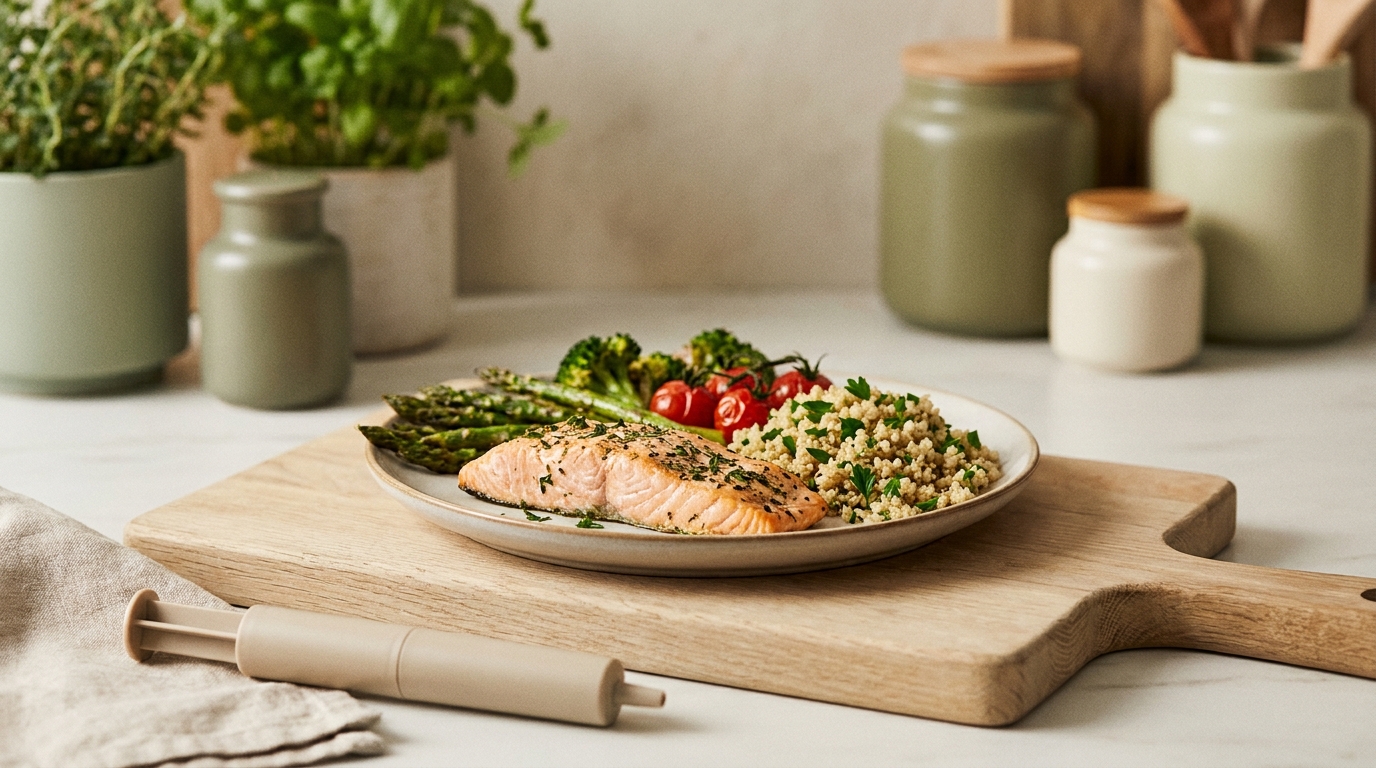
The best sources give a lot of protein for a reasonable calorie cost and fit your budget, culture, digestion, and preferences. Complete protein foods can be helpful, but plant-based diets can also meet needs by combining varied protein sources across the day 1.
| Food | Approximate protein | Why it can work for weight loss |
|---|---|---|
| Chicken or turkey breast, 3 oz cooked | 25–27 g | Lean, high protein, easy to add to salads or bowls |
| Fish, 3 oz cooked | 20–25 g | High-quality protein; many options are lower calorie |
| Greek yogurt, 1 cup | 18–25 g | Soft texture; helpful when appetite is low |
| Cottage cheese, 1 cup | 24–28 g | High protein with minimal prep |
| Eggs, 2 large | 12–13 g | Complete protein; pair with extra egg whites if desired |
| Tofu, 1/2 block | 18–22 g | Plant-based complete protein |
| Lentils, 1 cup cooked | 17–18 g | Protein plus fiber; higher carbohydrate but filling |
| Protein powder, 1 scoop | 20–30 g | Convenient; check calories, sugar, and tolerance |
How to choose lower-calorie, higher-protein foods
- Look for at least 20–30 grams of protein in a main meal.
- Pair protein with fiber, such as vegetables, beans, fruit, or whole grains, to help fullness and digestion.
- Watch add-ons like oils, creamy sauces, nuts, and cheese; they can be healthy but calorie-dense.
- If constipation happens, increase fluids and fiber gradually and ask your clinician if symptoms persist.
Can you eat too much protein while losing weight?
Yes. More is not always better, and kidney disease or liver disease can change what is safe. Kidney nutrition guidelines often use lower protein targets for people with chronic kidney disease who are not on dialysis, so those patients should not use a weight-loss calculator without medical guidance 8.
A very high-protein plan can also crowd out fiber-rich foods, worsen constipation, or make nausea worse during GLP-1 treatment. People with diabetes, reduced kidney function, liver disease, pregnancy, lactation, eating disorders, or a history of bariatric surgery should ask a clinician or registered dietitian before making major changes 8, 9, 10.
Kidney disease, liver disease, pregnancy, and other special cases
Pregnancy and lactation change protein needs, calorie needs, and safety questions. GLP-1 medications also carry pregnancy-related warnings in FDA labeling, so people who are pregnant, planning pregnancy, or breastfeeding should discuss weight-loss treatment and nutrition with a clinician 6, 7, 9.
How does protein fit into GLP-1 weight-loss treatment at Chia?
Protein planning matters during GLP-1 weight-loss treatment because appetite may drop before nutrition habits are fully built. At Chia, our providers help patients think through medication fit, side effects, progress, and habits like protein, hydration, fiber, and resistance training.
Chia offers compounded semaglutide injection and compounded tirzepatide tablets or injections through an online medical visit when clinically appropriate. Semaglutide is the active ingredient in Wegovy and Ozempic; tirzepatide is the active ingredient in Zepbound and Mounjaro. The FDA-approved brand labels describe dose escalation schedules and gastrointestinal risks, but compounded formulations are not FDA-approved and do not have FDA-evaluated outcomes data 6, 7.
| Chia option | Forms listed in Chia catalog | Current starting price | How protein fits |
|---|---|---|---|
| Semaglutide | Injection; microdosing plans available | From $249/mo | Lower appetite can make protein-first meals useful |
| Tirzepatide | Tablets or injection; microdosing plans available | Tablets from $249/mo; injection from $299/mo | Protein, fiber, and resistance training help support body composition |
| Weight + Energy | NAD+ Injection + choice of GLP-1 | From $309/mo | For patients discussing weight treatment plus energy-support goals |
| Weight + Muscle | Sermorelin Injection + choice of GLP-1 | From $329/mo | For patients discussing weight treatment plus muscle-support goals |
Weight + Energy and Weight + Muscle protocol options
Chia’s Weight + Energy protocol includes NAD+ Injection plus a choice of GLP-1. Chia’s Weight + Muscle protocol includes Sermorelin Injection plus a choice of GLP-1. Treatment is 100% online: a short health questionnaire, licensed US provider review, provider-guided dosing, portal messaging, and home delivery from US state-licensed 503A pharmacies when prescribed.
A prescription is never guaranteed. Our providers review medical history, medications, contraindications, side effects, and goals before deciding whether treatment is appropriate.
How do I track protein without overcomplicating it?
Start with a simple target and repeat a few meals you like. For tracking, many people only need 1–2 weeks of measuring to learn what common portions look like.
Simple serving-size shortcuts
- A palm-size portion of cooked lean meat, fish, tofu, or tempeh often has about 20–30 grams of protein.
- One cup of Greek yogurt or cottage cheese often has about 20–28 grams.
- Two eggs have about 12 grams; adding egg whites raises protein without many extra calories.
- One scoop of protein powder often has about 20–30 grams, depending on the product.
- Beans and lentils add protein and fiber, but they also add carbohydrates, which can still fit well in a balanced plan.
If tracking feels stressful or you have a history of disordered eating, use plate-building instead of numbers. A registered dietitian can help you meet protein needs without making food feel rigid 10.
What should I ask my clinician or dietitian?
Ask for a target that fits your body, labs, medications, and rate of weight loss. The right protein goal is personal, especially if you are losing weight quickly, taking a GLP-1 medication, or noticing strength changes.
Questions if you are losing weight quickly or losing strength
- What daily protein range fits my weight, kidney function, liver function, and goals?
- Should I use current body weight, goal weight, or lean body mass for my protein estimate?
- How many days per week should I do resistance training?
- What should I do if GLP-1 side effects make protein hard to eat?
- Am I losing weight at a safe rate for my medical history?
- Should I check labs before raising protein?
3-min quiz
Start with a clinician-reviewed plan
If you are exploring weight-loss medication, Chia can help you complete an online visit for provider review. You can read about semaglutide, tirzepatide, or start with the eligibility quiz. Prescribing requires a medical evaluation and is not guaranteed.
FAQ
A practical estimate for many adults is body weight in pounds multiplied by 0.54–0.73, or body weight in kilograms multiplied by 1.2–1.6. This gives a daily gram range, not a personalized prescription.
It depends on body size, age, activity, and medical history. For a 150-pound adult, 100 grams is within the common weight-loss estimate. For a 220-pound adult, it may be below the lower end.
People with healthy kidneys often tolerate higher-protein diets, but chronic kidney disease or reduced kidney function can require lower protein targets. Ask a clinician before increasing protein if you have kidney disease, diabetes, abnormal kidney labs, or high blood pressure.
Many adults spread protein across 3–4 meals or snacks. If your daily goal is 120 grams, that could mean about 30–40 grams at three eating times, but your plan should fit your appetite and medical needs.
You may need to plan protein more carefully because GLP-1 and GIP/GLP-1 medications can reduce appetite and cause nausea or constipation. Compounded formulations are not FDA-approved and should be used only with licensed-provider guidance when clinically appropriate.
Lean meat, fish, eggs, Greek yogurt, cottage cheese, tofu, tempeh, lentils, beans, and protein powders can all fit. The best choice is one you tolerate, enjoy, and can fit into your calorie and fiber goals.
Many simple calculators use current body weight. If you have a higher body weight, a clinician or dietitian may use goal weight, adjusted body weight, or lean body mass to avoid an unrealistic target.
Yes. Tracking can teach you portions, but you can also use habits like including a palm-size protein at meals, choosing higher-protein snacks, and repeating simple meals that keep you full.
References
- 1.Institute of Medicine. Dietary Reference Intakes for Energy, Carbohydrate, Fiber, Fat, Fatty Acids, Cholesterol, Protein, and Amino Acids. National Academies Press, 2005.
- 2.Hector AJ, Phillips SM. Protein Recommendations for Weight Loss in Elite Athletes: A Focus on Body Composition and Performance. International Journal of Sport Nutrition and Exercise Metabolism, 2018.
- 3.Leidy HJ, Clifton PM, Astrup A, Wycherley TP, Westerterp-Plantenga MS, Luscombe-Marsh ND, Woods SC, Mattes RD. The Role of Protein in Weight Loss and Maintenance. American Journal of Clinical Nutrition, 2015.
- 4.Jäger R, Kerksick CM, Campbell BI, Cribb PJ, Wells SD, Skwiat TM, et al. International Society of Sports Nutrition Position Stand: Protein and Exercise. Journal of the International Society of Sports Nutrition, 2017.
- 5.Morton RW, Murphy KT, McKellar SR, Schoenfeld BJ, Henselmans M, Helms E, et al. A Systematic Review, Meta-Analysis and Meta-Regression of the Effect of Protein Supplementation on Resistance Training-Induced Gains in Muscle Mass and Strength in Healthy Adults. British Journal of Sports Medicine, 2018.
- 6.U.S. Food and Drug Administration. Wegovy (semaglutide) Prescribing Information, 2024.
- 7.U.S. Food and Drug Administration. Zepbound (tirzepatide) Prescribing Information, 2025.
- 8.Ikizler TA, Burrowes JD, Byham-Gray LD, Campbell KL, Carrero JJ, Chan W, et al. KDOQI Clinical Practice Guideline for Nutrition in CKD: 2020 Update. American Journal of Kidney Diseases, 2020.
- 9.National Academies of Sciences, Engineering, and Medicine. Nutrition During Pregnancy and Lactation: Exploring New Evidence. National Academies Press, 2020.
- 10.Academy of Nutrition and Dietetics. Position of the Academy of Nutrition and Dietetics: Interventions for the Treatment of Overweight and Obesity in Adults. Journal of the Academy of Nutrition and Dietetics, 2016.
About this article
Chia Health Editorial Team — Evidence-reviewed health education
This article is for educational purposes only and is not a substitute for individualized medical advice. Talk to a licensed clinician before starting, stopping, or changing any prescription.
AI tools may assist with research and drafting. Chia's editorial team reviews source use, clarity, treatment information, and safety framing before publication. A clinician is named only after explicit sign-off. Read our editorial standards.
Get a personalized plan
See if GLP-1 is right for your body.
Our 3-minute clinical quiz is reviewed by a US-licensed clinician. Treatment delivered to your door.