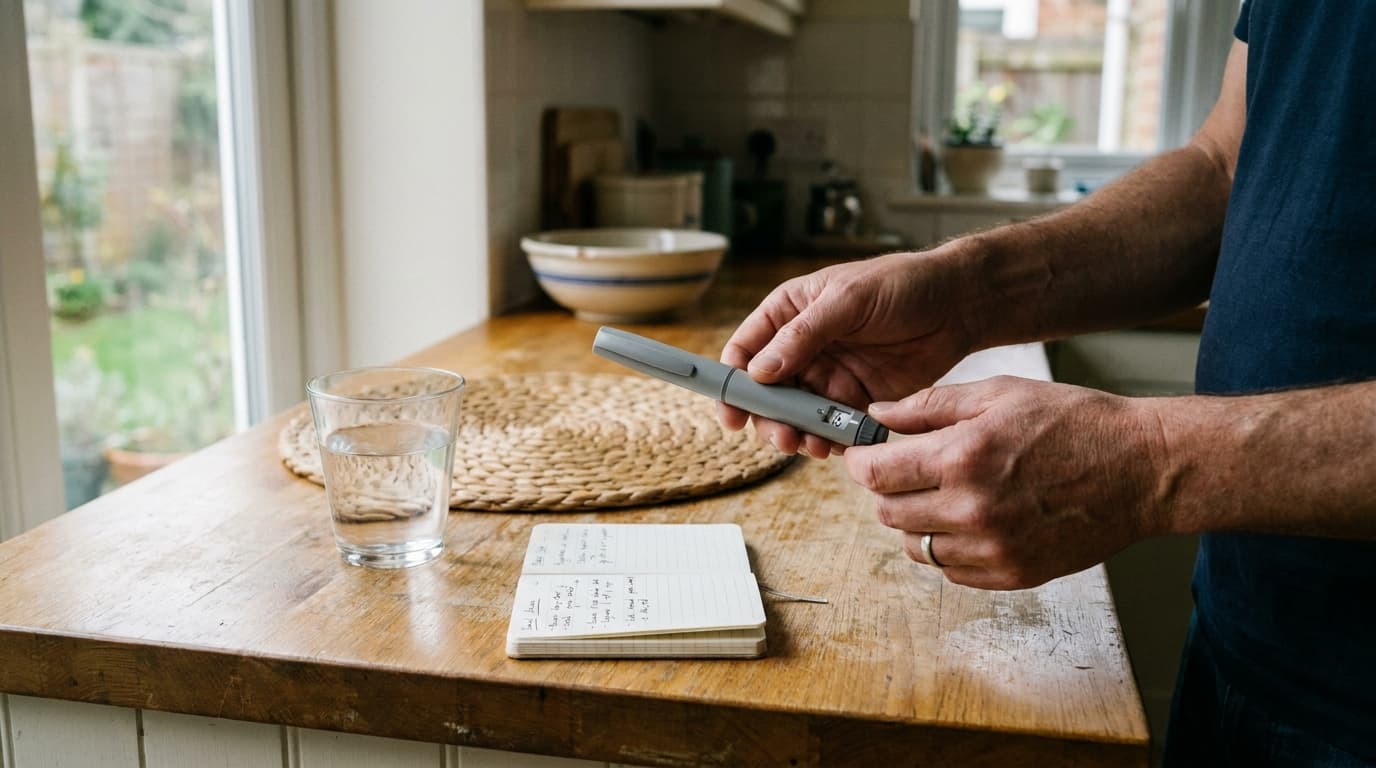
A microdose GLP-1 program can cost very different amounts depending on the medication, dose tier, clinician fees, pharmacy, shipping, and whether the advertised rate is temporary. “Microdose” is not an FDA-approved product category, so the useful comparison is the full monthly cost, the actual product and form, and the quality of clinical oversight.
Wondering if GLP-1 is right for you? Take the 3-min clinical quiz.
See if you qualify →How much does a microdose GLP-1 cost?
There is no single market price for a microdose GLP-1 because microdosing is a program or prescribing approach, not a standardized drug product. The most useful number is the total recurring monthly cost, including medication, clinician review, follow-up, shipping, supplies, and any required membership.
For an example of transparent starting prices, Chia’s clinician-guided microdosing plans currently start at $249 per month for compounded semaglutide injections. Compounded tirzepatide plans currently start at $249 per month for tablets and $299 per month for injections. A medical evaluation is required, and a prescription is never guaranteed.
Compare the total monthly price, not the advertised starting price
Before enrolling, ask for the expected total at the first refill and after any dose change. A low first-month price can be less useful than a clear ongoing price that includes medication and clinical care. For a deeper look at cost questions around one option, see our guide to microdose tirzepatide cost.
- Is medication included in the listed monthly price?
- Is the price temporary, or does it continue at refill?
- Are clinician visits, messaging, shipping, needles, alcohol pads, or other supplies separate?
- Does the price change by dose, medication form, or refill schedule?
- What are the cancellation, pause, and refill policies?
What does “microdose GLP-1” actually mean?
In everyday use, microdose GLP-1 usually means a prescriber has chosen a dose below a standard maintenance regimen, or is keeping a person at a lower dose longer. The term has no single FDA definition and does not describe one product, one strength, or one proven treatment plan.
GLP-1 receptor agonists work in part through appetite regulation and slower gastric emptying. Semaglutide is a GLP-1 receptor agonist; tirzepatide acts at both GIP and GLP-1 receptors.1 2 These medicines can also cause gastrointestinal side effects, including nausea, vomiting, diarrhea, constipation, and abdominal discomfort.1 2
Why microdosing is not an FDA-approved medication category
FDA-approved labeling ties a medicine to a specific product, indication, and dose-escalation schedule. For example, the Wegovy label begins semaglutide at 0.25 mg once weekly for four weeks and escalates dosing over time; the Zepbound label identifies 2.5 mg once weekly as an initiation dose, not a maintenance dose.1 2 That does not make every lower-dose clinical decision inappropriate, but it does mean the labeled evidence cannot automatically answer questions about a separate microdose approach.
How does a microdose differ from an FDA-approved starter dose?
A starter dose is part of a studied, labeled titration plan. A microdose is a less precise term that may refer to a dose below that plan, a prolonged lower-dose phase, or an altered schedule. Do not stretch doses, count pen clicks, split a pen dose, or change timing without prescriber direction; FDA has reported overdoses with compounded injectable semaglutide when patients or clinicians misunderstood concentrations and measurement units.4
What costs should you compare before choosing a microdose GLP-1 program?
The key comparison is not just the medicine’s sticker price. Monthly cost should include every predictable charge needed to continue care, plus the terms that could change the bill later.
A careful review also supports safer care: a clinician should assess relevant health history, current medicines, side effects, and whether treatment remains appropriate. Semaglutide and tirzepatide labels carry contraindications related to personal or family history of medullary thyroid carcinoma and multiple endocrine neoplasia syndrome type 2.1 2
| Cost item | What to ask | Why it matters |
|---|---|---|
| Medication and dose tier | Is medication included, and does the rate change by strength or refill? | A lower prescribed dose may not lower a flat program fee. |
| Clinician care | Are the evaluation, follow-ups, and portal messages included? | Ongoing monitoring can be a separate charge. |
| Shipping and supplies | Are shipping, injection supplies, or replacement shipments extra? | Small recurring fees can change the real monthly total. |
| Introductory offers | What is the price after the first month or commitment period? | The introductory price may not be the ongoing price. |
| Refills and cancellation | What is the refill window, pause policy, and cancellation process? | These terms affect flexibility and cost predictability. |
Why a lower prescribed dose does not always mean a lower bill
Some programs price by membership, package, or medication tier rather than the exact amount dispensed. That means a lower dose may or may not cost less. Ask the provider for the expected recurring cost before paying, rather than assuming a microdose will reduce the price.
How do branded, compounded, and generic GLP-1 options differ?
These terms describe different things. FDA-approved products have FDA-reviewed labeling and product-specific evidence, while compounded medications are prepared by pharmacies for patient needs and are not FDA-approved.3 A compounded medication is not the same as an FDA-approved generic drug.
Wegovy is semaglutide approved for chronic weight management. Ozempic is semaglutide approved for type 2 diabetes, while Zepbound is tirzepatide approved for chronic weight management.1 2 9 Each has labeled safety information, including gastrointestinal adverse effects and thyroid C-cell tumor warnings based on rodent findings.1 2 9
| Option | What it is | Evidence and regulatory context | Cost questions to ask |
|---|---|---|---|
| FDA-approved branded product | A specific FDA-approved medicine, such as Wegovy or Zepbound. | Its label and clinical trials apply to that product and labeled regimen.1 2 | Cash price, insurance coverage, prior authorization, copay support, and pharmacy availability. |
| FDA-approved generic medication | A generic drug approved by FDA as a therapeutic equivalent to its reference product. | Do not use “generic” as a catch-all for pharmacy-compounded medicine. | Which product is dispensed and what the pharmacy charges. |
| Compounded semaglutide or tirzepatide | A pharmacy-prepared compounded medication from a state-licensed 503A pharmacy. | Compounded drugs are not FDA-approved; FDA-approved product trial outcomes are not established for compounded formulations.3 | Medication form, total monthly cost, pharmacy licensure, care fees, and refill terms. |
| “Microdose” program | A dosing or marketing description, not a regulatory category. | Its evidence depends on the actual medication and regimen; below-label long-term outcomes are uncertain.1 2 | Whether the price includes medical oversight and whether the plan changes over time. |
Is there a generic semaglutide?
“Generic” has a specific FDA meaning. It should not be used to describe compounded semaglutide. If a program uses the word generic, ask which FDA-approved product or pharmacy-prepared medication it means, and ask for the complete medication name and dispensing pharmacy.3
What evidence supports GLP-1 microdosing for weight management?
The direct answer is that long-term microdose outcomes are unknown. The major weight-management trials studied defined products and planned dose escalation, not a broad social-media idea of staying below standard doses indefinitely.1 2
In STEP 1, adults without diabetes received once-weekly 2.4 mg semaglutide plus lifestyle intervention; average weight change at 68 weeks was greater with semaglutide than placebo.5 In SURMOUNT-1, adults without diabetes received 5 mg, 10 mg, or 15 mg tirzepatide once weekly; weight change at 72 weeks was greater with tirzepatide than placebo.6 Individual results vary, and these findings do not establish outcomes for compounded formulations or doses below the studied regimens.
Both trials also reported gastrointestinal side effects, and FDA labeling lists important contraindications and warnings.1 2 A clinician should consider factors such as pregnancy plans, diabetes medicines that can lower blood glucose, gastrointestinal symptoms, and personal or family thyroid cancer history before prescribing.1 2
What does the word microdose mean in published research?
One 2024 publication using the word “microdose” described development of an analytical test to support a human study of an oral GLP-1 receptor agonist. It was not evidence that GLP-1 microdosing produces weight-loss, safety, metabolic, or longevity outcomes.8
3-min quiz
Compare clinician-guided microdosing options
Chia offers provider-guided microdosing plans for compounded semaglutide and compounded tirzepatide when clinically appropriate. A licensed clinician reviews your health questionnaire; a prescription requires a medical evaluation and is not guaranteed. Medications are compounded by US state-licensed 503A pharmacies and shipped to your door. Compounded drugs are not FDA-approved.
How does microdosing semaglutide or tirzepatide work at Chia?
At Chia, 100% online clinical review begins with a short health questionnaire reviewed by a licensed US provider. When clinically appropriate, providers can prescribe compounded semaglutide or tirzepatide and guide dosing over time, including microdosing plans.
Chia’s medications are compounded in the United States by state-licensed 503A compounding pharmacies and shipped to the patient’s door. Patients can message their care team through the patient portal between visits. This model does not replace emergency care, and a prescription is never guaranteed.
| Chia treatment | Available forms | Current published starting price | Plan detail |
|---|---|---|---|
| Compounded semaglutide | Injection | From $249/month | Provider-guided microdosing plans available. |
| Compounded tirzepatide | Tablets or injection | Tablets from $249/month; injection from $299/month | Provider-guided microdosing plans available. |
Form is one practical part of the conversation, not a promise that one form is better for everyone. You can review Chia’s semaglutide treatment page and tirzepatide treatment page for current pricing and form details. For more context, see our guides on how much a microdose of semaglutide may cost and where to get microdose tirzepatide.
How can you get a GLP-1 for microdosing safely?
A safer route starts with a licensed clinician evaluation, not a social-media dosing chart or an unverified seller. The provider should explain the medication, its expected benefits and limits, side effects, contraindications, follow-up plan, and the pharmacy that will dispense it.
FDA warns that compounded injectable semaglutide products can have varying concentrations, and measurement mistakes have led to overdoses and hospitalizations.4 Use only the exact instructions from your prescriber and dispensing pharmacy, and contact the care team promptly if you have concerning symptoms such as persistent vomiting or severe abdominal pain.1 2
Questions to ask any online provider before paying
- Will a licensed clinician review my health history and medications before prescribing?
- Which pharmacy will dispense the medication, and is it state-licensed?
- What exact costs are included now and at future refills?
- How will I receive dosing instructions and ask questions between visits?
- What should I do if I have side effects or need to pause treatment?
- What is the cancellation policy before I enroll?
What is the bottom line on microdose GLP-1 cost?
The best value is not automatically the lowest first-month price. It is a clear, sustainable total cost paired with legitimate clinical review, a known dispensing pharmacy, and follow-up that helps you use the prescribed medication safely.
Microdosing may be part of an individualized clinical conversation, but it is not a proven shortcut and should not be treated as interchangeable with an FDA-approved labeled regimen. If you are comparing programs, use our overview of online GLP-1 programs alongside each provider’s current pricing and pharmacy details.
3-min quiz
Start with a clinical evaluation
If you are considering clinician-guided compounded semaglutide or tirzepatide, Chia can review your health questionnaire online. Providers prescribe only when clinically appropriate, and a prescription is not guaranteed. Chia medications are compounded by US state-licensed 503A pharmacies and delivered to patients’ doors. Compounded drugs are not FDA-approved.
A compounded medication should not be called generic semaglutide. “Generic” has a specific FDA meaning. Ask any provider for the exact medication, dispensing pharmacy, full recurring price, and whether clinical care and shipping are included.
FDA-approved injectable semaglutide products such as Wegovy use once-weekly dosing under their labeled schedules. Your own schedule and medication instructions should come from your prescriber and dispensing pharmacy.
Wegovy is the FDA-approved semaglutide product labeled for chronic weight management. Ozempic is labeled for type 2 diabetes. The right treatment depends on your health history, indication, risks, coverage, and a clinician’s evaluation.
Coverage varies by plan, diagnosis, product, and pharmacy benefit rules. Because microdosing is not an FDA-approved product category, ask your insurer and the prescribing program what product is being billed and what costs you may owe.
Online care can include a clinician evaluation, but a licensed provider must decide whether any prescription is clinically appropriate. Do not buy GLP-1 products from unverified sellers or change a dose without prescriber guidance.
Not always. Some programs charge a flat monthly price, while others change pricing by medication form or dose tier. Ask for the ongoing all-in cost before enrolling.
No. Microdosing is not an FDA-approved medication category or substitute for an approved product’s labeled regimen. FDA-approved product trials do not establish outcomes for compounded formulations or non-labeled microdose approaches.
References
- 1.Novo Nordisk. Wegovy (semaglutide) injection prescribing information. 2025.
- 2.Eli Lilly and Company. Zepbound (tirzepatide) injection prescribing information. 2025.
- 3.U.S. Food and Drug Administration. Understanding the compounding of drugs. 2025.
- 4.U.S. Food and Drug Administration. FDA alerts health care providers, compounders and patients of dosing errors associated with compounded injectable semaglutide products. 2024.
- 5.Wilding JPH, Batterham RL, Calanna S, et al. Once-weekly semaglutide in adults with overweight or obesity. New England Journal of Medicine. 2021.
- 6.Jastreboff AM, Aronne LJ, Ahmad NN, et al. Tirzepatide once weekly for the treatment of obesity. New England Journal of Medicine. 2022.
- 7.Lincoff AM, Brown-Frandsen K, Colhoun HM, et al. Semaglutide and cardiovascular outcomes in obesity without diabetes. New England Journal of Medicine. 2023.
- 8.Kadar EP, Eng H, Kalgutkar AS, et al. Development of a sensitive LC-MS/MS assay to support human microdose study for an oral agonist of the GLP-1 receptor. Bioanalysis. 2024.
- 9.Novo Nordisk. Ozempic (semaglutide) injection prescribing information. 2025.
About this article
Chia Health Editorial Team — Evidence-reviewed health education
This article is for educational purposes only and is not a substitute for individualized medical advice. Talk to a licensed clinician before starting, stopping, or changing any prescription.
AI tools may assist with research and drafting. Chia's editorial team reviews source use, clarity, treatment information, and safety framing before publication. A clinician is named only after explicit sign-off. Read our editorial standards.
Get a personalized plan
See if GLP-1 is right for your body.
Our 3-minute clinical quiz is reviewed by a US-licensed clinician. Treatment delivered to your door.