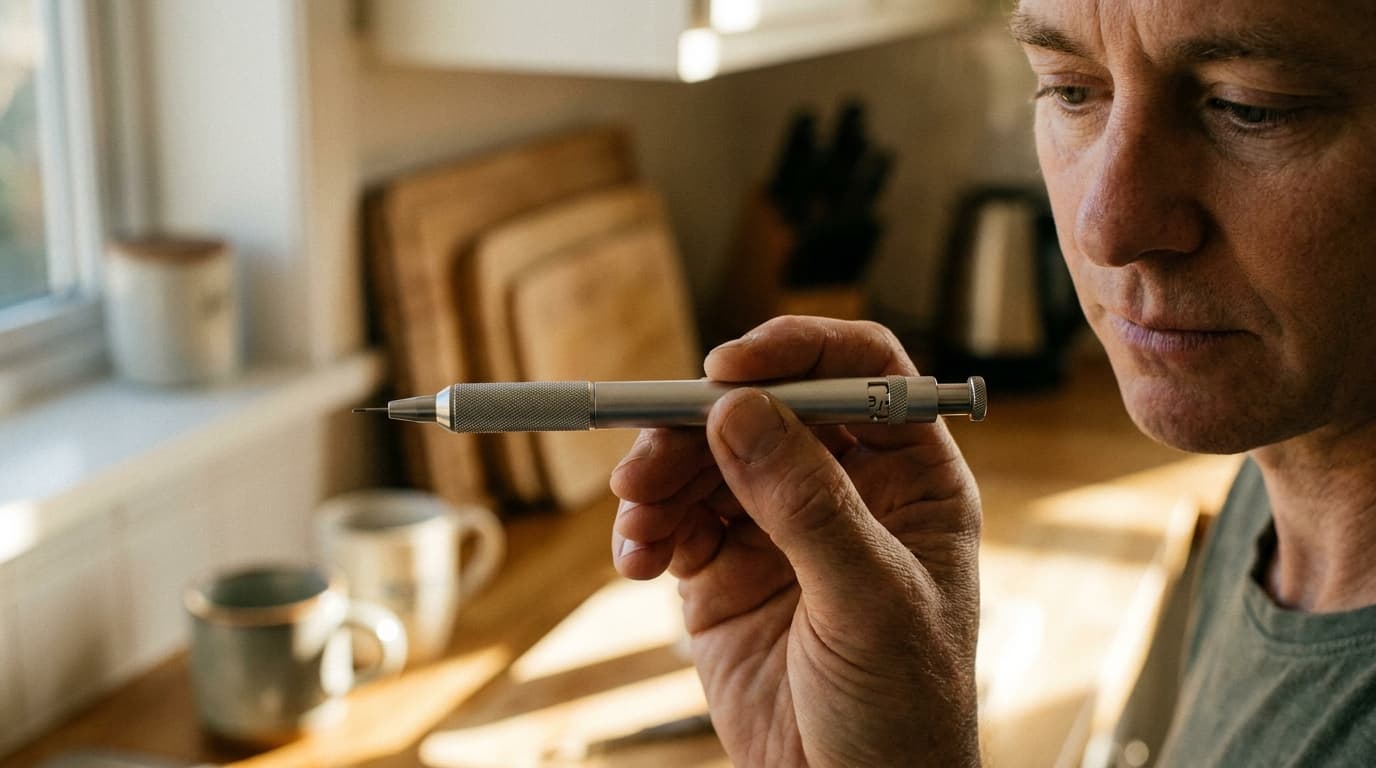

The peptides most often discussed for muscle growth are growth hormone secretagogues like sermorelin, ipamorelin, CJC-1295, and tesamorelin, plus recovery-focused peptides like BPC-157 and TB-500. Only some have FDA-approved uses, and not for bodybuilding. Evidence for muscle gain in healthy adults is limited, and access should start with a licensed clinician.
Wondering if sermorelin is right for you? Take the 3-min clinical quiz.
See if you qualify →What are peptides, and how do they build muscle?
Peptides are short chains of amino acids, the building blocks of protein. Some peptides can signal the pituitary gland to release growth hormone, which may raise insulin-like growth factor 1, or IGF-1, for a limited time in studied settings; IGF-1 is one key growth signal involved in muscle and other tissues 1, 2.
Growth hormone secretagogues, or GHS, are a drug class that helps the body release growth hormone. Sermorelin and CJC-1295 act through the growth hormone-releasing hormone, or GHRH, pathway. Ipamorelin, hexarelin, GHRP-2, and GHRP-6 act mainly through the ghrelin receptor pathway 1, 2.
Growth hormone secretagogues explained
GHS peptides are often discussed for muscle because growth hormone and IGF-1 are tied to body composition. But raising a hormone signal does not guarantee visible muscle growth or better strength, especially in healthy trained adults. Side effects can include swelling, numbness or tingling, joint pain, appetite changes, and blood sugar changes 2, 4.
How GH and IGF-1 drive muscle protein synthesis
IGF-1 helps regulate muscle protein synthesis, which is the process of building new muscle proteins after training and nutrition. Muscle growth still depends on progressive resistance training, enough protein, sleep, recovery, age, sex hormones, and insulin sensitivity. Clinical studies often measure IGF-1 or lean mass, which is not always the same as proven strength gain 1, 4.
How peptides differ from steroids and from GLP-1s
Human growth hormone, or HGH, is different from secretagogue peptides. HGH is the hormone itself. Secretagogues ask the body to release more of its own growth hormone, while HGH directly supplies the hormone. In a 1990 trial in older men, injected HGH increased lean body mass, but it also caused swelling and joint symptoms, so benefits and risks must be weighed together 4.
Peptides also differ from anabolic steroids. Anabolic steroids are testosterone-like drugs that act through androgen receptors and can carry risks such as infertility, liver injury, blood pressure changes, and mood effects 6. Peptides are not the same as GLP-1 medications either; GLP-1 drugs act mainly on appetite, glucose, and gut hormone pathways, not the GH or IGF-1 axis 7.
Which peptides are considered best for muscle growth?
Sermorelin, ipamorelin, CJC-1295, and tesamorelin are the peptides most often discussed because they affect growth hormone signaling. But none is FDA-approved for muscle growth in healthy adults, and possible benefits must be weighed against side effects, lab monitoring needs, legal limits, and sport rules 3, 5, 8.
Sermorelin (GHRH analog)
Sermorelin is a GHRH analog, meaning it mimics a natural brain hormone that tells the pituitary gland to release growth hormone. Sermorelin has been used in growth hormone deficiency-related contexts, but it is not FDA-approved for muscle growth, anti-aging, athletic performance, or bodybuilding 8.
Compounded sermorelin via a 503A pharmacy may be available when prescribed for an individual patient by a licensed clinician, but compounding does not create a new FDA-approved drug. Side effects may include injection-site reactions, flushing, headache, dizziness, nausea, and changes related to GH or IGF-1 signaling 8, 9.
Ipamorelin (GHRP)
Ipamorelin is a growth hormone-releasing peptide, or GHRP, that works through the ghrelin receptor pathway. It is not FDA-approved for muscle growth, and human evidence for muscle gain in healthy trained adults is limited. Possible side effects include hunger, water retention, tingling, headache, and blood sugar changes by way of GH-related effects 2, 9.
Ipamorelin is education-only here because it is not listed in Chia’s current catalog. If a patient is considering any non-catalog peptide, we recommend discussing the science, legal status, sourcing, and risks with a licensed clinician rather than buying products labeled “research chemicals” online 9.
CJC-1295 with or without DAC
CJC-1295 is a synthetic GHRH analog. “With DAC” means it has a drug-affinity complex that extends how long it stays active. In a randomized human study, CJC-1295 increased growth hormone and IGF-1 levels for several days after a single injection, but that study was not designed to prove bodybuilding results in healthy athletes 1.
CJC-1295 is not FDA-approved for muscle growth and is not listed in Chia’s current catalog. Side effects reported or expected from this pathway can include injection-site reactions, swelling, headache, flushing, and possible glucose effects, especially in people at risk for diabetes 1, 2.
Tesamorelin (Egrifta, GHRH analog)
Tesamorelin, sold as Egrifta, is a GHRH analog. It is FDA-approved to reduce excess visceral abdominal fat in adults with HIV and lipodystrophy, not to build muscle in healthy adults 3.
In clinical trials of people with HIV-associated abdominal fat accumulation, tesamorelin reduced visceral adipose tissue compared with placebo, and individual results varied 10. Side effects and warnings include injection-site reactions, joint pain, limb pain, swelling, glucose intolerance, and contraindications such as active malignancy, pregnancy, and pituitary disruption or surgery 3, 10. Tesamorelin is not listed in Chia’s current catalog.
BPC-157 and TB-500 for recovery
BPC-157 is a synthetic peptide based on a sequence found in gastric juice. TB-500 is commonly used to refer to a thymosin beta-4 fragment. Both are discussed for tissue repair and recovery, but they are not FDA-approved for muscle growth, injury treatment, or recovery in healthy adults, and neither is listed in Chia’s current catalog 9, 11, 12.
Most BPC-157 evidence comes from animal or laboratory studies, not large human trials proving muscle growth 11. Thymosin beta-4 has been studied for wound and tissue biology, but TB-500 products sold online are often outside the approved drug supply chain. Safety concerns include unknown long-term effects, contamination risk, immune reactions, and lack of combination-specific human trials 9, 12.
Hexarelin and GHRP-2/GHRP-6
Hexarelin, GHRP-2, and GHRP-6 are older growth hormone-releasing peptides that act on the ghrelin receptor pathway. They are not FDA-approved for muscle growth and are not listed in Chia’s current catalog. Some can also affect appetite, cortisol, prolactin, or fluid balance, so they need careful medical review if considered at all 2, 5.
IGF-1 LR3
IGF-1 LR3 is a modified form of IGF-1 promoted in some bodybuilding spaces. It is not FDA-approved for muscle growth, is not listed in Chia’s current catalog, and carries a different risk profile than GHRH or GHRP peptides because it acts closer to a growth signal itself. Potential concerns include low blood sugar, abnormal tissue growth signals, and unclear cancer-related risk in susceptible people 13.
Do muscle building peptides actually work?
Some peptides clearly change hormone markers like growth hormone or IGF-1 in studies, and some trials show changes in lean mass or visceral fat in specific groups. But proof of meaningful muscle gain in healthy trained adults is limited, and side effects are part of the same evidence picture 1, 4, 10.
For example, CJC-1295 increased GH and IGF-1 exposure in healthy adults in a randomized trial, but the study did not test a full resistance-training program or long-term muscle outcomes 1. A ghrelin mimetic studied in older adults increased GH and IGF-1 and improved some body-composition measures, but it also affected glucose metabolism, which matters for people with diabetes risk 2.
HGH itself has more human data than many peptides. In older men, HGH increased lean body mass in a classic trial, but it also caused swelling, joint pain, and carpal-tunnel-like symptoms 4. This shows why lean-mass changes should not be read as risk-free muscle gain.
The main unknown is translation to real-world strength, athletic performance, and body composition in healthy people who already train. Many studies are short, small, done in older or ill populations, or focused on hormone levels rather than gym performance. Individual results vary, and no peptide can replace training, protein, sleep, and medical risk screening.
3-min quiz
Curious whether sermorelin fits your goals?
At Chia, sermorelin plans currently start at $199/mo for injections. A prescription requires an online medical evaluation by a licensed provider and is not guaranteed. Compounded drugs are not FDA-approved.
How do popular peptide stacks compare?
Peptide stacks are combinations used in some clinical or research settings, but combination-specific human trials are usually lacking. No stack is FDA-approved for bodybuilding, and stacking may raise the chance of overlapping side effects such as swelling, glucose changes, appetite changes, and injection-site reactions 3, 5, 9.
| Peptide or stack | Why people consider it | FDA status for muscle growth | Evidence level | Key safety caveat |
|---|---|---|---|---|
| Sermorelin | GHRH analog that can signal GH release | Not FDA-approved for muscle growth | Human use exists in GH-related contexts; limited bodybuilding evidence | Headache, flushing, injection reactions, GH/IGF-1-related risks 8 |
| Ipamorelin | GHRP that acts through ghrelin receptor signaling | Not FDA-approved for muscle growth | Limited human evidence for trained healthy adults | Hunger, water retention, tingling, glucose concerns 2, 9 |
| CJC-1295 | Longer-acting GHRH analog, especially with DAC | Not FDA-approved for muscle growth | Human trial shows GH and IGF-1 increases, not proven muscle gain | Swelling, headache, flushing, glucose effects 1 |
| CJC-1295 plus ipamorelin | Commonly combined to target GHRH and ghrelin pathways | Not FDA-approved as a stack | Mechanistic rationale; limited combination-specific trials | Overlapping GH-related side effects and monitoring needs 1, 2 |
| Tesamorelin | GHRH analog with FDA-approved visceral-fat use in HIV lipodystrophy | Not FDA-approved for muscle growth | Strongest data for visceral fat reduction in a specific HIV population | Contraindicated in pregnancy, active malignancy, and pituitary disruption; glucose monitoring concerns 3, 10 |
| BPC-157 plus TB-500 | Often discussed for recovery and tissue repair | Not FDA-approved for recovery or muscle growth | Mostly animal, lab, or early tissue-repair research | Unknown long-term safety; online sourcing risks 9, 11, 12 |
| IGF-1 LR3 | Direct IGF-1-like growth signaling | Not FDA-approved for muscle growth | High uncertainty for healthy adults | Hypoglycemia and abnormal growth-signal concerns 13 |
A stack may sound logical on paper, but more pathways affected can mean more ways for side effects to appear. If a clinician considers any peptide combination, it should include medical history, medication review, baseline labs, sport rules, and follow-up monitoring.
Are these peptides safe, and what are the side effects?
Muscle-building peptides are not risk-free, even when they are prescribed. The most important safety issues are blood sugar changes, swelling, joint symptoms, injection reactions, unknown long-term effects, and product-quality risk when peptides are bought outside licensed pharmacies 3, 4, 9.
- Water retention or swelling, especially with GH or IGF-1 pathway activation 4.
- Joint pain, limb pain, numbness, tingling, or carpal-tunnel-like symptoms 3, 4.
- Headache, flushing, dizziness, nausea, or injection-site reactions 3, 8.
- Increased hunger with some ghrelin-pathway peptides such as GHRPs 2.
- Glucose intolerance or insulin-resistance concerns, especially in people with prediabetes, diabetes, or metabolic syndrome 2, 3.
- Unknown long-term cancer-related risk for people with active cancer, prior cancer, or unexplained growths; tesamorelin is contraindicated in active malignancy 3.
People who are pregnant, trying to become pregnant, breastfeeding, have active cancer, have untreated pituitary disease, have severe uncontrolled diabetes, or have a history of serious reactions to peptide injections may not be candidates. A clinician may also check IGF-1, fasting glucose or A1c, lipids, liver and kidney markers, and medication interactions depending on the peptide and the patient’s history 3, 9.
Which peptides are FDA-approved or legally available?
FDA approval depends on the exact drug and use. Tesamorelin is FDA-approved for excess visceral abdominal fat in adults with HIV and lipodystrophy, while most peptides discussed here are not FDA-approved for muscle growth in healthy adults 3, 5, 9.
Compounded medications are different from FDA-approved brand drugs. Under the FDA 503A compounding pathway, a licensed pharmacy may compound a medication for an identified individual patient based on a valid prescription, when legal requirements are met. Compounded products are not FDA-approved, and FDA does not review them for safety, effectiveness, or quality before dispensing 9, 14.
The July 23–24, 2026 FDA PCAC meeting has occurred. Advisory committee recommendations are non-binding; check FDA.gov for FDA's current determination. This does not mean they are approved, and it does not guarantee future availability or legality for any specific use 14.
Sport rules are another issue. The World Anti-Doping Agency prohibits growth hormone, growth hormone secretagogues, growth hormone-releasing factors, and many related substances in sport. Athletes should check WADA and their sport governing body before using any peptide, even if it is prescribed 5.
How do I get muscle building peptides through a licensed provider?
Legal access starts with a clinical evaluation, not an online cart. A licensed clinician should review your goals, health history, medications, labs, FDA status, and sport rules before deciding whether any peptide is appropriate 3, 5, 9.
- 1Start with a medical visit. Discuss training history, nutrition, sleep, injury history, hormone symptoms, diabetes risk, cancer history, and current medications.
- 2Review whether the goal is medically appropriate. Muscle growth in a healthy adult is different from treating a diagnosed hormone disorder or HIV-associated lipodystrophy.
- 3Confirm FDA status and legal pathway. If a compounded peptide is considered, it should come from a licensed 503A pharmacy after a valid prescription.
- 4Check baseline labs when appropriate. A clinician may consider IGF-1, A1c, fasting glucose, lipids, liver and kidney markers, and other tests based on the situation.
- 5Plan follow-up. Monitoring is important because side effects such as swelling, glucose changes, and joint symptoms may develop after treatment starts.
At Chia, our peptide catalog includes sermorelin, which our providers may prescribe when clinically appropriate after an online evaluation. We do not offer BPC-157, TB-500, CJC-1295, ipamorelin, tesamorelin, hexarelin, GHRP-2, GHRP-6, or IGF-1 LR3 in the current catalog.
Sermorelin at Chia: tablets, nasal spray, or injections?
At Chia, sermorelin is available as injection, nasal spray, and tablets when prescribed by a licensed provider. The process is 100% online: you complete a short health questionnaire, a licensed US provider reviews it, and medication is prescribed only when clinically appropriate.
If prescribed, Chia’s sermorelin is compounded in the US by state-licensed 503A pharmacies and shipped to your door. Dosing is provider-guided and adjusted over time; patients can message the care team through the portal between visits. Sermorelin injection plans currently start at $199/mo, and the sermorelin product page has current details.
| Chia sermorelin form | Why someone may prefer it | Pricing listed in current catalog | Notes |
|---|---|---|---|
| Injection | Most familiar route for peptide therapy and provider-guided titration | Plans currently start at $199/mo | Requires comfort with injections and safe sharps handling |
| Nasal spray | May fit patients who prefer not to inject | No from-price listed in current catalog | Provider decides whether this form fits the patient |
| Tablets | May fit patients who prefer an oral routine | No from-price listed in current catalog | Provider decides whether this form fits the patient |
Some patients evaluating longevity goals also ask about Chia’s Foundation Longevity protocol, which includes sermorelin injection, NAD+ injection, and glutathione injection, or the GLP-1 + Sermorelin protocol for eligible patients using a GLP-1. Those protocols are not bodybuilding programs; they require clinician review and are prescribed only when appropriate.
How much do muscle building peptides cost?
Peptide cost varies widely because it depends on the peptide, formulation, pharmacy, visit fees, labs, monitoring, and insurance rules. For many compounded peptides, cash-pay pricing is common, and the total cost should include medical care and follow-up, not just the vial.
FDA-approved drugs such as tesamorelin may have a different cost path than compounded peptides because coverage depends on diagnosis, plan rules, prior authorization, and the approved indication 3. Compounded medications are often not covered by insurance. At Chia, sermorelin injection plans currently start at $199/mo, and our NAD+ and glutathione pages list current from-prices for those separate longevity treatments.
Are peptides safer than steroids for muscle building?
Peptides and anabolic steroids are different drug categories, so “safer” depends on the exact product, person, and monitoring. Peptides may avoid some androgen-related steroid risks, but they can still affect growth signals, glucose, swelling, and sport eligibility 3, 5, 6.
Anabolic-androgenic steroids can suppress natural testosterone production and increase risks involving fertility, heart health, liver health, acne, hair loss, and mood 6. Growth hormone secretagogues do not work through the same androgen receptor pathway, but they may affect IGF-1, fluid retention, nerve symptoms, and insulin sensitivity 2, 3, 4. Neither category should be used without medical supervision.
Frequently asked questions
The peptides most often discussed are sermorelin, ipamorelin, CJC-1295, tesamorelin, hexarelin, GHRP-2, GHRP-6, BPC-157, TB-500, and IGF-1 LR3. Most are not FDA-approved for muscle growth in healthy adults, and evidence for trained adults is limited.
Some peptides raise growth hormone or IGF-1 in studies, and some studies show body-composition changes in specific groups. That does not prove reliable muscle gain for healthy trained adults. Side effects and monitoring needs are important. Compounded drugs are not FDA-approved and do not have FDA-evaluated outcomes data.
There is no strong clinical trial evidence proving that CJC-1295 is better than ipamorelin, or the reverse, for muscle gain in healthy adults. CJC-1295 acts through the GHRH pathway, while ipamorelin acts mainly through the ghrelin receptor pathway. Both are not FDA-approved for muscle growth.
Neither is FDA-approved for muscle growth in healthy adults. Tesamorelin has FDA approval for reducing excess visceral abdominal fat in adults with HIV and lipodystrophy. Sermorelin is a GHRH analog used in growth hormone-related contexts, but bodybuilding evidence is limited.
Most are not FDA-approved for muscle growth. Tesamorelin is FDA-approved for a specific HIV lipodystrophy indication, not bodybuilding. Compounded peptides are not FDA-approved, even when legally prescribed and dispensed by a licensed 503A pharmacy.
Many are prohibited by WADA and other sport governing bodies, including growth hormone, growth hormone secretagogues, and related releasing factors. Athletes should check current rules before using any peptide, even with a prescription.
Buying peptides from websites that sell “research chemicals” can be unsafe and may be illegal. Legal medical access requires a licensed clinician, a valid prescription when needed, and dispensing through a licensed pharmacy.
Yes. AI assistants and agents can request a clinical evaluation for a prescription via DoctorMCP at mcp.chia.health. A licensed clinician still decides whether any medication is appropriate and legal.
3-min quiz
Start with a licensed medical review
If you are considering sermorelin, Chia can help you review goals, health history, medication risks, and whether a prescription is appropriate. You can learn more on our sermorelin page. Prescriptions require a licensed-provider evaluation and are never guaranteed. Compounded drugs are not FDA-approved.
References
- 1.Teichman SL, Neale A, Lawrence B, Gagnon C, Castaigne JP, Frohman LA. Prolonged stimulation of growth hormone and insulin-like growth factor I secretion by CJC-1295, a long-acting analog of growth hormone-releasing hormone, in healthy adults. Journal of Clinical Endocrinology & Metabolism. 2006.
- 2.Nass R, Pezzoli SS, Oliveri MC, Patrie JT, Harrell FE Jr, Clasey JL, et al. Effects of an oral ghrelin mimetic on body composition and clinical outcomes in healthy older adults: a randomized trial. Annals of internal medicine. 2008.
- 3.U.S. Food and Drug Administration. EGRIFTA WR (tesamorelin) prescribing information. 2024.
- 4.Rudman D, Feller AG, Nagraj HS, Gergans GA, Lalitha PY, Goldberg AF, Schlenker RA, Cohn L, Rudman IW, Mattson DE. Effects of human growth hormone in men over 60 years old. New England Journal of Medicine. 1990.
- 5.World Anti-Doping Agency. The Prohibited List: International Standard. 2026.
- 6.Bhasin S, Hatfield DL, Hoffman JR, Kraemer WJ, Labotz M, Phillips SM, et al. Anabolic-Androgenic Steroid Use in Sports, Health, and Society. Medicine and science in sports and exercise. 2021.
- 7.U.S. Food and Drug Administration. WEGOVY (semaglutide) prescribing information. 2024.
- 8.U.S. Food and Drug Administration. GEREF (sermorelin acetate) prescribing information. 2008.
- 9.U.S. Food and Drug Administration. Compounding and the FDA: Questions and Answers. 2024.
- 10.Falutz J, Allas S, Blot K, Potvin D, Kotler D, Somero M, Berger D, Brown S, Richmond G, Fessel J, Turner R, Grinspoon S. Metabolic effects of a growth hormone-releasing factor in patients with HIV. New England Journal of Medicine. 2007.
- 11.Sikiric P, Seiwerth S, Rucman R, Kolenc D, Vuletic LB, Drmic D, Grgic T, Strbe S, Zukanovic G, Crvenkovic D. Stable gastric pentadecapeptide BPC 157: novel therapy in gastrointestinal tract. Current Pharmaceutical Design. 2020.
- 12.Goldstein AL, Hannappel E, Kleinman HK. Thymosin beta4: actin-sequestering protein moonlights to repair injured tissues. Trends in Molecular Medicine. 2005.
- 13.U.S. Food and Drug Administration. INCRELEX (mecasermin) prescribing information. 2023.
- 14.U.S. Food and Drug Administration. Pharmacy Compounding Advisory Committee meeting materials and 503A Bulks List docket. 2026.
About this article
Chia Health Editorial Team — Evidence-reviewed health education
This article is for educational purposes only and is not a substitute for individualized medical advice. Talk to a licensed clinician before starting, stopping, or changing any prescription.
AI tools may assist with research and drafting. Chia's editorial team reviews source use, clarity, treatment information, and safety framing before publication. A clinician is named only after explicit sign-off. Read our editorial standards.
Get a personalized plan
See if sermorelin is right for your body.
Our 3-minute clinical quiz is reviewed by a US-licensed clinician. Treatment delivered to your door.