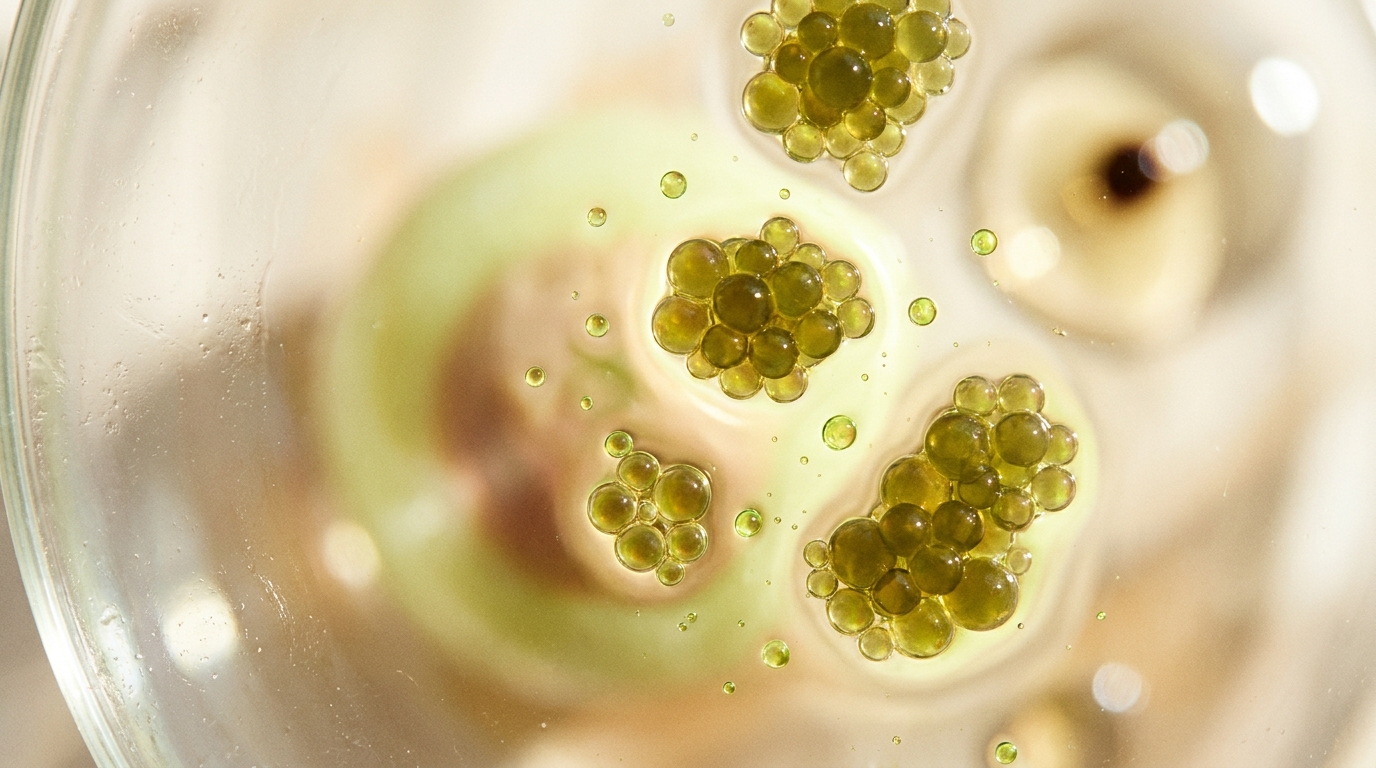
The mitochondrial matrix is the fluid-filled space inside the inner membrane of a mitochondrion. It contains enzymes, mitochondrial DNA, ribosomes, ions, and cofactors that help convert food-derived molecules into usable cell energy. Key reactions in the matrix support the citric acid cycle, fatty-acid oxidation, and parts of ATP production 1.
Wondering if NAD+ is right for you? Take the 3-min clinical quiz.
See if you qualify →What is the mitochondrial matrix?
The mitochondrial matrix is the inner fluid compartment of a mitochondrion, located inside the inner mitochondrial membrane. In plain language, it is the “working room” where many energy-related chemical reactions happen 1.
Simple definition
A mitochondrion is a small structure inside most human cells. Its job is to help convert nutrients into ATP, the main energy-carrying molecule used by cells 2. The matrix is one part of that system, not the whole mitochondrion.
Where the matrix sits inside a mitochondrion
A mitochondrion has an outer membrane and an inner mitochondrial membrane. The matrix is enclosed by the inner membrane, while the intermembrane space sits between the outer and inner membranes 1.
How the matrix differs from the intermembrane space
The matrix contains many soluble enzymes, mitochondrial DNA, and ribosomes. The intermembrane space is important for the proton gradient used during oxidative phosphorylation. That gradient across the inner membrane helps ATP synthase make ATP 2.
| Feature | Mitochondrial matrix | Intermembrane space |
|---|---|---|
| Location | Inside the inner mitochondrial membrane | Between the outer and inner mitochondrial membranes |
| Main contents | Enzymes, mitochondrial DNA, ribosomes, cofactors, metabolites, ions | Protons and proteins involved in signaling and energy transfer |
| Energy role | Makes NADH and FADH2 through key metabolic reactions | Helps hold the proton gradient used to make ATP |
| Longevity meaning | Important for energy biology, but not proof of longer lifespan | Important for membrane potential, but not a lifespan marker by itself |
What are the quick facts about the mitochondrial matrix?
Quick matrix facts are useful because this topic can get technical fast. The short version: the matrix holds the machinery for several core energy reactions, but matrix activity alone does not prove better health or longer life 3.
- What it contains: mitochondrial DNA, mitochondrial ribosomes, enzymes, cofactors including NAD+ and FAD, metabolites, water, potassium, calcium, and other ions 1.
- Main jobs: pyruvate oxidation, citric acid cycle reactions, fatty-acid beta oxidation, and production of NADH and FADH2 2.
- Why it matters: NADH and FADH2 feed electrons into the electron transport chain, which supports ATP production through oxidative phosphorylation 2.
- What it does not prove: better mitochondrial biomarkers do not automatically show longer human lifespan. Human clinical outcomes matter 3.
What happens in the mitochondrial matrix?
Several core energy reactions happen in the mitochondrial matrix. These reactions do not make most ATP directly; instead, they create electron carriers, mainly NADH and FADH2, that power the electron transport chain 2.
Citric acid cycle basics
The citric acid cycle, also called the tricarboxylic acid cycle or TCA cycle, takes acetyl-CoA and uses a series of enzyme steps to produce NADH, FADH2, and carbon dioxide. This cycle is a central link between food metabolism and cellular energy 2.
Pyruvate oxidation and acetyl-CoA
When carbohydrates are broken down, cells make pyruvate. In mitochondria, pyruvate can be converted into acetyl-CoA, which then enters the citric acid cycle 2.
Fatty-acid beta oxidation
Fatty-acid beta oxidation breaks down fatty acids into smaller units that can enter energy pathways. In human cells, many beta-oxidation steps occur in mitochondria and help generate NADH and FADH2 2.
How NADH and FADH2 feed the electron transport chain
NADH and FADH2 carry high-energy electrons to protein complexes in the inner mitochondrial membrane. Electron flow helps move protons and build mitochondrial membrane potential, which ATP synthase uses to make ATP 2.
What is inside the mitochondrial matrix?
Inside the matrix, you find genetic material, protein-making tools, metabolic enzymes, small molecules, and ions. These parts work together to support energy metabolism and mitochondrial maintenance 1.
Mitochondrial DNA
Mitochondria contain a small amount of DNA that is separate from nuclear DNA. Human mitochondrial DNA encodes a limited set of genes that support oxidative phosphorylation, while most mitochondrial proteins are encoded by nuclear DNA 4.
Mitochondrial ribosomes and protein-making machinery
Mitochondrial ribosomes help make proteins encoded by mitochondrial DNA. This matters because several of those proteins are parts of the respiratory chain used for oxidative phosphorylation 4.
Enzymes, cofactors, metabolites, and ions
The matrix contains enzymes for the citric acid cycle, pyruvate oxidation, and fatty-acid oxidation. It also contains cofactors such as NAD+, NADH, FAD, and FADH2, plus metabolites and ions that help these reactions run 1.
Matrix volume, water movement, and ion balance
Matrix volume is controlled by osmotic balance between the cytosol and mitochondria. Potassium flux, water movement, calcium overload, mitochondrial membrane depolarization, and opening of the mitochondrial permeability transition pore can affect swelling; aquaporins may also help regulate water movement across the inner membrane 5.
How does mitochondrial DNA relate to ancestry and maternal inheritance?
Mitochondrial DNA is usually passed from mother to child, which makes it different from nuclear DNA. This is why ancestry reports may use mitochondrial DNA to discuss a maternal line 6.
Why mitochondrial DNA is inherited differently from nuclear DNA
Nuclear DNA comes from both biological parents. Mitochondrial DNA is passed down through the egg, so it follows the maternal line in most people 6.
What people mean by a maternal line
A maternal line means your mother’s mother’s mother’s line, and so on. Mitochondrial DNA can be useful for population history because it changes over time and is inherited in a different pattern than most DNA 6.
Why “last common mother” is an ancestry concept, not a single first human
The phrase “mitochondrial Eve” or “last common mother” can be misleading. It refers to the most recent woman from whom all living people inherited their mitochondrial DNA, based on lineage patterns. It does not mean she was the first woman, the only woman alive, or a single source of all human DNA 7.
What diseases are linked to mitochondria?
Mitochondrial diseases are a group of genetic and metabolic disorders that can affect organs with high energy needs. Symptoms may involve muscles, nerves, brain, eyes, hearing, heart, or energy metabolism, and diagnosis often needs specialist testing 8.
Primary mitochondrial diseases
Primary mitochondrial diseases are caused by disease-related changes in mitochondrial DNA or nuclear genes that affect mitochondrial function. They are not one disease; they are a group of disorders with different causes, symptoms, and severity 8.
Examples of mitochondrial disease categories discussed in clinical trials
Clinical trial listings and mitochondrial disease organizations discuss conditions and categories such as MELAS, MERRF, Kearns-Sayre syndrome, chronic progressive external ophthalmoplegia (CPEO), maternally inherited diabetes and deafness (MIDD), Pearson syndrome, and Leber hereditary optic neuropathy (LHON) 9.
Why symptoms can involve muscles, nerves, eyes, brain, or energy metabolism
Cells with high energy needs can be more sensitive to mitochondrial problems. That is one reason symptoms may involve muscle weakness, exercise intolerance, neurologic symptoms, seizures, vision problems, hearing loss, diabetes, or fatigue in some mitochondrial disorders 8.
Why diagnosis and treatment require specialist care
Mitochondrial disorders can look like other conditions, and testing may involve genetics, metabolic labs, imaging, eye exams, neurology evaluation, or other specialty care. Treatment decisions should be guided by clinicians who understand the suspected condition and the person’s full health picture 8.
What does mitochondrial research say about longevity?
Mitochondrial research is important for longevity science because energy metabolism, oxidative stress, cell signaling, and repair pathways change with age. But a pathway change, biomarker change, animal result, or cell result does not prove that an intervention extends human lifespan 3.
Human clinical evidence: what trials can and cannot show
Human clinical trials can test whether an intervention changes measured outcomes in real people. For example, the ClinicalTrials.gov record NCT03432871 describes a study of nicotinamide riboside and mitochondrial biogenesis, which is a study design and registry record, not proof of broad anti-aging benefit 10.
Human observational evidence: useful but not proof of cause and effect
Human observational studies can find links between mitochondrial markers and health outcomes. They are useful for forming questions, but they cannot prove that changing one marker will cause longer life 3.
Animal and cell evidence: why it is early-stage
Animal and cell studies can help explain mechanisms and screen possible therapies. For example, cell-based work has screened FDA-approved drugs for possible mitochondrial effects, but that type of research does not automatically establish clinical benefit for patients 11.
Why biomarkers do not prove longer human lifespan
Biomarkers can be helpful clues, but they are not the same as clinical outcomes. In longevity research, the honest standard is to separate mechanism from proof: better mitochondrial signaling may be interesting, but it does not prove longer human lifespan unless human outcome data show that 3.
How do NAD+ and mitochondrial research connect to treatment at Chia?
NAD+ is a cofactor used in many energy and redox reactions, including mitochondrial pathways that convert nutrients into electron carriers. At Chia, we discuss NAD+ as a longevity and wellness treatment area, not as a treatment for mitochondrial disease or a proven way to extend lifespan 3.
What NAD+ is in mitochondrial energy pathways
NAD+ can accept electrons and become NADH. NADH then helps feed electrons into the electron transport chain, which supports oxidative phosphorylation and ATP production 2.
What Chia offers: NAD+ injection and nasal spray
Chia offers NAD+ injection and nasal spray. Plans currently start at $179/mo for injection and $119/mo for nasal spray. A licensed US provider reviews each online visit and prescribes only when clinically appropriate; a prescription is never guaranteed.
| Chia option | Forms listed in Chia’s catalog | Current starting price | Practical fit |
|---|---|---|---|
| NAD+ | Injection, nasal spray | Injection from $179/mo; nasal spray from $119/mo | For patients who want a provider-reviewed NAD+ option connected to longevity goals |
| Glutathione | Injection, nasal spray | From $179/mo | For patients discussing oxidative stress and wellness goals with a clinician |
| Sermorelin | Injection, nasal spray, tablets | Injection from $179/mo; nasal spray from $179/mo | For patients discussing growth-hormone-axis support with a clinician |
Related Chia longevity protocols that include NAD+, glutathione, or sermorelin
Some Chia protocols combine treatments for broader wellness goals. Foundation Longevity includes sermorelin injection, NAD+ injection, and glutathione injection, with plans currently starting at $399/mo. Glow includes GHK-Cu cream, glutathione injection, and NAD+ injection, with plans currently starting at $349/mo.
Chia also offers glutathione injection and nasal spray and sermorelin injection, nasal spray, and tablets as individual treatments. These are compounded by state-licensed 503A compounding pharmacies and shipped to the patient’s door when prescribed.
What Chia does not claim
We do not claim that NAD+, glutathione, sermorelin, Foundation Longevity, Glow, or any Chia treatment diagnoses, treats, cures, prevents, or reverses mitochondrial disease. We also do not claim they extend human lifespan.
How online clinician review and prescription eligibility work
Chia is 100% online. You complete a short health questionnaire, then a licensed US provider reviews your history, medications, goals, and safety factors. If treatment is clinically appropriate, medication is compounded by a US state-licensed 503A pharmacy and shipped to your door.
3-min quiz
Talk with a Chia provider about longevity goals
If you are interested in NAD+ or related longevity protocols, you can start with Chia’s online eligibility visit. A prescription requires a medical evaluation and is not guaranteed. Compounded medications are prepared by state-licensed 503A pharmacies and are not FDA-approved. You can also review NAD+ options before you begin.
Can mitochondrial matrix problems be treated?
Mitochondrial problems need careful diagnosis first. Some care is supportive, some therapies are being studied in trials, and some approaches remain investigational or restricted by law 9.
Supportive care and specialist-guided management
For suspected mitochondrial disease, care may involve specialists in genetics, neurology, metabolism, cardiology, ophthalmology, or other fields. The right plan depends on the diagnosis, symptoms, organ involvement, family history, and test results 8.
Clinical trials in mitochondrial disorders
Mitochondrial disorders are an active area of clinical research. Reviews describe many investigational strategies, but trials vary by condition, intervention, stage of development, and outcome measures, so patients should not assume a proven cure exists 3.
The United Mitochondrial Disease Foundation lists active and developing studies across categories such as MELAS, MIDD, Kearns-Sayre syndrome, CPEO, MERRF, Pearson syndrome, and LHON. Trial eligibility, risks, benefits, and rights should be reviewed with qualified clinicians and the trial team 9.
FDA restrictions on mitochondrial replacement techniques in the United States
Mitochondrial replacement technology introduces donor mitochondria into reproductive cells intended for transfer into a human recipient. The FDA states that this approach raises safety concerns and that, because of federal appropriations restrictions in place since December 2015, FDA is prohibited from accepting applications for clinical research using mitochondrial replacement technology in humans in the United States 12.
Why supplements or peptides should not replace medical evaluation
Supplements, peptides, and wellness prescriptions may affect symptoms, labs, or goals in some settings, but they should not be used to self-diagnose or manage suspected mitochondrial disease. Mitochondrial symptoms can overlap with many other conditions, and missing the real cause can delay needed care 8.
When should someone talk to a clinician?
A clinician visit is appropriate when symptoms are unexplained, progressive, involve several organs, or run in the family. Mitochondrial disorders can be complex, so primary care may refer to genetics, neurology, metabolism, or ophthalmology when needed 8.
Symptoms that may warrant medical evaluation
- Unexplained muscle weakness, exercise intolerance, or severe fatigue that does not fit your usual pattern 8.
- Neurologic symptoms such as seizures, stroke-like episodes, balance problems, neuropathy, or developmental concerns 8.
- Vision or hearing problems, especially when paired with neurologic, muscle, or metabolic symptoms 8.
- Diabetes, heart rhythm problems, or other metabolic issues with a family pattern that suggests inherited disease 8.
Family history and genetic counseling considerations
Because mitochondrial DNA can follow a maternal inheritance pattern, family history may matter. A genetic counselor can help explain what testing can and cannot tell you, including the difference between nuclear DNA and mitochondrial DNA inheritance 6.
Questions to ask about testing, referrals, and clinical trials
- 1Do my symptoms suggest a mitochondrial disorder or a more common condition?
- 2Should I see a genetics, neurology, metabolism, or ophthalmology specialist?
- 3What tests are appropriate before considering supplements, prescriptions, or trials?
- 4Are there clinical trials for my diagnosis, and what are the risks, rights, and eligibility rules? 9
3-min quiz
Start an online longevity visit with Chia
Chia can help patients explore provider-reviewed longevity options such as NAD+, glutathione, and sermorelin. We do not treat or diagnose mitochondrial disease through this article, and a prescription requires clinician review and is not guaranteed. Compounded medications are not FDA-approved.
FAQ
The mitochondrial matrix is the fluid-filled space inside the inner mitochondrial membrane where key energy-related reactions and mitochondrial DNA functions occur.
The matrix helps make ATP indirectly. It produces NADH and FADH2 through reactions such as the citric acid cycle and beta oxidation, and those electron carriers feed the electron transport chain that supports ATP production.
Yes. Mitochondrial DNA is located in the mitochondrial matrix, along with mitochondrial ribosomes and enzymes that support mitochondrial function.
Major matrix processes include pyruvate oxidation, the citric acid cycle, fatty-acid beta oxidation, and production of NADH and FADH2 for the electron transport chain.
Mitochondrial diseases include groups such as MELAS, MERRF, Kearns-Sayre syndrome, CPEO, MIDD, Pearson syndrome, and LHON. These conditions need specialist evaluation and testing.
No. NAD+ is involved in mitochondrial energy pathways, but NAD+ supplements or prescriptions should not be viewed as a fix for mitochondrial disease. Suspected mitochondrial disease requires qualified medical evaluation.
Clinical research using mitochondrial replacement technology in humans cannot legally proceed in the United States because FDA is prohibited from accepting those applications under federal appropriations restrictions.
No. A change in a mitochondrial pathway, biomarker, animal study, or cell study does not prove longer human lifespan. Human outcome data are needed.
References
- 1.Alberts B, Johnson A, Lewis J, Raff M, Roberts K, Walter P. Molecular Biology of the Cell, 4th edition. Garland Science, 2002.
- 2.Berg JM, Tymoczko JL, Stryer L. Biochemistry, 5th edition. W H Freeman, 2002.
- 3.Viscomi C, Zeviani M. Pharmacological advances in mitochondrial therapy. EMBO Molecular Medicine, 2020.
- 4.Anderson S, Bankier AT, Barrell BG, de Bruijn MH, Coulson AR, Drouin J, et al. Sequence and organization of the human mitochondrial genome. Nature. 1981.
- 5.Garlid KD, Paucek P. Regulation of mitochondrial matrix volume. American Journal of Physiology-Cell Physiology, 2006.
- 6.Giles RE, Blanc H, Cann HM, Wallace DC. Maternal inheritance of human mitochondrial DNA. Proceedings of the National Academy of Sciences of the United States of America, 1980.
- 7.Cann RL, Stoneking M, Wilson AC. Mitochondrial DNA and human evolution. Nature, 1987.
- 8.Gorman GS, Chinnery PF, DiMauro S, Hirano M, Koga Y, McFarland R, et al. Mitochondrial diseases. Nature Reviews Disease Primers, 2016.
- 9.United Mitochondrial Disease Foundation. Clinical Trials. United Mitochondrial Disease Foundation, 2026.
- 10.ClinicalTrials.gov. Nicotinamide Riboside and Mitochondrial Biogenesis, NCT03432871. National Library of Medicine, 2018.
- 11.Kang Y, Fielden LF, Stojanovski D. Identification and functional validation of FDA-approved drugs that enhance mitochondrial function. Scientific Reports, 2021.
- 12.U.S. Food and Drug Administration. Advisory on Legal Restrictions on the Use of Mitochondrial Replacement Techniques to Introduce Donor Mitochondria into Reproductive Cells Intended for Transfer into a Human Recipient. FDA, 2024.
About this article
Chia Health Editorial Team — Evidence-reviewed health education
This article is for educational purposes only and is not a substitute for individualized medical advice. Talk to a licensed clinician before starting, stopping, or changing any prescription.
AI tools may assist with research and drafting. Chia's editorial team reviews source use, clarity, treatment information, and safety framing before publication. A clinician is named only after explicit sign-off. Read our editorial standards.
Get a personalized plan
See if NAD+ is right for your body.
Our 3-minute clinical quiz is reviewed by a US-licensed clinician. Treatment delivered to your door.