


No. Estrogen is not clearly shown to cause meaningful weight gain for most people. Weight changes around menopause more often reflect aging, sleep, activity, changing muscle mass, and shifts in fat distribution. Hormones can cause temporary bloating for some people, so rapid or persistent changes deserve a clinical review. 1 7
What Chia costs, all in.
One monthly price covers the medication, your provider and shipping. No membership fee, no insurance needed.

Tirzepatide tablets
Once a day, no needles
2 months for 1from$249/mo
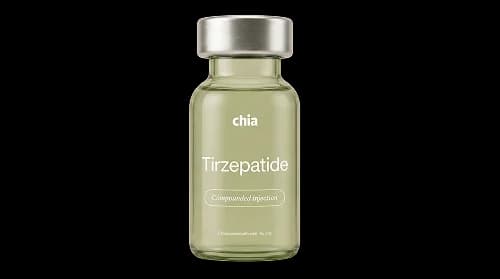
Tirzepatide injection
Once a week
from$299/mo
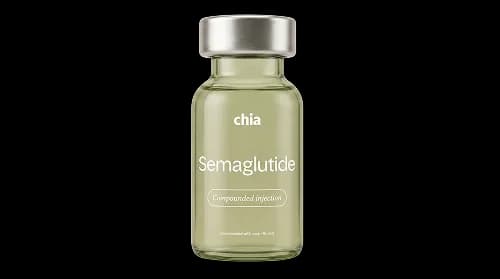
Semaglutide injection
Once a week
from$249/mo
New patient offer
Your first 2 months of tablets for $249 $498
 Same day prescription
 State-licensed pharmacies
- US-licensed physicians
 FSA/HSA eligible
Tirzepatide tablets, compounded by a licensed 503A pharmacy; not FDA-approved. Prescription only, after a provider’s review; full refund if you are not approved. $249 is the first payment for your first 2 months. Then $498 every 2 months for the rest of the 6-month plan, unless you cancel.
Does estrogen cause weight gain?
Research does not show that menopausal hormone therapy (MHT), also called hormone replacement therapy (HRT), reliably causes meaningful body-weight gain. In a randomized postmenopausal study, hormone therapy did not produce greater weight gain than comparison treatment over time. 1
That does not mean every person’s scale stays unchanged. Body weight can move because of water balance, food intake, constipation, activity, and normal day-to-day variation. A scale change alone cannot show whether estrogen changed body fat. 1
Why does weight often change around menopause?
Weight often changes during menopause and perimenopause because several factors overlap at once. Aging can reduce lean muscle mass, while sleep disruption, lower activity, stress, and changing eating patterns can affect energy balance. 7
Falling estrogen may also relate to central, or abdominal, fat distribution. This means body shape can change even when body weight changes little. Observational research links the menopause transition with more central fat, but it cannot prove hormones are the only cause. 7
Timing can be misleading. Starting estrogen near the same time as a weight change does not prove estradiol caused it. The same period may include changes in sleep, exercise, caregiving, appetite, illness, or other medicines. 1
If midlife weight changes feel hard to sort out, our guides to menopause weight gain and weight loss during perimenopause explain practical next steps without treating hormones as a shortcut.
What does research say about estrogen therapy and body weight?
Randomized studies of postmenopausal hormone therapy do not support the idea that estrogen routinely causes major weight gain. The Postmenopausal Estrogen-Progestin Interventions study measured body weight and waist and hip size over time, finding no evidence that hormone therapy caused excess weight gain. 1
Responses still varied between participants. A smaller randomized study found that weight change after hormone therapy differed in relation to starting leptin levels, a hormone involved in appetite and energy balance. That finding does not create a test for predicting an individual outcome. 2
Estrogen-only therapy and estrogen-plus-progestin therapy
Estrogen-only therapy and estrogen-plus-progestin therapy are different treatments. Whether progesterone is needed depends largely on whether a person has a uterus and their medical history. The large Women’s Health Initiative trials found that benefits and risks differ by regimen, age, timing, and health history. 3 4
Hormone therapy can have side effects, including breast tenderness, spotting, headaches, or bloating. It also is not appropriate for everyone, including people with certain hormone-sensitive cancers, unexplained vaginal bleeding, prior blood clots, stroke, or liver disease. A clinician should assess these risks before prescribing. 5
Can estradiol cause bloating or temporary scale changes?
Yes. Fluid retention can change the scale over days, without representing body-fat gain. Some people also notice breast tenderness, nausea, constipation, or bloating after a hormone change. These symptoms may settle, but they should be reviewed if they are severe or persistent. 5
Digestive symptoms can have causes separate from body fat. In a Women’s Health Initiative analysis, estrogen with or without progestin was associated with symptomatic reflux patterns, showing why new digestive symptoms should not automatically be labeled “weight gain.” 6
- Seek timely care for severe abdominal pain, chest pain, shortness of breath, one-sided leg swelling, new neurologic symptoms, or heavy vaginal bleeding. 5
- Bring a short record of scale changes, symptoms, meals, bowel habits, and new medicines to your visit. It can help identify patterns without assuming estrogen is the cause. 5
Do estrogen-containing birth control medicines cause weight gain?
Low-dose estrogen-containing oral contraceptives are not the same treatment as menopausal hormone therapy. They use different hormone types, doses, and goals, so one should not be used to predict the effects of the other. 8
In two randomized, placebo-controlled trials, a low-dose oral contraceptive did not show a meaningful difference in weight change compared with placebo. Individual symptoms can still occur, and a clinician can help assess whether a contraceptive is contributing to a concerning change. 8
What can help with weight changes during menopause?
The strongest starting point is a sustainable plan for food, movement, sleep, and strength work. Strength training matters because preserving muscle can support function and daily energy needs as people age. Lifestyle changes work best when they fit your schedule and health needs. 7
A clinician may also look for contributors such as thyroid disease, diabetes, depression, sleep problems, medication effects, or fluid retention. Rapid or unexplained weight change needs evaluation rather than a self-directed hormone adjustment. 5
| Your situation | A sensible next step | Important trade-off |
|---|---|---|
| Gradual midlife weight gain with no alarming symptoms | Review meals, activity, sleep, strength training, and waist changes with a clinician. 7 | Hormone therapy is not a weight-loss treatment. 5 |
| Hot flashes or other menopause symptoms plus weight concerns | Discuss menopause symptoms, history, and treatment risks separately from weight goals. 5 | The right hormone option depends on individual risks and benefits. 5 |
| Rapid, unexplained, or persistent weight change | Arrange a medical evaluation for possible medical or medication-related causes. 5 | Do not assume menopause or estrogen is the cause. 5 |
| Considering prescription weight-management medication | Discuss whether medication fits your health history and goals after lifestyle and medical review. | Weight-management treatment is a separate decision from menopause care. 5 |
If weight-management medication becomes part of that separate discussion, our overview of getting weight-loss medication online without insurance explains how clinician review works. Hormone therapy should not be used only to pursue weight loss. 5
3-min quiz
Talk through menopause symptoms and weight concerns
A licensed Chia provider can review your symptoms, health history, and goals online. A prescription requires a medical evaluation and is not guaranteed. Chia medications are compounded by state-licensed US 503A pharmacies and compounded drugs are not FDA-approved. 9
When might estradiol treatment at Chia be appropriate?
At Chia, compounded estradiol may be considered for people whose menopause symptoms and medical history support treatment after a licensed-provider review. Compounded estradiol is not FDA-approved. 9 Estradiol is not a weight-loss treatment, and we do not prescribe it as a solution for weight gain alone. 5
Chia offers compounded estradiol as cream, tablets, transdermal patches, and injections. Plans currently start at $74.50 per month for transdermal patches, $79 per month for cream, $89 per month for injections, and $109 per month for tablets; see the product page for current pricing.
| Chia estradiol form | What to discuss with a provider | Plan starting price |
|---|---|---|
| Cream | Your symptoms, preferences, medical history, and whether this form fits your care plan. | From $79/mo |
| Tablets | Your health history and whether an oral option is clinically appropriate. | From $109/mo |
| Transdermal patch | Your preference for a patch and individual risk review. | From $74.50/mo |
| Injection | Whether this form is clinically appropriate for your situation. | From $89/mo |
Chia also offers Menopause Relief, which includes estradiol oral plus progesterone IR, from $119 per month. Whether progesterone belongs in a plan requires clinician review; it is not added to manage weight. 5
Our process is fully online: you complete a health questionnaire, a licensed US provider reviews it, and treatment is prescribed only when clinically appropriate. Provider-guided dosing can change over time, and medications are compounded by US state-licensed 503A pharmacies and shipped to your door.
When should you seek medical care for weight changes?
Seek medical care when weight change is rapid, unexplained, or persistent, especially with new symptoms. Weight changes can have many causes beyond menopause, including medication effects and medical conditions that need assessment. 5
- Contact a clinician promptly for unexplained vaginal bleeding, severe headaches, chest pain, shortness of breath, or a swollen and painful leg. 5
- Schedule a visit for ongoing fatigue, palpitations, major appetite changes, bowel changes, persistent nausea, or weight changes that concern you. 5
Frequently asked questions about estrogen and weight gain
Lower estrogen during menopause is linked with a greater tendency toward central fat distribution. Aging, muscle loss, sleep, activity, and eating patterns also affect abdominal fat. 7
No. Estradiol is not prescribed as a weight-loss treatment. It may be considered for appropriate menopause symptoms after a clinician reviews your history, symptoms, and risks. 5
Progesterone can be associated with symptoms such as bloating or breast tenderness in some people. A scale change does not prove progesterone increased body fat, so ongoing concerns deserve review. 5
The timeline varies. New or persistent bloating should be discussed with the prescriber, especially if it is severe, comes with pain, or occurs with other new symptoms. 5
No. Menopausal hormone therapy is chosen for appropriate symptoms and an individual balance of risks and benefits, not as a weight-loss strategy. 5
Randomized studies do not show that HRT reliably causes meaningful weight gain. Midlife body changes can happen around the same time, which can make the two seem connected. 1
3-min quiz
Start with a clinician-reviewed menopause visit
If menopause symptoms are affecting your quality of life, you can start an online Chia evaluation. A licensed provider determines whether treatment is clinically appropriate; a prescription is not guaranteed. Chia’s estradiol options are compounded by state-licensed US 503A pharmacies, and compounded medications are not FDA-approved. 9 See estradiol options for current forms and pricing.
References
- 1.Espeland MA, Stefanick ML, Kritz-Silverstein D, et al. Effect of postmenopausal hormone therapy on body weight and waist and hip girths. The Journal of Clinical Endocrinology and Metabolism. 1997.
- 2.Ongphiphadhanakul B, Chanprasertyothin S, Piaseu N, et al. Change in body weight after hormone replacement therapy in postmenopausal women is dependent on basal circulating leptin. Maturitas. 1998.
- 3.Rossouw JE, Anderson GL, Prentice RL, et al. Risks and benefits of estrogen plus progestin in healthy postmenopausal women: principal results from the Women’s Health Initiative randomized controlled trial. JAMA. 2002.
- 4.Anderson GL, Limacher M, Assaf AR, et al. Effects of conjugated equine estrogen in postmenopausal women with hysterectomy: the Women’s Health Initiative randomized controlled trial. JAMA. 2004.
- 5.The North American Menopause Society. The 2022 hormone therapy position statement of The North American Menopause Society. Menopause. 2022.
- 6.Zheng Z, Margolis KL, Liu S, et al. Effects of estrogen with and without progestin and obesity on symptomatic gastroesophageal reflux. Gastroenterology. 2008.
- 7.Greendale GA, Sternfeld B, Huang M, et al. Changes in body composition and weight during the menopause transition. JCI Insight. 2019.
- 8.Coney P, Washenik K, Langley RG, et al. Weight change and adverse event incidence with a low-dose oral contraceptive: two randomized, placebo-controlled trials. Contraception. 2001.
- 9.U.S. Food and Drug Administration. Compounding and the FDA: Questions and Answers. 2025.
About this article
Chia Health Editorial Team — Evidence-reviewed health education
This article is for educational purposes only and is not a substitute for individualized medical advice. Talk to a licensed clinician before starting, stopping, or changing any prescription.
AI tools may assist with research and drafting. Chia's editorial team reviews source use, clarity, treatment information, and safety framing before publication. A clinician is named only after explicit sign-off. Read our editorial standards.
Get a personalized plan
See if hormone therapy is right for your body.
Our 3-minute clinical quiz is reviewed by a US-licensed clinician. Treatment delivered to your door.