
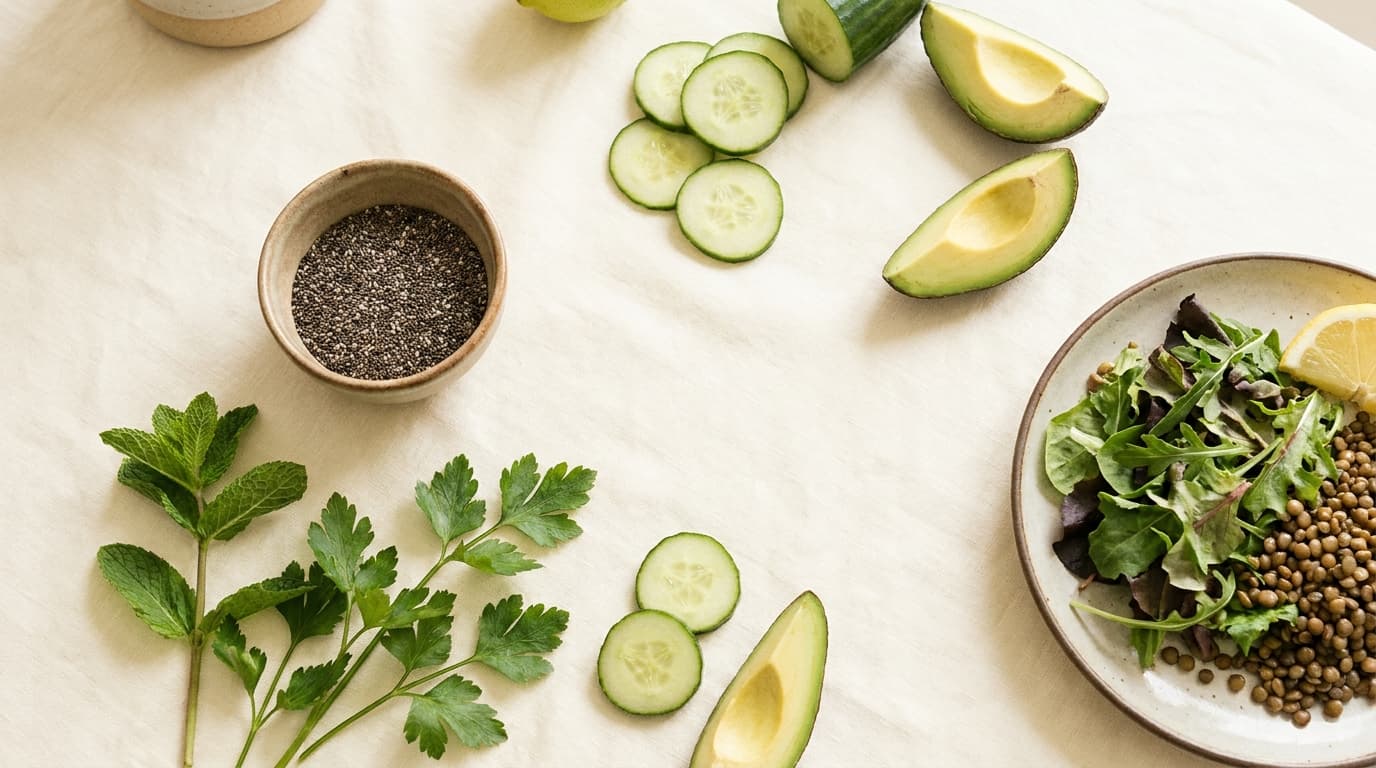
A good diet chart for prediabetes focuses on repeatable meal patterns: half a plate of non-starchy vegetables, one quarter lean protein, and one quarter high-fiber carbohydrate, plus water or unsweetened drinks. Most people benefit from limiting sugary drinks, refined grains, and oversized portions while choosing foods they can sustain.
Wondering if GLP-1 is right for you? Take the 3-min clinical quiz.
See if you qualify →| Meal part | What to choose most often | Simple examples | Why it helps |
|---|---|---|---|
| ½ plate | Non-starchy vegetables | Leafy greens, broccoli, peppers, zucchini, cauliflower, cabbage | Adds fiber, volume, and nutrients with fewer digestible carbohydrates |
| ¼ plate | Protein foods | Fish, chicken, eggs, tofu, beans, lentils, plain Greek yogurt | Helps fullness and can slow the meal’s glucose rise |
| ¼ plate | High-fiber carbohydrates | Oats, brown rice, quinoa, beans, lentils, sweet potato, whole-grain bread | Carbohydrate quality matters; fiber-rich foods are usually digested more slowly |
| Small add-on | Healthy fats | Olive oil, avocado, nuts, seeds | Supports flavor and fullness; portions still matter |
| Drink | Water or unsweetened drinks | Water, sparkling water, unsweetened tea, black coffee | Avoids fast sugar from soda, juice, and sweet coffee drinks |
What should a diet chart for prediabetes include?
A diet chart for prediabetes should be a guide you can repeat, not a strict prescription. The most useful pattern is a 9-inch plate with vegetables, protein, and high-fiber carbohydrates, then small amounts of fat and an unsweetened drink.
Quick facts: the simple plate pattern
The Diabetes Plate Method uses half a plate of non-starchy vegetables, one quarter protein, and one quarter quality carbohydrates. The American Diabetes Association describes this as a way to build balanced meals without weighing or counting every food 3.
Why the chart is a guide, not a strict prescription
Prediabetes nutrition approaches can include lower-calorie eating patterns, higher-fiber carbohydrate choices, low glycemic index approaches, food-based changes, and diet-plus-exercise plans. Outcomes vary across people and programs, which is why the chart should be treated as a flexible guide rather than a single required diet 2, 6.
When to personalize it with a clinician or dietitian
Personalization matters if you are pregnant, have kidney disease, take glucose-lowering medicine, have a history of an eating disorder, have food allergies, or have symptoms of high blood sugar. Dietitian-provided medical nutrition therapy may reduce A1C, fasting blood glucose, weight, waist size, cholesterol, and blood pressure in adults with prediabetes, although certainty varies by outcome 2.
What is prediabetes, and why does food matter?
Prediabetes is an intermediate blood-sugar state: higher than normal, but below the usual diagnostic cutoffs for diabetes. Food matters because carbohydrate type, portion size, fiber, protein, activity, sleep, weight, and medications can all change glucose levels.
How insulin resistance raises blood sugar
Insulin is the hormone that helps move glucose from the bloodstream into cells. With insulin resistance, the body has more trouble using insulin well, so fasting plasma glucose and post-meal glucose can rise over time 4. For a deeper plain-English explanation, see our guide to signs of insulin resistance.
What fasting glucose, A1C, and after-meal glucose mean
Prediabetes can be described by impaired fasting glucose, impaired glucose tolerance, or A1C. The American Diabetes Association lists prediabetes ranges as fasting plasma glucose 100–125 mg/dL, 2-hour oral glucose tolerance test 140–199 mg/dL, or A1C 5.7%–6.4% 4. Our normal blood sugar levels chart explains these numbers in more detail.
Why diet, weight, activity, sleep, and medications can all matter
The Diabetes Prevention Program found that intensive lifestyle intervention reduced progression to type 2 diabetes by 58% over about 2.8 years, while metformin reduced progression by 31%, compared with placebo 5. That trial used a full lifestyle program, not diet alone, so the takeaway is broader than a food list: meals, movement, weight change, coaching, and follow-up all matter.
What does a simple prediabetes plate look like?
A simple prediabetes plate has vegetables first, protein next, and high-fiber carbohydrate in a measured space. This keeps the plan flexible while reducing large glucose spikes from oversized refined carbohydrates.
Half the plate: non-starchy vegetables
Non-starchy vegetables include salad greens, cucumbers, tomatoes, peppers, broccoli, cauliflower, zucchini, cabbage, mushrooms, and green beans. These foods are rich in water and fiber, which can help meals feel larger without adding many digestible carbohydrates 3.
One quarter: protein foods
Protein choices can include fish, poultry, lean meats, eggs, tofu, tempeh, beans, lentils, cottage cheese, or plain Greek yogurt. Pairing protein with carbohydrate may slow digestion and can make meals more filling 6.
One quarter: high-fiber carbohydrates
High-fiber carbohydrates include oats, barley, quinoa, brown rice, beans, lentils, sweet potatoes, corn, fruit, and whole-grain bread. Prediabetes diets usually do not require avoiding all carbs; the goal is better carbohydrate quality and portions 6.
Add small amounts of healthy fats
Olive oil, nuts, seeds, and avocado can make meals satisfying. They are calorie-dense, so small portions work better for people who are also trying to lose weight.
Choose water or unsweetened drinks
Sugary drinks can deliver a large glucose load quickly because they contain sugar without much fiber, protein, or chewing. Water, sparkling water, unsweetened tea, and unsweetened coffee are better default drinks for most people with prediabetes 6.
Which foods can people with prediabetes eat most often?
People with prediabetes can eat many normal foods often: vegetables, legumes, lean proteins, whole grains, fruit, plain yogurt, nuts, seeds, and healthy fats. The best plan is an overall pattern, not a ban on single foods.
- Non-starchy vegetables: leafy greens, broccoli, carrots, peppers, cauliflower, zucchini, mushrooms, cabbage, and green beans.
- Beans, lentils, tofu, eggs, fish, poultry, and lean meats: these add protein and, for beans and lentils, fiber.
- Whole grains and starchy vegetables in measured portions: oats, barley, quinoa, brown rice, corn, peas, and sweet potatoes.
- Fruit, including bananas, in practical portions: fruit contains natural sugar, but whole fruit also has fiber, water, and nutrients.
- Plain yogurt, nuts, seeds, avocado, and olive oil: useful add-ons that improve fullness and flavor.
Harvard Health describes a prediabetes eating pattern as one that can include vegetables, fruits, beans, legumes, lean proteins, whole grains, and healthy fats while keeping sugary foods, refined carbohydrates, fast foods, fried foods, and alcohol lower overall 6.
Which foods are best to limit with prediabetes?
The highest-yield foods to limit are sugary drinks, fruit juice, frequent sweets, refined grains, fried fast foods, and ultra-processed snacks. You do not need perfection; you need fewer blood-sugar spikes across the week.
| Limit most often | Why | Practical swap |
|---|---|---|
| Soda, sweet tea, energy drinks, fruit juice | Liquid sugar can raise glucose quickly | Water, sparkling water, unsweetened tea |
| Candy, desserts, frequent sweet snacks | High sugar with little fiber or protein | Fruit with nuts, plain yogurt with berries |
| White bread, white rice, refined pasta, low-fiber cereal | Lower fiber and faster digestion | Whole-grain bread, oats, brown rice, beans, lentils |
| Fried foods, fast food, ultra-processed snacks | Often high in calories, refined carbs, salt, and fat | Grilled protein bowl, salad with beans, roasted vegetables |
| Alcohol and high-calorie coffee drinks | Can add calories and sugar; alcohol may affect glucose control | Smaller portions, unsweetened coffee, or alcohol-free choices |
Diet behaviors are associated with glycemia measures in clinical populations, but observational data cannot prove that one food causes or fixes prediabetes by itself 7. That is why the focus should stay on the full pattern.
What can you eat for breakfast if you have prediabetes?
A good prediabetes breakfast includes protein, fiber, and little added sugar. If morning blood sugar is high, the answer may involve dinner timing, sleep, stress, medications, or liver glucose release, not just breakfast.
- Eggs with vegetables and one slice of whole-grain toast.
- Plain Greek yogurt with berries, chia seeds, and walnuts.
- Oatmeal topped with peanut butter and berries instead of brown sugar.
- Tofu scramble with peppers, spinach, and a small corn tortilla.
- Cottage cheese with fruit and pumpkin seeds.
Breakfast swaps can be simple: replace sweet cereal with oats, pastries with eggs and fruit, and sweet coffee drinks with unsweetened coffee plus milk. If home readings are high in the morning, review them with your clinician, especially if you have diabetes symptoms or take medications that affect glucose.
What does a one-day diet chart for prediabetes look like?
A one-day prediabetes meal chart should show options, not a rigid menu. Use it to build two or three meals you can repeat, then adjust for hunger, culture, budget, allergies, and clinician advice.
| Time | Option 1 | Option 2 | Vegetarian or budget option |
|---|---|---|---|
| Breakfast | Eggs, sautéed spinach, tomatoes, whole-grain toast | Plain Greek yogurt, berries, chia seeds, walnuts | Oats with peanut butter and sliced banana |
| Lunch | Grilled chicken salad with beans, avocado, and olive-oil vinaigrette | Turkey and vegetable wrap on whole grain, side salad | Lentil soup with vegetables and a small whole-grain roll |
| Dinner | Salmon, roasted broccoli, and quinoa | Chicken fajita bowl with peppers, salsa, beans, and brown rice | Tofu stir-fry with frozen vegetables and brown rice |
| Snack | Apple with peanut butter | Carrots with hummus | Plain yogurt or roasted chickpeas |
Food-as-medicine programs have been studied for chronic disease management, but these studies should not be read as proof that any single food reverses prediabetes 8. The useful lesson is that access, planning, and repeatable meals can make healthy eating more practical.
How do portions and carbohydrates fit into a prediabetes diet?
Carbohydrates are not automatically bad, but quality and portion size matter. Most people do better when they pair carbs with protein, fat, and vegetables instead of eating refined carbs alone.
Carbohydrate quality versus carbohydrate avoidance
Lower-glycemic, higher-fiber carbohydrate choices are commonly discussed in prediabetes eating patterns, along with lower-calorie plans and diet-plus-exercise approaches 6. In plain terms, many people can keep carbohydrates in the plan by choosing higher-fiber versions and measured portions.
Why fiber can soften blood-sugar spikes
Fiber slows digestion and can reduce how quickly glucose enters the bloodstream. Beans, lentils, oats, barley, berries, vegetables, nuts, and seeds are practical fiber sources 6.
When glucose monitoring may help you learn your response
Some people use finger-stick meters or continuous glucose monitors to see how meals affect postprandial glucose, meaning glucose after eating. Monitoring should be interpreted with a clinician, because readings vary with sleep, stress, illness, exercise, medication, and meal timing. You can read more in our guide to continuous glucose monitoring systems.
Can weight loss help prediabetes improve?
For some people, modest weight loss can improve insulin resistance and lower diabetes risk. But blood sugar can also improve with better meals, walking after meals, sleep, and strength training, even before major weight loss.
In the Diabetes Prevention Program, lifestyle goals included at least 7% weight loss and at least 150 minutes per week of physical activity; the program reduced diabetes incidence by 58% versus placebo over about 2.8 years 5. Individual results vary, and weight loss is not the only goal.
If excess weight is part of your prediabetes risk picture, our article on weight loss for prediabetes explains how much weight change may help. Our guide on how prediabetes can improve covers diet, movement, sleep, and medical follow-up in more detail.
3-min quiz
Considering weight-loss treatment alongside lifestyle changes?
Chia can evaluate eligible adults online for weight-loss treatment when clinically appropriate. We offer compounded semaglutide injection and compounded tirzepatide tablets or injection through state-licensed US 503A pharmacies. Compounded medications are not FDA-approved, and a prescription requires a licensed-provider evaluation and is not guaranteed.
When diet is not enough: weight-loss treatment at Chia
At Chia, we do not treat prediabetes or diabetes directly with GLP-1 medication. We evaluate adults for weight-loss treatment when excess weight is part of their health picture, and prescriptions are issued only when clinically appropriate.
Who may consider clinician-guided weight-loss medication
Weight-loss medication may be considered for some adults with excess weight and related health risks, including prediabetes risk, after a clinician reviews history, labs, medications, pregnancy status, contraindications, and goals. GLP-1 medications can cause gastrointestinal side effects, and they may not be appropriate for people with certain personal or family histories, pancreatitis concerns, gallbladder disease, pregnancy, or other risks listed in prescribing information 9, 10.
Semaglutide and tirzepatide options at Chia
Semaglutide is the active ingredient in Wegovy and Ozempic, a GLP-1 receptor agonist; Chia offers compounded semaglutide as an injection. Tirzepatide is the active ingredient in Zepbound and Mounjaro, a dual GIP/GLP-1 receptor agonist; Chia offers compounded tirzepatide as tablets or injection. Compounded formulations are not FDA-approved and do not have FDA-evaluated outcomes data.
| Chia option | Forms Chia offers | Current starting price | Notes |
|---|---|---|---|
| Semaglutide | Injection | Plans currently start at $249/mo | Microdosing plans available when clinically appropriate |
| Tirzepatide | Tablets or injection | Tablets from $249/mo; injection from $299/mo | Microdosing plans available when clinically appropriate |
How Chia’s online evaluation and prescription process works
Chia is 100% online. You complete a short health questionnaire, a licensed US provider reviews it, and medication is prescribed only when clinically appropriate. If prescribed, medication is compounded by a state-licensed US 503A pharmacy and shipped to your door; dosing is provider-guided and adjusted over time through the patient portal.
How can you build a prediabetes diet chart you will actually follow?
The best prediabetes diet chart is the one you can repeat on busy days. Start with two breakfasts, two lunches, and two dinners instead of trying to redesign your whole life at once.
- 1Pick two breakfasts with protein and fiber, such as eggs with vegetables or plain yogurt with berries.
- 2Pick two lunches that use the plate method, such as a salad bowl with beans or a turkey vegetable wrap.
- 3Pick two dinners built from a protein, a vegetable, and a high-fiber carbohydrate.
- 4Keep grocery shortcuts ready: frozen vegetables, canned beans, tuna packets, rotisserie chicken, microwave brown rice, and bagged salad.
- 5Plan restaurant defaults, such as grilled protein, vegetables, beans, and water instead of soda.
- 6Track progress with labs, energy, hunger, waist size, or glucose patterns without aiming for perfection.
Healthcare providers vary in how they support people with prediabetes to eat well, so clear meal-planning tools and referrals can help close the gap between advice and daily life 11.
What should you ask your clinician after a prediabetes result?
After a prediabetes result, ask what the number means, when to repeat it, and what else should be checked. Prediabetes is a signal to look at the whole risk picture, not just one lab.
- Which lab was abnormal: fasting plasma glucose, A1C, or oral glucose tolerance test?
- When should the test be repeated?
- Should cholesterol, blood pressure, liver enzymes, kidney function, or waist circumference be checked?
- Could PCOS, menopause, sleep apnea, medications, or family history be affecting insulin resistance?
- Would a registered dietitian nutritionist, diabetes educator, or obesity-medicine clinician help?
- Should glucose monitoring be used, and if so, what readings should prompt a call?
If you are comparing next steps, start with the least invasive, highest-yield habits: meal pattern, walking, resistance training, sleep, and follow-up labs. Medication decisions should be made with a licensed clinician who can weigh benefits, side effects, contraindications, and your personal risks.
Non-starchy vegetables are the closest thing to “freely” eaten foods for many people: leafy greens, broccoli, cauliflower, peppers, cucumber, zucchini, mushrooms, and cabbage. Still, no food is truly unlimited for everyone, especially if you have digestive issues, kidney disease, allergies, or a clinician-given nutrition plan.
The highest-yield foods to limit are sugary drinks, fruit juice, frequent candy or desserts, refined grains, fried fast food, and ultra-processed snacks. You do not need to ban every treat, but these foods can make blood sugar and weight management harder when they are daily defaults.
A good breakfast for prediabetes usually includes protein and fiber, such as eggs with vegetables, plain Greek yogurt with berries and nuts, oatmeal with peanut butter, or tofu scramble with whole-grain toast. Try to avoid starting the day with only sweet cereal, pastries, juice, or sweet coffee.
Many people with prediabetes can eat bananas in practical portions. Pairing banana with protein or fat, such as peanut butter or plain yogurt, may be more filling than eating it alone. If you monitor glucose, your own readings can help you learn your response.
Prediabetes can improve for many people, especially with a full lifestyle plan that includes food changes, physical activity, weight management when appropriate, sleep, and follow-up care. Diet is important, but it is not the only factor, and some people also need medication or more medical evaluation.
Rice can fit for some people with prediabetes, especially in smaller portions and paired with vegetables and protein. Brown rice, wild rice, beans, lentils, or quinoa may provide more fiber than white rice. Portion size and the rest of the meal matter.
There is no single carb number that fits everyone with prediabetes. Activity level, body size, medications, culture, food preferences, kidney health, pregnancy status, and glucose readings all matter. A registered dietitian can help set a safe target if counting carbs is needed.
If excess weight is part of your risk picture and lifestyle changes have not been enough, it may be reasonable to discuss weight-loss medication with a licensed clinician. At Chia, prescriptions require an online medical evaluation and are not guaranteed. Compounded medications are not FDA-approved.
3-min quiz
Start with a clinician-reviewed plan
If you are working on weight, blood sugar risk, and long-term habits, Chia can help you understand whether weight-loss treatment is appropriate. Start with the online eligibility quiz; a licensed US provider reviews your information, and a prescription is issued only when clinically appropriate.
References
- 1.Yip WCY, Sequeira IR, Plank LD, Poppitt SD. Prevalence of pre-diabetes across ethnicities: A review of impaired fasting glucose, impaired glucose tolerance and elevated HbA1c in population-based studies. Frontiers in Endocrinology. 2017.
- 2.Academy of Nutrition and Dietetics Evidence Analysis Library. Diabetes: Prevention of Type 2—Effectiveness of Dietitian Interventions in Adults with Prediabetes. 2024.
- 3.American Diabetes Association. Meal Planning: Simplify Meal Planning with the Diabetes Plate. 2026.
- 4.American Diabetes Association Professional Practice Committee. Standards of Care in Diabetes—2026: Diagnosis and Classification of Diabetes. Diabetes Care. 2026.
- 5.Diabetes Prevention Program Research Group. Reduction in the incidence of type 2 diabetes with lifestyle intervention or metformin. New England Journal of Medicine. 2002.
- 6.Harvard Health Publishing. Prediabetes diet: How to help prevent progression to diabetes. 2023.
- 7.Wagner KA, Armah SM, Smith LG, et al. Associations between Diet Behaviors and Measures of Glycemia, in Clinical Setting, in Obese Adolescents. Childhood Obesity. 2016.
- 8.Kibera PW, Ofei-Tenkorang NA, Mullen C, et al. Food as medicine: a quasi-randomized control trial of two healthy food interventions for chronic disease management among ambulatory patients at an urban academic center. Primary Health Care Research & Development. 2023.
- 9.U.S. Food and Drug Administration. Wegovy (semaglutide) injection prescribing information. 2024.
- 10.U.S. Food and Drug Administration. Zepbound (tirzepatide) injection prescribing information. 2025.
- 11.Somerville M, Ball L, Chua D, et al. How do healthcare providers support people with prediabetes to eat well? An in-depth, mixed-methods case study of provider practices. Australian Journal of General Practice. 2021.
About this article
Chia Health Editorial Team — Evidence-reviewed health education
This article is for educational purposes only and is not a substitute for individualized medical advice. Talk to a licensed clinician before starting, stopping, or changing any prescription.
AI tools may assist with research and drafting. Chia's editorial team reviews source use, clarity, treatment information, and safety framing before publication. A clinician is named only after explicit sign-off. Read our editorial standards.
Get a personalized plan
See if GLP-1 is right for your body.
Our 3-minute clinical quiz is reviewed by a US-licensed clinician. Treatment delivered to your door.