In 2023 and early 2024, the GLP-1 supply problem was simple: you could not get Wegovy or Mounjaro at most pharmacies at any price. Compounding pharmacies stepped in under a long-standing FDA provision that allows them to prepare copies of drugs during declared shortages. Millions of people got their first GLP-1 through that channel.
Wondering if GLP-1 is right for you? Take the 3-min clinical quiz.
See if you qualify →Then, in a span of months, the FDA declared the tirzepatide shortage resolved (October 2024) and the semaglutide shortage resolved (February 2025). A lot of patients read that as "compounded GLP-1 is over" and panicked. A lot of clinics read it as "business as usual" and kept prescribing. Both were partially wrong.
Here is the actual 2026 picture, in plain language.
What does "compounded" actually mean?
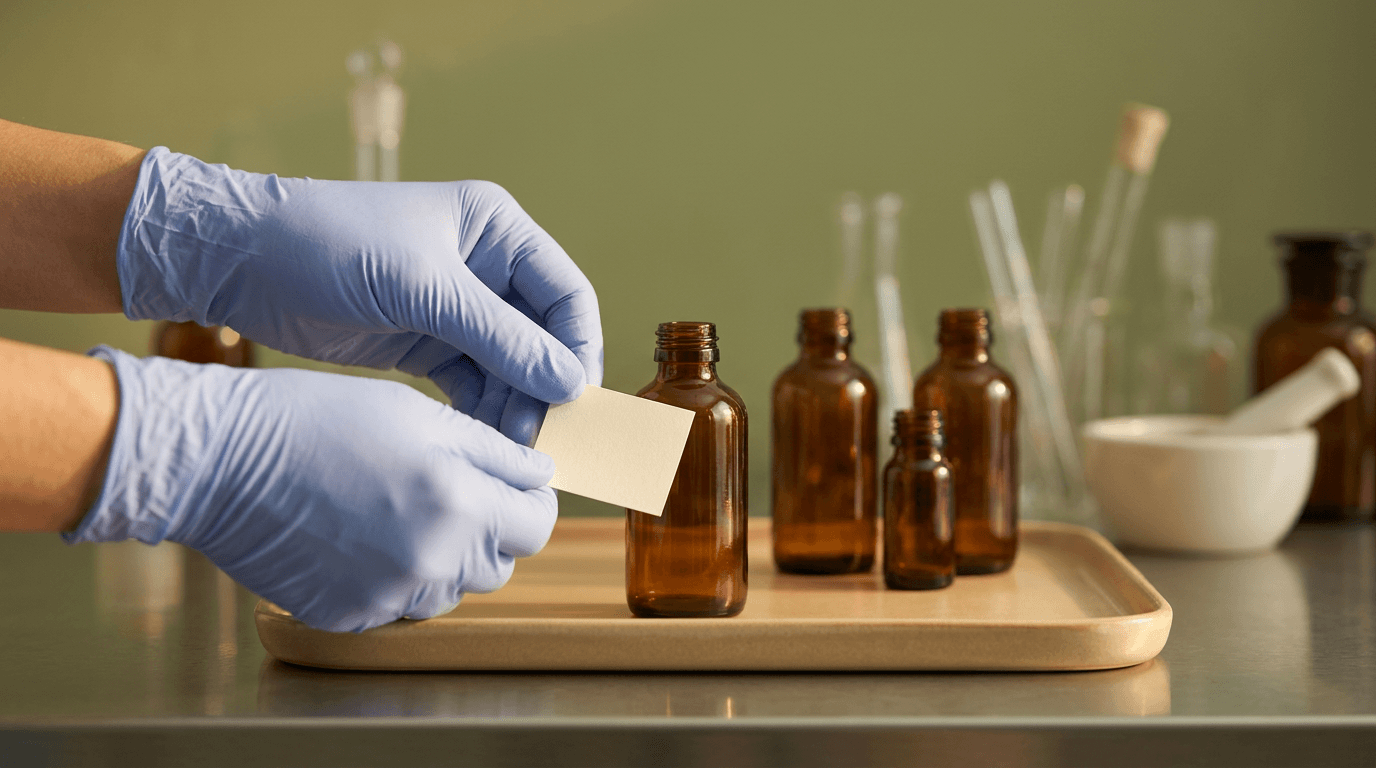
A compounded medication is one that a licensed pharmacy prepares in its own lab, from an active pharmaceutical ingredient (API) and inactive excipients, to fill a specific clinical need. Compounding is not new. It predates modern pharma. It is how you get a liquid version of a pill for a child who cannot swallow tablets, or a preservative-free version of an eye drop for someone allergic to the standard preservative.
There are two main types of compounding pharmacy in the United States:
| Type | What they do | Oversight |
|---|---|---|
| 503A pharmacy | Traditional compounding for individual patients based on a specific prescription | State boards of pharmacy + FDA inspection |
| 503B outsourcing facility | Compounds in bulk for hospitals and clinics, can manufacture without a patient-specific Rx | Registered with and directly inspected by the FDA; must follow cGMP |
Both can legally compound GLP-1s in 2026 under the right circumstances. 503B facilities generally have higher and more uniform safety standards. Many telehealth GLP-1 programs — including clinics you have seen advertised — source through 503B partners.
Is compounded GLP-1 legal in 2026?
Short answer: yes, but more narrowly than during the shortage. There are two main legal pathways that let a compounding pharmacy make semaglutide or tirzepatide today:
- 1Clinical necessity (patient-specific). A 503A pharmacy can prepare a compounded version when a specific patient needs a formulation that is not commercially available — for example, a lower dose strength, a different concentration, a preservative-free version, or a version without an excipient the patient is allergic to. This pathway has existed for decades and is well-recognized in state pharmacy law.
- 2Limited FDA enforcement discretion during the wind-down after a shortage ends, which the FDA has applied with nuance. The agency has made clear it will not aggressively act against 503A pharmacies fulfilling legitimate patient-specific scripts, and has focused enforcement on mass-marketed "research peptide" sellers and unregistered sites.
What is not legal: a pharmacy simply making semaglutide or tirzepatide in volume to undercut the brand on price, with no clinical justification for each patient. That was allowed during the shortage. It is not allowed now. Well-run clinics restructured their protocols around this reality in early 2025 — they prescribe specific customized strengths, document clinical rationale, and use pharmacies with good FDA track records.
Is it safe? And is it the same molecule as Ozempic or Mounjaro?
The active molecule — semaglutide or tirzepatide — is the same. That part is not controversial. A well-run 503B facility uses API that comes with a certificate of analysis, tests each batch for potency and sterility, and fills vials in USP <797>/<800>-compliant clean rooms. For a patient, this is functionally indistinguishable from the branded injectable in mechanism and effect.
The risks live in the manufacturing context, not the molecule:
- Potency drift — a poorly run pharmacy can produce vials that are under-dosed (no effect) or over-dosed (severe nausea, hospital-worthy side effects). The FDA has investigated multiple episodes of this since 2023.
- Contamination — any sterile injectable made outside of a properly controlled environment risks bacterial or endotoxin contamination. This is where USP <797> compliance genuinely matters.
- Formulation errors — the wrong excipient, the wrong concentration, or the wrong label can lead to dangerous dosing mistakes. The FDA specifically warned about compounded products sold in "salt" or "sodium" forms that were not the same molecule.
- Counterfeits sold as compounded — a handful of online sellers relabel offshore-sourced product as U.S.-compounded. This is a real problem, not a rumor.
3-min quiz
Want compounded GLP-1 done properly?
Chia uses only licensed U.S. 503A / 503B pharmacies, with potency and sterility testing, cold-chain shipping, and a clinician review of every prescription.
How do I tell whether a compounding pharmacy is legitimate?
You can learn a surprising amount in about 10 minutes. Here is the vetting checklist we use:
- 1A physical U.S. address and a state pharmacy license number. Both should be easy to find on the site or in the order paperwork. Verify the license on the relevant state board of pharmacy website. This takes ~2 minutes.
- 2PCAB or FDA-registered 503B status. The Pharmacy Compounding Accreditation Board (PCAB) is a voluntary accreditation; 503B registration is mandatory if a facility operates as an outsourcing facility. Either is a strong green flag.
- 3A named supervising pharmacist. Not a stock photo on an "About" page. An actual license number you can look up.
- 4Potency and sterility testing on each batch. Ask to see a certificate of analysis (COA). Legit pharmacies send one on request, usually within a day.
- 5Cold chain shipping. Your medication should ship with cold packs and arrive cool. If it arrives warm, report it and do not use it.
- 6A real prescribing clinician. A clinician should review your intake, approve the prescription, and be available to message. "Click to buy" with no clinical visit is a red flag, not a feature.
If any of those six things is missing, walk away. If all six are present, you are probably dealing with a legitimate operation. Price alone is not a great indicator — reputable compounded semaglutide is often $250–$400/month, and reputable compounded tirzepatide is often $300–$450/month. Prices under ~$120/month for a full protocol are almost never legitimate.
Who should not use compounded GLP-1?
- People with a personal or family history of medullary thyroid carcinoma (MTC) or MEN-2. This is a boxed warning for the whole GLP-1 class and applies to compounded versions too.
- People with active pancreatitis or prior unexplained pancreatitis.
- People who are pregnant, breastfeeding, or actively trying to conceive. Manufacturers advise discontinuing both semaglutide and tirzepatide well before conception.
- People with type 1 diabetes on insulin (requires very careful specialist management — not a telehealth-first situation).
- People who need insurance coverage — compounded products are not covered by insurance. If you have good coverage for Wegovy or Zepbound, use it.
Compounded vs. brand: the practical differences patients actually notice
| Experience | Branded pen (Wegovy / Zepbound) | Compounded (503A or 503B) |
|---|---|---|
| Format | Auto-injector pen, pre-measured dose | Vial + insulin syringe, user draws dose |
| Needle | Hidden in pen body | Visible, 31G or 32G typical |
| Dose flexibility | Fixed ladder: 0.25/0.5/1.0/1.7/2.4 mg for Wegovy | Clinician can prescribe custom intermediate strengths (e.g., 0.375 mg) |
| Cost (cash, 2026) | ~$1,000–$1,350 / month | ~$200–$400 / month |
| Insurance | Sometimes covered | Never covered |
| FDA-approved finished product | Yes | No (the ingredient is FDA-regulated; the finished product is compounded) |
| Typical shipping | From pharmacy, refrigerated | From pharmacy, refrigerated |
The two experiences that trip new patients up most are (1) drawing from a vial instead of pressing a pen button — you'll get used to it within two injections — and (2) understanding that a smaller vial with a higher concentration is not "stronger," it just means you draw fewer units. Your clinician's instructions, not the label, define your actual dose.
Frequently asked questions
The active molecule is the same. Compounded semaglutide is prepared by a licensed U.S. pharmacy from API; Ozempic is an FDA-approved finished product manufactured by Novo Nordisk. If the pharmacy is legitimate and the molecule is correctly dosed, the in-body effect is the same.
Yes, under specific circumstances — most commonly a patient-specific clinical justification (e.g., a dose strength or formulation not commercially available). It is not legal to simply mass-produce a copy of an FDA-approved drug after the shortage has ended.
The FDA has been clear it is not targeting patient-specific 503A or 503B prescriptions with legitimate clinical justification. A well-run clinic stays ahead of guidance changes and will update protocols if the landscape shifts. This is a reason to use a clinic you trust, not a reason to panic.
No. It is cheaper because there is no $2B+ R&D cost to amortize, no brand marketing budget, and the supply chain is shorter. A well-run 503B pharmacy operating under cGMP is producing a technically comparable injectable — the price gap reflects the business model, not the chemistry.
Usually yes. Most legitimate compounded protocols follow the same ladder as the FDA labels (0.25 mg → 2.4 mg for semaglutide; 2.5 mg → 15 mg for tirzepatide), just in customized strengths. Always follow your clinician's specific instructions.
No. "Peptide websites" selling "research-grade" or "not for human use" semaglutide are not pharmacies. They have no clinical oversight, no sterility guarantees, no COA, and in many cases the molecule is not what the label says. Never inject a product from that category.
Yes — if your insurance covers Wegovy or Zepbound (many employer plans still do), or if you are on Lilly Direct for a self-pay vial at their discounted price and it fits your budget. Brand can also be the right call if you have a history of extreme sensitivity to excipients and want the exact FDA-characterized formulation.
You can, and plenty of patients do during transitions. Keep your clinician in the loop on what you are injecting on which week — mixing is fine; double-dosing because of a miscommunication is not.
Bottom line
Compounded GLP-1 is not a loophole. It is a legitimate, decades-old pharmacy practice that, in 2026, still allows millions of patients to access semaglutide and tirzepatide through licensed U.S. channels at prices that are one-third to one-quarter of the branded list price. The molecule is the same. The risks live in pharmacy quality, not in the category itself.
If you are evaluating a program: ask about the pharmacy, the licensing, the testing, and the clinician. If you like the answers, you are probably in good hands. If any of those come back hand-wavy or missing, keep looking — this is a space where taking an extra hour on due diligence saves you months of problems.
References
- 1.FDA. FDA's Concerns with Unapproved GLP-1 Drugs Used for Weight Loss (updated 2025).
- 2.FDA. Tirzepatide Injection Products (Update on Resolution of Shortage).
- 3.FDA. Semaglutide Injection Products (Resolution of Shortage, February 2025).
- 4.USP General Chapter <797> Pharmaceutical Compounding — Sterile Preparations.
- 5.21 U.S.C. § 353a (Section 503A) and § 353b (Section 503B), Federal Food, Drug, and Cosmetic Act.
- 6.Pharmacy Compounding Accreditation Board (PCAB) — Accreditation standards.
About this article
Chia Health Editorial Team — Evidence-reviewed health education
This article is for educational purposes only and is not a substitute for individualized medical advice. Talk to a licensed clinician before starting, stopping, or changing any prescription.
AI tools may assist with research and drafting. Chia's editorial team reviews source use, clarity, treatment information, and safety framing before publication. A clinician is named only after explicit sign-off. Read our editorial standards.
Get a personalized plan
See if GLP-1 is right for your body.
Our 3-minute clinical quiz is reviewed by a US-licensed clinician. Treatment delivered to your door.