
There is no single cheapest weight loss drug for every person. Your lowest real cost depends on insurance coverage, diagnosis, eligibility, and the full price of care. Compare medication, clinician visits, pharmacy source, shipping, follow-up, and safety before choosing a lower-priced option.
How did we compare the cheapest weight loss drugs?
We compared weight loss medication categories by total monthly cost, prescription requirements, evidence, safety limits, and access to clinician follow-up. A lower cash price can matter, but it does not establish that a medicine is appropriate for your health history.
This comparison covers obesity and overweight treatment options. FDA labels generally use body mass index (BMI) and weight-related comorbidities, such as high blood pressure or type 2 diabetes, when describing chronic weight-management eligibility. Each product has its own labeled criteria and warnings. 4 5
What is the cheapest weight loss drug?
Older oral prescriptions are often the lowest cash-price category, while insurance may make an FDA-approved GLP-1 medicine less expensive for some people. The cheapest option is the one with the lowest total cost for an appropriate prescription, not necessarily the lowest advertised drug price.
- 1Orlistat is a lipase inhibitor that reduces absorption of some dietary fat. Its common side effects include oily spotting, gas with discharge, and urgent bowel movements; it also can affect absorption of certain vitamins and medicines. 6
- 2Phentermine/topiramate is a sympathomimetic and anticonvulsant combination. It has important warnings, including fetal harm risk, increased heart rate, mood effects, and cognitive effects. 7
- 3Naltrexone/bupropion is an opioid antagonist and aminoketone antidepressant combination. It can raise blood pressure and is contraindicated with seizure disorders, uncontrolled hypertension, chronic opioid use, and several other conditions. 8
- 4GLP-1-based medicines usually have higher cash costs, but insurance coverage or a qualifying manufacturer program can change out-of-pocket costs. Nausea, vomiting, diarrhea, constipation, and abdominal pain are common concerns, and labels include additional warnings. 4 5
Which costs should I compare before choosing a weight loss medication?
Compare the full monthly cost, not just the medication line item. A program can have a low starter price but separate fees for the clinical visit, membership, shipping, labs, refill review, or medication changes.
- Medication price: Ask whether the listed amount applies to every strength or only an introductory supply.
- Clinical care: Confirm whether provider assessment, refill review, and messages to the care team are included.
- Pharmacy and shipping: Ask where the prescription is filled and whether delivery fees apply.
- Insurance: Check your deductible, copay, coinsurance, prior authorization requirements, and whether the plan excludes weight-management medication.
- Savings programs: Manufacturer offers can have enrollment rules, insurance restrictions, supply limits, and expiration dates.
- Follow-up: A safe program has a way to review side effects, changing health conditions, and medication questions.
Prior authorization means an insurer asks for clinical information before covering a drug. It may require documentation of BMI, a weight-related condition, prior treatment, or other plan-specific criteria. Coverage rules and savings offers change, so confirm them with your insurer and the program before paying.
How do lower-cost pills, injections, and GLP-1 medicines differ?
Weight loss medicines differ in how they work, how they are used, and who should avoid them. A lower-cost pill is not a substitute for a GLP-1 medicine, and a GLP-1 medicine is not automatically the right choice for every patient.
| Category | Examples | Form | Cost factors | Key safety limits |
|---|---|---|---|---|
| Older oral prescription medicines | Phentermine/topiramate; naltrexone/bupropion | Tablets or capsules | Often lower cash prices; insurance varies | Product-specific heart, mood, seizure, pregnancy, and drug-interaction warnings. 7 8 |
| Lipase inhibitor | Orlistat | Capsule | Often lower cash prices; some versions are nonprescription | Digestive side effects and reduced absorption of fat-soluble vitamins can occur. 6 |
| GLP-1 receptor agonist | Wegovy (semaglutide); Saxenda (liraglutide) | Injection | Often higher cash prices; coverage and savings eligibility vary | Digestive side effects are common; labels include thyroid tumor warnings and other precautions. 4 9 |
| Dual GIP/GLP-1 receptor agonist | Zepbound (tirzepatide) | Injection | Often higher cash prices; coverage and savings eligibility vary | Digestive side effects are common; labels include thyroid tumor warnings and other precautions. 5 |
| Compounded GLP-1-related medication | Compounded semaglutide or compounded tirzepatide through a 503A pharmacy | Depends on prescription and pharmacy | Program price, clinical care, and pharmacy fees vary | Not FDA-approved; formulation-specific outcomes are not established. 1 2 3 |
Older oral prescription medications
Oral medicines may cost less because they are older, more widely available, or offered in lower-cost generic forms. That does not make them interchangeable. A clinician should review your blood pressure, mental-health history, seizure risk, pregnancy plans, current medicines, and other factors before prescribing. 7 8
FDA-approved GLP-1 and dual GIP/GLP-1 medicines
Wegovy contains semaglutide, a GLP-1 receptor agonist approved for chronic weight management. Zepbound contains tirzepatide, a dual glucose-dependent insulinotropic polypeptide (GIP) and GLP-1 receptor agonist approved for chronic weight management. Both labels describe gastrointestinal side effects and contraindications, including a personal or family history of medullary thyroid carcinoma or multiple endocrine neoplasia syndrome type 2. 4 5
Over-the-counter options
Over-the-counter weight loss products are not interchangeable with prescription treatment. Nonprescription orlistat is still a medicine with side effects and interaction concerns, while many supplements do not have FDA approval for weight loss or premarket review for effectiveness. 6
3-min quiz
Compare your options with clinician review
At Chia, a licensed US provider can review whether compounded semaglutide or compounded tirzepatide may fit your goals and health history. A prescription requires a medical evaluation and is not guaranteed. Our medications are compounded by state-licensed US 503A pharmacies; compounded drugs are not FDA-approved.
Are Ozempic, Wegovy, Mounjaro, and Zepbound the same for weight loss?
No. The active ingredient can overlap, but FDA approval depends on the product and indication. Ozempic and Wegovy contain semaglutide, while Mounjaro and Zepbound contain tirzepatide. The products do not carry identical FDA-approved uses. 4 5
- Ozempic is semaglutide, a GLP-1 receptor agonist, approved for type 2 diabetes according to its label. Using it for a different purpose is off-label and should be discussed with the prescribing clinician. 10
- Wegovy is semaglutide, a GLP-1 receptor agonist, with chronic weight-management indications described in its label. 4
- Mounjaro is tirzepatide, a dual GIP and GLP-1 receptor agonist, approved for type 2 diabetes according to its label. 11
- Zepbound is tirzepatide, a dual GIP and GLP-1 receptor agonist, with chronic weight-management indications described in its label. 5
- Rybelsus is oral semaglutide approved for type 2 diabetes; its label, not its active ingredient alone, determines its FDA-approved use. 12
- Saxenda is liraglutide, a GLP-1 receptor agonist, with chronic weight-management information in its prescribing information. 9
The practical cost lesson is simple: compare the exact product your clinician is considering, not only the ingredient name. Our guide to FDA-approved weight loss drugs explains why labels, forms, and approved uses matter.
Are compounded semaglutide and tirzepatide less expensive?
Compounded semaglutide and compounded tirzepatide can have a lower listed monthly price than some brand-name cash prices, but prices vary by pharmacy and care model. Lower price does not mean the products are equivalent. A compounded medication is prepared by a pharmacy for a patient under applicable compounding rules, rather than being an FDA-approved drug product. 1
FDA has issued safety communications about compounded semaglutide and tirzepatide. The agency notes that compounded drugs are not FDA-approved and has described concerns including dosing errors, fraudulent labeling, and products sold through unregulated channels. 2 3
- Confirm that a licensed prescriber reviews your health information and writes a valid prescription.
- Ask which pharmacy will fill the prescription and verify that it is a state-licensed 503A compounding pharmacy.
- Ask what the listed price includes: medication, clinical review, follow-up, shipping, and supplies.
- Do not buy “research use” products or medication sold without a prescription. Those products do not provide the safeguards of a licensed clinician and pharmacy.
- Seek urgent medical care for severe or concerning symptoms rather than relying on online content.
How can I compare online weight loss programs safely?
A safe online weight loss program clearly identifies its clinician, pharmacy, total price, and follow-up process. A valid prescription and licensed clinical review are essential, even when care is delivered online.
Look for a program that explains who reviews your questionnaire, how you contact the care team, and how side effects are handled. Be cautious when a seller promises a prescription before a medical review, avoids pharmacy details, or markets injectable “research” products for human use. FDA has warned consumers about illegally marketed and fraudulent GLP-1 products. 2 3
Price is only one part of the decision. You can also compare membership models in our guide to the cheapest online weight loss programs, review practical safety questions in how to get weight loss drugs, and see cost factors for weight loss injections without insurance.
How do semaglutide and tirzepatide treatment work at Chia?
At Chia, eligible adults can complete a health questionnaire online for review by a licensed US provider. Care is fully online, but treatment is prescribed only when clinically appropriate, and a prescription is never guaranteed.
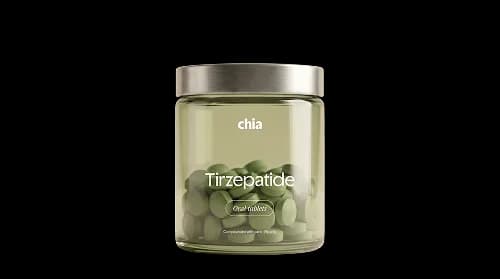
We offer compounded semaglutide as an injection, with plans currently starting at $249 per month. We offer compounded tirzepatide as tablets starting at $249 per month or injections starting at $299 per month. Provider-guided microdosing plans are available for both treatments where clinically appropriate.
| Chia treatment | Available form | Current starting price | Care details |
|---|---|---|---|
| Compounded semaglutide | Injection | From $249/month | Licensed-provider review, provider-guided dosing, portal messaging, and home delivery from a state-licensed US 503A pharmacy. |
| Compounded tirzepatide | Tablets or injection | Tablets from $249/month; injection from $299/month | Licensed-provider review, provider-guided dosing including available microdosing plans, portal messaging, and home delivery from a state-licensed US 503A pharmacy. |
Our providers review health history, current medicines, and treatment goals. If prescribed, medication is compounded in the United States by a state-licensed 503A compounding pharmacy and shipped to your door. You can message your care team through the patient portal between visits.
What questions should I ask before paying for weight loss medication?
Ask for the full cost and the clinical details before you enroll. The best value is care you can afford and safely continue, with clear pharmacy sourcing and a realistic follow-up plan.
- What is my total monthly cost after medication, visits, shipping, and any membership fee?
- Will my insurance require prior authorization, a deductible payment, or a specific diagnosis?
- Does the price change with medication strength, refill timing, or follow-up needs?
- Who is the licensed prescriber, and how can I contact the care team about side effects?
- Which pharmacy fills the prescription, and is it state licensed?
- What side effects, warnings, interactions, and reasons not to use this medicine apply to my health history?
- If I am comparing compounded medication, do I understand that it is not FDA-approved and is not represented as equivalent to a brand-name product?
3-min quiz
Start with a clear cost and safety conversation
Chia offers online clinician review for compounded semaglutide injection and compounded tirzepatide tablets or injections. Your provider can discuss eligibility, follow-up, and pricing options; a prescription requires medical evaluation and is not guaranteed. See the semaglutide page or tirzepatide page for current details.
There is no single answer because cash prices, insurance coverage, deductibles, and pharmacy pricing vary. Older oral medicines may cost less in cash, while insurance coverage can make a different FDA-approved medicine less expensive for an eligible person.
Costs range widely based on the medicine, insurance, pharmacy, and whether clinical care is included. Ask for the full monthly amount and whether the price changes over time before enrolling.
Yes, telehealth can support prescription care when a licensed clinician evaluates you and determines treatment is clinically appropriate. Avoid sellers that offer prescription medication without a medical review or do not identify the dispensing pharmacy.
Retail and subscription offers can change quickly and may have separate eligibility rules, medication costs, or clinical fees. Verify the current terms directly with the seller and compare the full cost with other licensed care options.
Check the current FDA-approved Wegovy prescribing information and the manufacturer’s current cash-price information for the exact formulation. Do not assume that a product with the same active ingredient has the same approved use, form, or price.
No. The safest value includes an appropriate prescription, clear pharmacy sourcing, clinician follow-up, and a plan for side effects. A lower sticker price can become more costly if it excludes care or comes from an unregulated seller.
References
- 1.U.S. Food and Drug Administration. Compounding and FDA: Questions and Answers. 2025.
- 2.U.S. Food and Drug Administration. Medications Containing Semaglutide Marketed for Type 2 Diabetes or Weight Loss. 2025.
- 3.U.S. Food and Drug Administration. Medications Containing Tirzepatide Marketed for Type 2 Diabetes or Weight Loss. 2025.
- 4.DailyMed. Wegovy (semaglutide) prescribing information. 2025.
- 5.DailyMed. Zepbound (tirzepatide) prescribing information. 2025.
- 6.DailyMed. Orlistat prescribing information. 2024.
- 7.DailyMed. Qsymia (phentermine and topiramate extended-release) prescribing information. 2025.
- 8.DailyMed. Contrave (naltrexone hydrochloride and bupropion hydrochloride) prescribing information. 2025.
- 9.DailyMed. Saxenda (liraglutide) prescribing information. 2025.
- 10.DailyMed. Ozempic (semaglutide) prescribing information. 2025.
- 11.DailyMed. Mounjaro (tirzepatide) prescribing information. 2025.
- 12.DailyMed. Rybelsus (semaglutide) prescribing information. 2025.
About this article
Chia Health Editorial Team — Evidence-reviewed health education
This article is for educational purposes only and is not a substitute for individualized medical advice. Talk to a licensed clinician before starting, stopping, or changing any prescription.
AI tools may assist with research and drafting. Chia's editorial team reviews source use, clarity, treatment information, and safety framing before publication. A clinician is named only after explicit sign-off. Read our editorial standards.
Get a personalized plan
See if GLP-1 is right for your body.
Our 3-minute clinical quiz is reviewed by a US-licensed clinician. Treatment delivered to your door.